The Korea Disease Control and Prevention Agency announced that it will begin accepting vaccination reservations from the 29th in preparation for the COVID-19 variant (JN.1) vaccine for infants and young children (6 months to 4 years old), which will start on the 11th of next month.
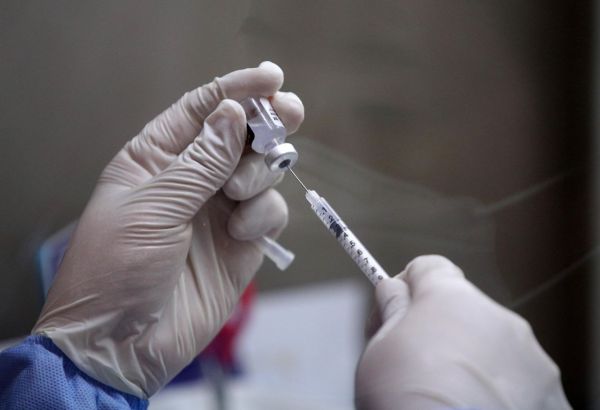 On the 3rd, medical staff are busy handling Pfizer vaccines at the COVID-19 vaccine storage center in the Yongsan-gu Vaccination Center, Seoul. Photo by Hyunmin Kim kimhyun81@
Vaccination medical institutions can be checked on the Vaccination Helper website.
Earlier, the Ministry of Food and Drug Safety granted emergency approval for Pfizer's 'Comirnaty JN1 0.033 mg/mL' (active ingredient Bretobamaran), a COVID-19 JN.1 variant vaccine for infants and young children aged 6 months to 4 years.
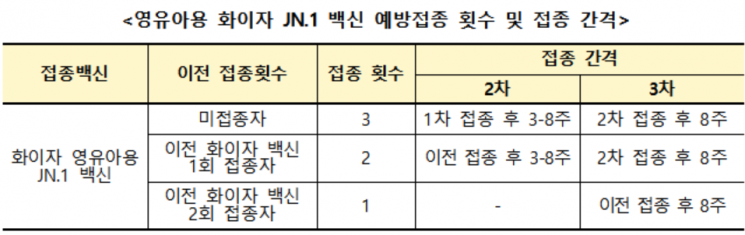
The Pfizer JN.1 vaccine for infants and young children requires up to three doses depending on the number of previous Pfizer vaccine doses received, so vaccination should be done after consulting with medical staff.
Infants and young children who have received two or more doses of the previous Pfizer vaccine need only one dose of the new vaccine, while those who have received one dose of the Pfizer vaccine require two doses of the new vaccine. Infants and young children who have never been vaccinated before can choose between the Moderna JN.1 vaccine (2 doses) and the Pfizer JN.1 vaccine (3 doses).
Additionally, since the 2024?2025 season Novavax vaccine administration ends on the 30th of next month, the Ministry of Food and Drug Safety recommends that those contraindicated for mRNA vaccines or those who have postponed vaccination receive their shots promptly before the expiration date.
Meanwhile, as of 6 p.m. on the 18th, the COVID-19 vaccination rate for the 2024?2025 season is 32.7%, which is 8.6 percentage points higher than the same period last year.
Ji Young-mi, director of the Korea Disease Control and Prevention Agency, urged, "Although the vaccination rate is higher compared to the previous season, to prevent severe illness and death among high-risk groups such as seniors aged 65 and older, immunocompromised individuals aged 6 months and older, and residents of infection-vulnerable facilities, caregivers and family members of high-risk groups should ensure timely vaccination."
© The Asia Business Daily(www.asiae.co.kr). All rights reserved.


















