Semiconductor Industry "Sulfuric Acid Quality Decline... Process Shaken"
Semiconductor industry players such as Samsung Electronics and SK Hynix have unusually expressed concerns about the current situation of Korea Zinc, which is embroiled in a management rights dispute with Youngpoong and MBK Partners.
Korea Zinc supplies high-purity sulfuric acid necessary for domestic semiconductor production, and recently pointed out the possibility of delayed supply or deterioration in quality due to the management rights dispute.
If sulfuric acid supply faces difficulties, it would cause serious damage to the semiconductor business. Not only the semiconductor sector but also the domestic non-ferrous metals industry has voiced concerns that the prolonged management rights dispute at Korea Zinc could undermine product quality.
According to the industry on the 29th, a domestic semiconductor company recently sent an official request letter to Korea Zinc regarding sulfuric acid supply and quality maintenance. In the letter, the company indirectly conveyed concerns about the quality of sulfuric acid produced after the management rights dispute, stating, "Even slight fluctuations in your (Korea Zinc’s) sulfuric acid quality are causing instability in our process variation (the degree of quality variation in products produced during the process)."
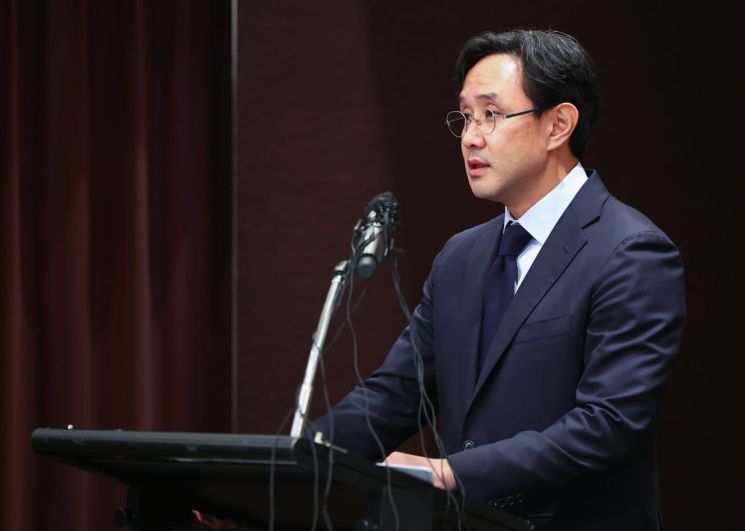
It continued, "Over a long period, stable supply through Korea Zinc’s steady capacity expansion, collaboration, and investment in quality have enabled mutual growth," and emphasized, "Sulfuric acid is a very important material requiring continuous and professional quality management, so close consultation between both companies to prepare for future demand is urgently needed."
It added, "As the difficulty of (semiconductor) products and processes increases, if any anomalies occur in sulfuric acid quality, there is a possibility of serious damage to semiconductor production and quality control," and stated, "We request stable supply and quality maintenance and improvement of semiconductor-grade sulfuric acid."
High-purity sulfuric acid is used in semiconductor manufacturing processes to remove foreign substances or impurities from the wafer surface. Because it plays an essential role in both early and late stages of semiconductor manufacturing, the purity of sulfuric acid greatly affects semiconductor performance and yield. Korea Zinc’s Onsan smelter is the largest production base supplying about 65% of domestic high-purity sulfuric acid. It produces a total of 1.4 million tons of sulfuric acid annually (as of 2023), including for semiconductor use, supplying Samsung Electronics, SK Hynix, and others.
A Korea Zinc official said, "With large-scale semiconductor investments underway, we have designated sulfuric acid as a future business and are expanding production facilities to meet increasing demand," adding, "Since Youngpoong and MBK attempted a hostile M&A, industry concerns have grown not only about semiconductor sulfuric acid but also various other products."
Earlier, in the previous month when the management rights dispute began, more than 80 domestic and foreign companies that receive supplies of Korea Zinc’s major products such as zinc, lead, precious metals, and semiconductor sulfuric acid reportedly sent quality maintenance request letters expressing serious concerns about the potential disruption of product quality continuity. There are also concerns that the supply of rare metals such as indium and cobalt, as well as strategic mineral resources like bismuth and antimony, could be disrupted.
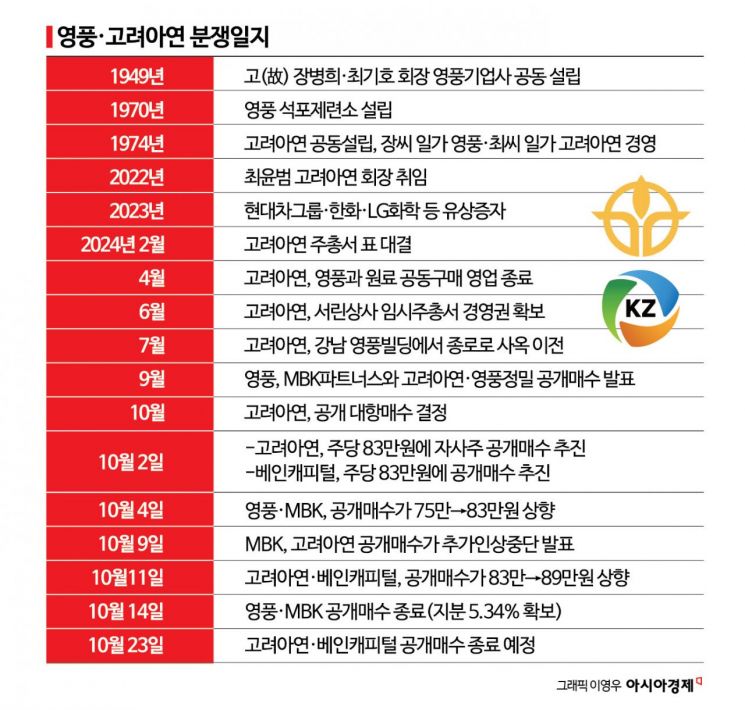
Additionally, Korea Zinc’s technical staff and labor union are actively opposing MBK’s acquisition of management rights, raising significant fears of potential core personnel departures. Korea Zinc’s Chief Technology Officer (CTO), Vice Chairman Lee Je-jung, and key technical personnel held a press conference last month stating that they would all resign if MBK takes over management rights.
This backlash largely stems from doubts about MBK and Youngpoong’s management capabilities. Youngpoong’s average annual operating profit over the past five years is about 700 million KRW, whereas Korea Zinc’s is 870 billion KRW, showing a significant gap. Even in its core smelting business, Youngpoong has recorded losses for three consecutive years until last year. MBK has also faced controversies over restructuring and early sales after acquiring ING Life, Homeplus, and bhc Chicken.
Political circles are also concerned about technology leakage and overseas sales resulting from the Korea Zinc management rights dispute. Given the nature of private equity funds, there is a view that investments may be reduced or contracts with business partners changed to secure investment returns. MBK previously faced suspicions of potentially transferring Korea Zinc to China after it was revealed that Chinese capital was involved.
In response, MBK Vice Chairman Kim Kwang-il stated at the National Assembly audit on the 24th that "Chinese capital accounts for about 5% of MBK’s 10 trillion KRW scale 6th fund involved in the Korea Zinc management rights dispute," and added, "There is absolutely no plan to transfer technology to China or sell the company to China."
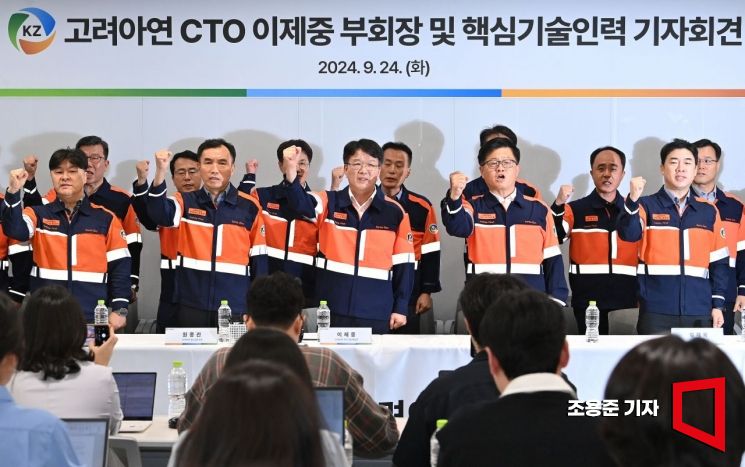 Lee Jejung, Vice Chairman of Korea Zinc, along with executives and employees, are shouting slogans opposing the public tender offer at a press conference regarding the management rights dispute with MBK and Young Poong, held on the 24th at Korea Zinc in Jongno-gu, Seoul. Photo by Jo Yongjun
An industry insider pointed out, "If product supply is disrupted due to the Korea Zinc management rights dispute, we will have no choice but to reduce Korea Zinc’s volume and switch to other suppliers," adding, "Regardless of which side wins the dispute, if key customers disappear, the company will suffer significant losses and shareholder value will greatly decline."
© The Asia Business Daily(www.asiae.co.kr). All rights reserved.



















