International oil prices plummeted more than 6% on Monday, the 28th (local time), as oil facilities were excluded from Israel's retaliatory airstrikes targeting Iran.
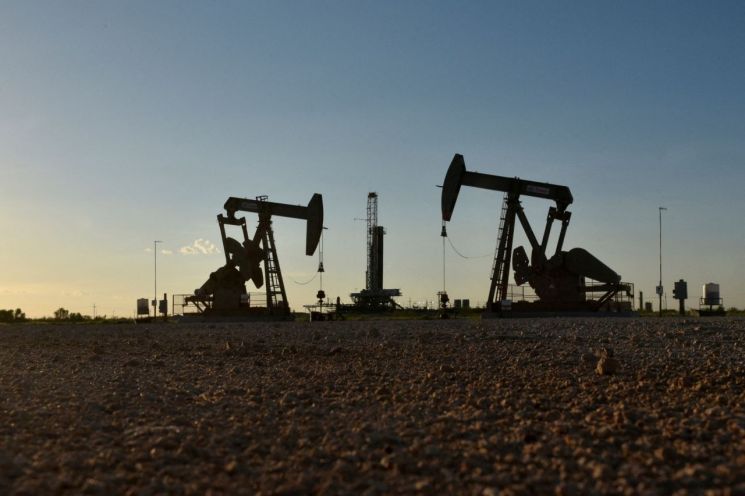
On that day, December delivery Brent crude futures on the London ICE Futures Exchange closed at $71.42 per barrel, down $4.63 (6.09%) from the previous session. The U.S. benchmark, December delivery West Texas Intermediate (WTI) crude, also closed at $67.38 per barrel, down $4.40 (6.13%) from the previous session. This marks the largest single-day drop since July 12, 2022 (-7.93%). It also fell to the lowest level in over a month based on closing prices.
This was due to a slight easing of Middle East geopolitical concerns that had been pushing oil prices up, coupled with renewed worries about demand contraction. On the early morning of the 26th, the Israeli military conducted retaliatory airstrikes against Iran’s ballistic missile launches, targeting only military facilities and excluding oil facilities. The risk of escalation between Israel and Iran, which the market had been concerned about, decreased, pulling oil prices down.
Bill Farren-Price, senior researcher at the Oxford Energy Institute, assessed that this was "due to the perception that retaliatory hostile actions between Israel and Iran have been restrained." Citigroup also stated in a report released that day, "Recent Israeli military actions are unlikely to affect crude oil supply," and lowered its Brent crude price forecast for the next three months from $74 to $70 per barrel. According to the U.S. Energy Information Administration (EIA), Iran accounts for up to 4% of global oil supply.
Additionally, global concerns about oversupply, including demand slowdown from China, have resurfaced. Goldman Sachs diagnosed that market attention is shifting from Middle East conflicts to oversupply concerns in 2025. Andy Lipow, president of Lipow Oil Associates, said, "With Israel, encouraged by the U.S., deliberately avoiding targeting oil facilities, the oil market is returning to an oversupply market," and predicted, "Oil prices will face downward pressure for the remainder of this year." He added that oil production is increasing not only in the U.S., Canada, and Brazil but also in smaller countries such as Argentina and Senegal.
However, geopolitical concerns from the Middle East could escalate again at any time. Iranian President Masoud Pezeshkian emphasized at a cabinet meeting the previous day, "We do not seek war," but stressed that Iran has the right to respond to Israel’s retaliatory attacks. Vivek Dhar, head of mining and energy commodities research at the Commonwealth Bank of Australia, said, "Despite Israel lowering the level of attacks on Iran, we doubt whether the proxies of Israel and Iran (Hamas and Hezbollah) can reach a ceasefire," and pointed out, "Direct conflict between Israel and Iran will continue."
© The Asia Business Daily(www.asiae.co.kr). All rights reserved.
![Clutching a Stolen Dior Bag, Saying "I Hate Being Poor but Real"... The Grotesque Con of a "Human Knockoff" [Slate]](https://cwcontent.asiae.co.kr/asiaresize/183/2026021902243444107_1771435474.jpg)
















