Yongsan-gu Opens Jeju Youth Hostel in 2017 for Affordable Use by Residents... Seongdong-gu Builds Healing Centers in Gangwon Yeongwol and Jeonnam Yeosu, Popular Among Residents... Mapo-gu Faces Opposition to Building Resident Resort in Incheon Ongjin-gun, Shifts to Lease Operation Instead
Yongsan-gu in Seoul has a community rest facility in Jeju.
Seong Jang-hyun, the mayor of Yongsan-gu, opened the Jeju Youth Hostel in April 2017. The purpose was to introduce a ‘new concept of universal welfare’ that combines rest, education, and experience for the residents. It was the first local government in the country to establish a community rest facility on Jeju Island.
The facility is located on a 11,422㎡ site and consists of a main building with one basement floor and three above-ground floors, totaling 4,125㎡ in floor area, and an annex with two above-ground floors and a floor area of 274㎡. The main building includes 45 rooms, seminar rooms, a restaurant, a karaoke room, and a billiard room. The rooms vary in size: 10-pyeong type (12 rooms), 15-pyeong type (6 rooms), 20-pyeong type (20 rooms), 25-pyeong type (6 rooms), and 28-pyeong type (1 room). The annex houses a snack bar, convenience facilities, and the management office.
Additional facilities include a tangerine experience farm, a jokgu court (also used as a badminton court), an outdoor deck, and a barbecue area. Customized services are provided not only for family tourists but also for students on school trips.
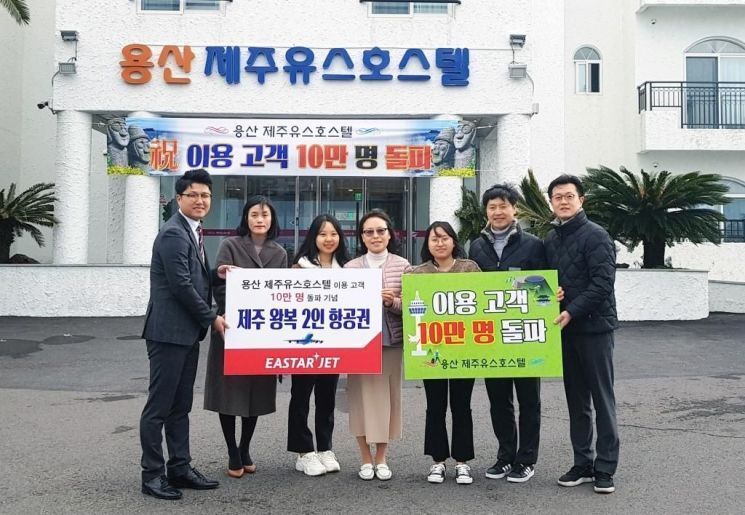
The district is known to have gained significant asset investment benefits as residents use the facility at prices lower than market rates, while real estate prices have risen considerably since the purchase.
Following this, other Seoul autonomous districts have competed to establish community rest facilities in local areas.
A representative district is Seongdong-gu. After being elected in the 6th local election, Jung Won-oh, the mayor of Seongdong-gu, built healing centers in Yeongwol, Gangwon Province, and Yeosu.
The Yeongwol Healing Center, opened in July 2016, is equipped with a camping site and tent area. The Yeosu Healing Center is a two-story building purchased from a closed school. Although it is somewhat distant, many residents use it, especially on weekends when it is fully booked.
It is particularly popular because residents can use it at an affordable cost of about 50,000 won per day.
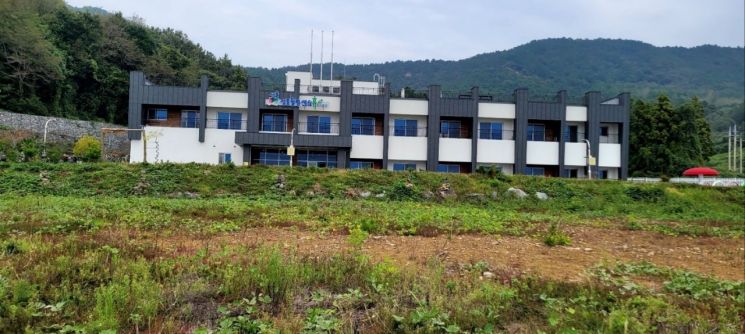
In this way, community rest facilities for Seoul residents have been steadily established in local areas.
Mapo-gu attempted to build a community rest facility including a convention hall in Gochang-gun, Jeollabuk-do during the 7th local election term, but the project was withdrawn amid concerns about the excessive construction cost of 38.7 billion won and low accessibility.
Due to these issues, Mapo-gu has prioritized fairness, objectivity, and transparency above all in selecting the site for the rest facility.
To this end, the district formed a dedicated team for the rest facility construction and, since early this year, requested site recommendations from seven sister cities including Namhae-gun, Gochang-gun, and Ongjin-gun, while also conducting a nationwide public contest, receiving a total of nine recommended sites.
Subsequently, through a review by the Rest Facility Site Selection Committee composed of 12 members including Mapo-gu council members and experts in architecture and real estate, five evaluation criteria?accessibility, ease of development, location environment, cost-effectiveness, and development potential?were assessed, and Ongjin-gun in Incheon Metropolitan City was selected as the final site.
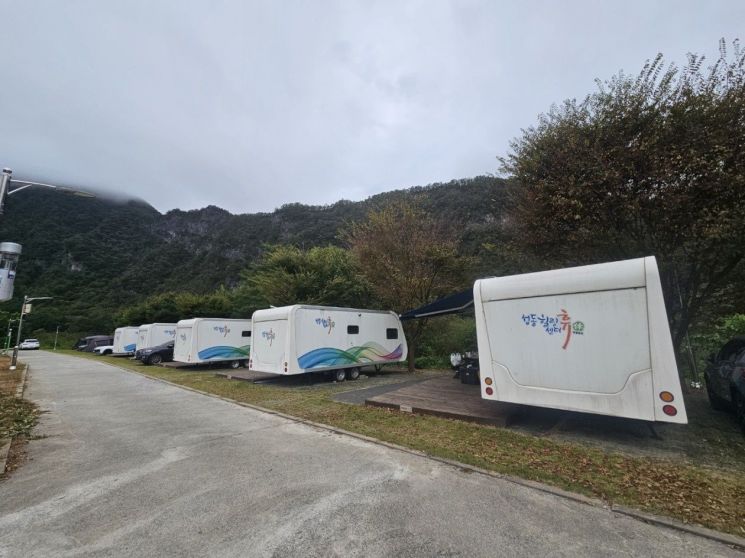
Ongjin-gun is a region with good accessibility, reachable within about an hour, and has future plans for land connection.
Ongjin-gun was expected to provide various administrative supports such as simplifying related consultations and permit procedures to ensure the rest facility project could proceed swiftly, allowing Mapo-gu residents to benefit quickly.
However, last week, the local Democratic Party issued a press release opposing the construction of the rest facility costing about 15 billion won and even raised suspicions of preferential treatment.
Accordingly, on the 23rd, the district held an emergency policy meeting and decided to change the ‘Mapo-gu Community Rest Facility Construction Plan,’ originally scheduled to start construction next year, to a lease-operation model.
Until now, the district had planned to establish camping facilities by 2025 where any Mapo-gu resident could enjoy rest at about 40% of the market price.
To prevent excessive land acquisition costs, the district transparently proceeded with related procedures such as land purchase at half the combined appraisal value determined by appraisal firms selected by both the seller and the district.
Additionally, instead of constructing buildings, the plan was to create a rest facility with camping facilities including glamping, as well as sports facilities such as soccer fields, swimming pools, badminton courts, and tennis courts, to provide a healing space in nature.
Despite these facts, the district expressed concern over the spread of baseless rumors regarding the site selection of the rest facility and stated that this decision was made to resolve unnecessary division and conflict.
Going forward, the district plans to gather residents’ opinions and reconsider detailed matters such as the location and usage methods of the rest facility, taking into account accessibility and convenience, and to promptly proceed with enabling residents to use the facility from next year after enacting relevant ordinances.
Park Kang-su, mayor of Mapo-gu, said, “The more difficult the economy, the more necessary it is to have healing facilities that any resident can use without burden,” adding, “Mapo-gu will continue to make every effort to discover and implement policies that can improve the quality of life and happiness of residents.”
© The Asia Business Daily(www.asiae.co.kr). All rights reserved.
![Clutching a Stolen Dior Bag, Saying "I Hate Being Poor but Real"... The Grotesque Con of a "Human Knockoff" [Slate]](https://cwcontent.asiae.co.kr/asiaresize/183/2026021902243444107_1771435474.jpg)


















