Emergency Meeting of Provincial Planning and Coordination Directors Chaired by Vice Minister
4.3 Trillion KRW Decrease Expected, Ministry of Economy and Finance to Provide Additional 2.1 Trillion KRW
Operation of 'Jibang Jaejeong Hyupryeok Jiwondan'... Consulting Support Provided
The government has urged local governments to actively identify and prioritize the use of available resources they hold, such as the Integrated Fiscal Stabilization Fund and net surplus funds, to respond to the decrease in local allocation tax. This comes as the local allocation tax received by local governments is expected to decrease by more than 2 trillion won due to a decline in national tax revenue.
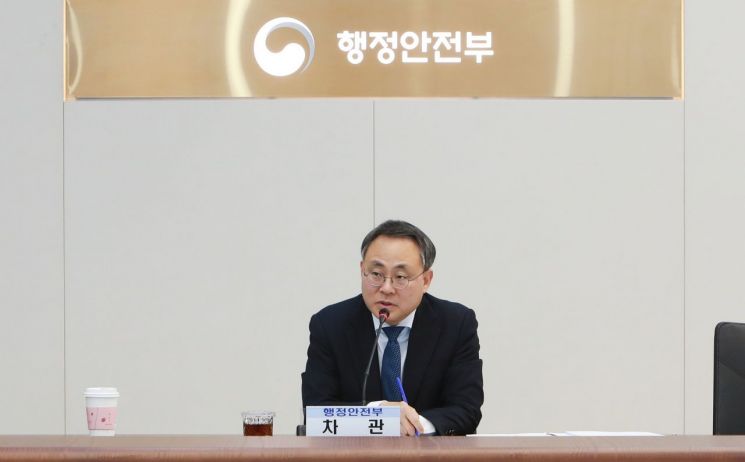
On the 28th, the Ministry of the Interior and Safety held an emergency meeting of planning and coordination office chiefs from provinces and cities, chaired by the vice minister, to discuss cooperation measures and support plans for local governments based on the announced adjustment plan for local allocation tax following the national tax re-estimation results.
Earlier, the government projected this year’s national tax revenue at 337.7 trillion won, which is 29.6 trillion won (8.1%) short of the revenue budget of 367.3 trillion won. Accordingly, the local allocation tax linked to domestic taxes is also expected to decrease by 4.3 trillion won.
However, the Ministry of Economy and Finance decided to allocate an additional approximately 2.1 trillion won by mobilizing other resources such as funds to support local finances. Initially, out of 66.8 trillion won in local allocation tax, 62.5 trillion won was scheduled to be allocated, but this measure will increase it to about 64.5 trillion won.
At the meeting, the Ministry of the Interior and Safety requested local governments to actively identify and first utilize available resources they hold, such as the Integrated Fiscal Stabilization Fund and net surplus funds, to respond to the decrease in local allocation tax. In particular, they emphasized the need for proactive expenditure restructuring, such as cutting budgets for unnecessary or non-urgent projects, and boldly reallocating budgets from projects that cannot be executed within the year or are delayed to those that can be executed.
It is planned to ensure that on-the-ground livelihood projects and support projects for vulnerable groups are not reduced or cut and are executed without disruption. The Ministry of the Interior and Safety also plans to actively prepare support measures such as government purchase of local bonds to respond if any local governments face difficulties despite efforts to utilize available resources.
To directly support the matters discussed that day, the Ministry of the Interior and Safety will also operate the "Local Finance Cooperation Support Group," led by the director of the Local Finance Bureau. The support group will grasp the status of available resources in local governments, monitor response situations, and closely consult with financial authorities and related ministries to resolve difficulties faced by local governments.
Vice Minister Ko Ki-dong of the Ministry of the Interior and Safety said, "Even in the situation of decreased local allocation tax, livelihood projects and regional economic revitalization projects must be executed without disruption through the use of available resources," adding, "The Ministry of the Interior and Safety will continue to devise support plans to resolve difficulties faced by local governments."
© The Asia Business Daily(www.asiae.co.kr). All rights reserved.

















