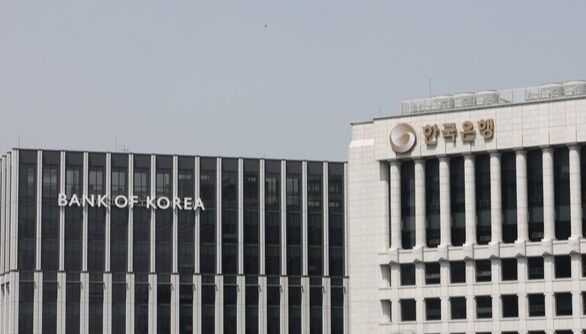
The Bank of Korea announced that it has successfully completed a project to improve cross-border payments.
On the 28th, the Bank of Korea announced that it had completed Project Mandala, which had been carried out since October last year in collaboration with the Bank for International Settlements (BIS) Innovation Hub Singapore Centre and the central banks of three countries (Australia, Malaysia, Singapore).
Project Mandala is a proof-of-concept (PoC) project aimed at automating cross-border payment systems to alleviate overlapping regulatory burdens by country, payment delays, and risks of transaction cancellations.
The Bank of Korea explained that the current cross-border payment system processes transactions across borders through multiple banks such as the paying bank, receiving bank, and foreign exchange bank, resulting in slow speed and high costs, which led to the initiation of this project.
It added that recently, as capital flow management (CFM) policies differ by country and anti-money laundering (AML) and counter-terrorism financing (CFT) regulations are being strengthened worldwide, the burden of regulatory compliance verification has been identified as a major friction point in cross-border payments, necessitating the search for solutions.
The Bank of Korea emphasized that as a result of the project, it confirmed that a system automating the regulatory compliance verification procedures redundantly performed by the paying bank, receiving bank, and others for a single transaction was implemented, improving the processing speed and transparency of cross-border payments.
In the Mandala system, when the paying bank inputs transaction information (transaction country, payer and payee, amount, payment method, etc.), it automatically identifies relevant policy and regulatory matters and generates a checklist. Following the checklist, the system verifies regulatory compliance for the transaction and then creates a certificate of compliance, which is delivered to the receiving bank.
Within the Mandala system, the receiving bank does not need to separately repeat the regulatory compliance verification procedures already performed by the paying bank.
For example, assuming a case where a Korean manufacturer acquires unlisted securities worth 1 million Australian dollars issued by an Australian supplier and transfers 500,000 Australian dollars by offsetting bonds and debts, the existing system requires many regulatory procedures, but in the Mandala system, most steps are processed automatically, making the transaction much faster and simpler, according to the Bank of Korea.
A Bank of Korea official stated, "Since the initial proof of concept for Project Mandala has been successfully achieved, if follow-up or linked projects are conducted in the future, it will be possible to review the expansion of the project scope, legal considerations, technical considerations, and commercialization potential."
© The Asia Business Daily(www.asiae.co.kr). All rights reserved.
![Clutching a Stolen Dior Bag, Saying "I Hate Being Poor but Real"... The Grotesque Con of a "Human Knockoff" [Slate]](https://cwcontent.asiae.co.kr/asiaresize/183/2026021902243444107_1771435474.jpg)
















