Junggi Ombudsman Promotes Improvement of 767 Local Ordinances Closely Aligned with Junggi and Small Business Operators' Field Needs
When small and medium-sized enterprises (SMEs) and small business owners use shared assets such as land and buildings owned by local governments, the lease fees or usage fees will be reduced by about 30-50%, and the number of installment payments will also be expanded to 12 times a year. In addition, indirect costs such as the 'Safety Management Deposit' imposed when constructing factories or business sites will be reduced, and the area of factory or business site land where waste storage facilities or warehouses can be built will be expanded.
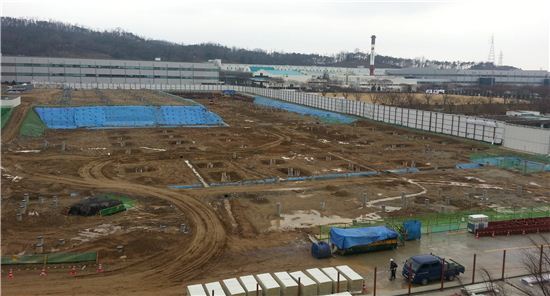 Factory site developed by a local government. The photo is not related to the article content.
 [Photo by Asia Economy DB]
Choi Seung-jae, the Small and Medium Business Ombudsman, announced on the 28th that he will promote regulatory innovation of local ordinances closely connected to the field for SMEs and small business owners together with 243 local governments nationwide. Since 2021 until last year, the SME Ombudsman has been working on improving about 3,000 regulatory provisions in 39 local ordinances through the 'SME and Small Business Owner Experience-Based Local Government Regulatory Innovation.'
This regulatory improvement focuses on regulations related to 'shared assets' and 'construction,' which are closely related to the management sites of SMEs and small business owners currently struggling with high interest rates, high prices, and high labor costs. It is expected that 767 regulatory provisions in ordinances (421 related to shared assets and 346 related to construction) will be improved in 180 local governments.
Local Government Shared Asset Usage and Lease Fees Reduced by 30-50%
First, the 'Shared Asset Management Ordinance' will be improved so that land, buildings, and other shared assets owned by local governments can be conveniently used for business activities at a low cost.
To revitalize the local economy, the lease fees for general assets can be reduced by ordinance to 30% or 50%, but some local governments did not specifically define the industries eligible for reduction, resulting in some local SMEs not receiving reductions. Therefore, the scope of lease fee reductions will be expanded to include production and research facilities installed and used by SMEs in manufacturing, construction, publishing, broadcasting, and telecommunications.
Also, if there is no basis for reducing lease fees for factories, regulations will be established. If the reduction conditions are set too high, the employment criteria will be lowered from 50 to 30 employees, and the local raw material procurement rate will be lowered from 50% to 30%, allowing more factories to benefit in the future.
The threshold for installment payments of usage and lease fees will also be lowered from 1 million won to 500,000 won, and the number of installment payments will be increased from up to 6 times a year to up to 12 times a year.
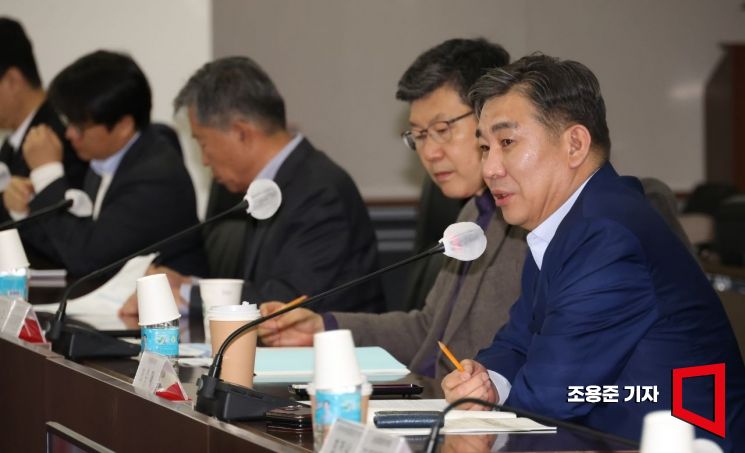
Factories in Industrial Areas with No Construction Suspension or Neglect Excluded from 'Safety Management Deposit' Requirement
Indirect cost burdens such as the 'Safety Management Deposit' imposed when installing or expanding factories and business sites will be reduced, and construction regulations that restrict land use will also be eased.
Factories in industrial areas and industrial complexes where construction suspension and neglect cases are almost nonexistent will be excluded from the requirement to deposit the 'Safety Management Deposit.' In addition, the deposit will be differentiated according to the size of the building, and the deposit burden will be gradually eased when constructing buildings exceeding 10,000 square meters of total floor area.
The area of temporary structures such as waste storage facilities or warehouses that can be installed on factory sites will be expanded from 100㎡ to 200㎡, and the criteria for securing public open spaces will be differentiated according to the building's use and area to maximize space utilization within limited factory sites. For factory and logistics facility sites, landscaping area standards will be relaxed to reduce landscaping cost burdens.
Related systems will be reorganized to ensure fair and transparent construction administration. The authority for preparing and managing the list of delegated architects was transferred to the provincial governors to ensure fairness, but some local ordinances still grant this authority to heads of basic local governments, which will be revised.
Furthermore, the qualifications and terms of members of construction-related committees will be clarified, and reappointment will be limited. Grounds for disqualification and recusal will be aligned with higher laws to establish a foundation for transparent operation of the Construction Civil Complaints Committee and Local Construction Committee.
Through this local ordinance regulatory improvement, it is expected to contribute to strengthening the competitiveness and promoting the growth of SMEs and small business owners by reducing the burden of shared asset usage and lease fees and the cost burden associated with new construction and expansion of factories.
Ombudsman Choi Seung-jae stated, "Since the total revenue from shared asset rental and usage fees collected by all local governments is about 3.3 trillion won, and the number of registered factories nationwide reaches 208,943, the effect of this shared asset and construction ordinance regulatory improvement is expected to be very significant," adding, "Following the shared asset and construction regulations, we plan to promote regulatory innovation of location-related local ordinances that inconvenience SMEs and small business owners by the end of the year."
© The Asia Business Daily(www.asiae.co.kr). All rights reserved.
![Clutching a Stolen Dior Bag, Saying "I Hate Being Poor but Real"... The Grotesque Con of a "Human Knockoff" [Slate]](https://cwcontent.asiae.co.kr/asiaresize/183/2026021902243444107_1771435474.jpg)
















