Delinquent Taxpayers with Monthly Income Exceeding 3 Million Won: 57 Individuals Targeted
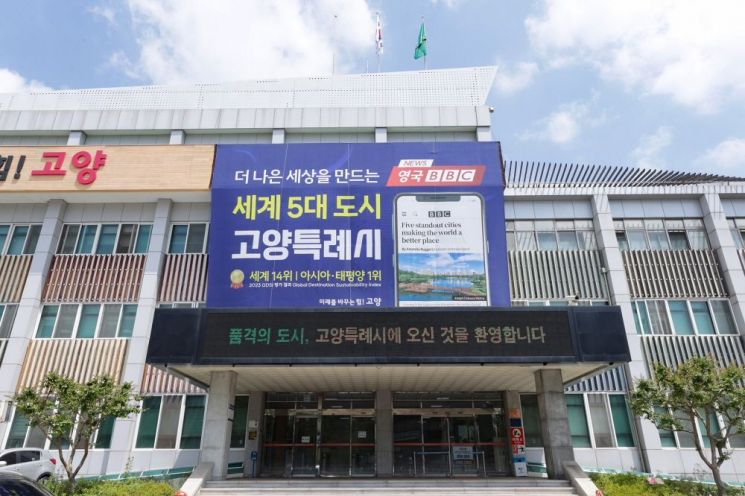
Goyang Special City, Gyeonggi Province (Mayor Lee Dong-hwan) announced on the 25th that it has sent wage garnishment pre-notification letters to high-amount and chronic defaulters of the environmental improvement charge in order to initiate wage garnishment measures.
In July, the city mailed wage garnishment pre-notification letters by post to the addresses of 848 defaulters regardless of their employment status. For those who still did not pay within the deadline, the city requested the National Health Insurance Service to verify their employment status.
Accordingly, considering the wage garnishment exemption threshold of 2.5 million KRW according to the national tax forced collection regulations, the city sent the wage garnishment pre-notification letters once again to high-amount and chronic defaulters deemed capable of payment to encourage voluntary payment before wage garnishment.
This time, the wage garnishment pre-notification letters were sent to 57 defaulters whose monthly salary exceeds 3 million KRW and whose total outstanding amount is 500,000 KRW or more.
The total outstanding amount of these individuals is 57.78 million KRW across 911 cases, with monthly salaries ranging from a minimum of 3.06 million KRW to a maximum of 10.32 million KRW. Among the 57 recipients, 32 earn between 3 million KRW and 4.5 million KRW per month, 16 earn between 4.5 million KRW and 6 million KRW, and 9 earn more than 6 million KRW.
The garnishable wage amount is the portion exceeding 2.5 million KRW; for salaries up to 5 million KRW, the amount exceeding 2.5 million KRW is garnished, and for salaries up to 6 million KRW, 50% of the monthly salary is garnished. When wages are garnished, a wage garnishment notice is sent to the defaulter’s workplace, and a certain amount is deducted from the defaulter’s salary to cover the outstanding debt. The city plans to implement stringent collection measures against defaulters who have regular income but lack the willingness to pay, thereby promoting tax payment awareness.
A city official stated, “We will conduct tailored collection activities and strong enforcement measures against defaulters,” adding, “It is more important for citizens to voluntarily pay their outstanding amounts than to rely on forced collection through wage garnishment.”
© The Asia Business Daily(www.asiae.co.kr). All rights reserved.

















