Purchased a House in Yangpyeong-dong During 2019 Multi-Home Regulations
Police Internal Investigation Initiated Following Yeongdeungpo-gu Office's Request
Recently, Moon Da-hye, the daughter of former President Moon Jae-in who caused controversy due to drunk driving, has been suspected of engaging in 'gap investment' when purchasing a house in Yangpyeong-dong, Seoul, during the period in 2019 when the government was rolling out various real estate policies to curb multi-home speculation and gap investments.
According to the 'Housing Acquisition Fund Procurement and Move-in Plan' submitted by Yeongdeungpo District Office to Koo Ja-geun, a member of the National Assembly's Planning and Finance Committee from the People Power Party, Moon purchased a house in Yangpyeong-dong, Yeongdeungpo-gu, in May 2019 for 760 million KRW. She reported 510 million KRW from real estate sale proceeds (sale of a villa in Gugi-dong), 20 million KRW in cash, and 230 million KRW in rental deposits, and checked the 'rental (jeonse/monthly rent)' item in the move-in plan section.
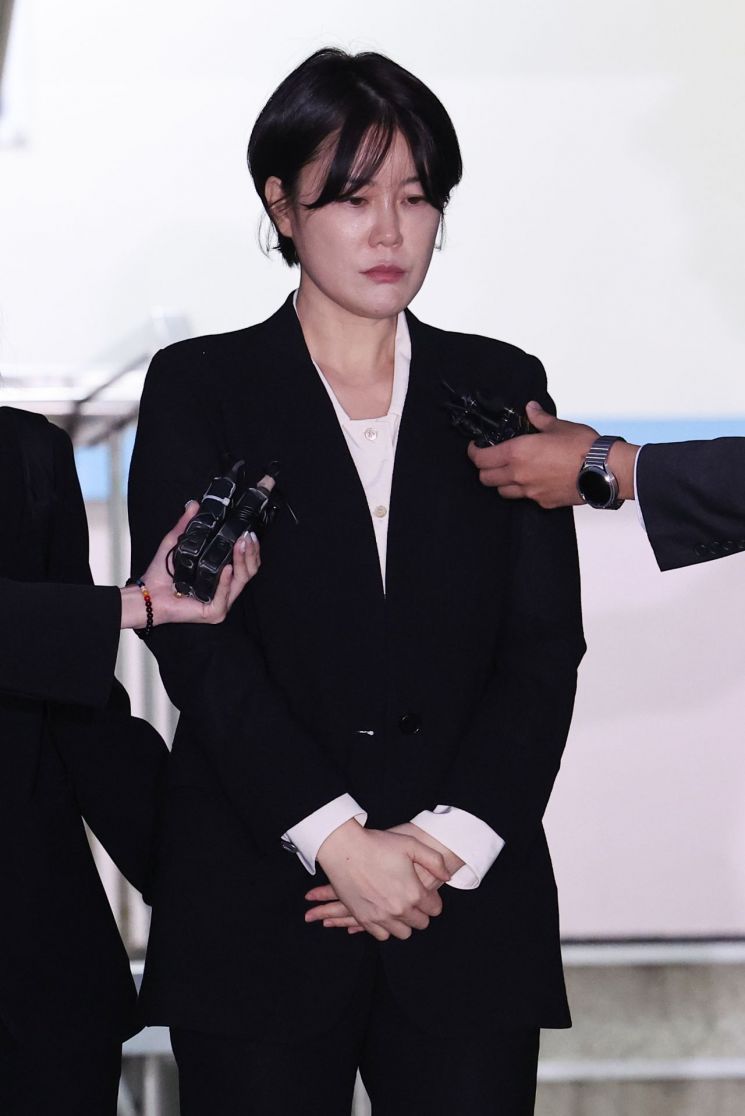 Dahye Moon, daughter of former President Moon Jae-in, who caused a drunk driving accident, is seen leaving the building after completing an investigation at the Yongsan Police Station in Seoul on the afternoon of the 18th, responding to questions from the press.
 [Photo by Yonhap News]
At that time, Moon, who was residing in Thailand and engaged in gap investment, purchased the Yangpyeong-dong house during the period when the Moon administration had declared war on multi-home speculation and gap investments. The keywords of the September 13, 2018 real estate measures later became 'comprehensive real estate tax' and 'gap investment ban.' Furthermore, on December 16, 2019, former President Moon recommended that Blue House officials at the secretary level or higher who owned two or more houses dispose of all but one.
At the time, the Blue House explained that this measure reflected President Moon's determination to lead by example for the success of real estate policies. In this context, Moon sold the Yangpyeong-dong house about 1 year and 9 months later, in February 2021, for 900 million KRW, earning a capital gain of 140 million KRW. Assemblyman Koo pointed out, "While increasing regulations daily to tell the public not to speculate, the president's child was profiting from gap investment and engaging in residence tech," adding, "It is also an issue to examine the unclear sources of funds Moon used for real estate after the gap investment."
Minister Yoo In-chon: "Overall illegal... will investigate"
Regarding the shared accommodations operated by Moon in Jeju Island and Yeongdeungpo, Seoul, Minister Yoo In-chon of the Ministry of Culture, Sports and Tourism, who attended the National Assembly audit that day, also stated, "I understand it is overall illegal." At the Culture, Sports and Tourism Committee's audit of the Ministry of Culture, Sports and Tourism held at the National Assembly, when Shin Dong-wook of the People Power Party asked if there were plans to investigate the allegations, Minister Yoo said, "In Jeju as well as officetels in Yeongdeungpo-gu, accommodation permits are not granted," adding, "Investigations by investigative agencies are underway and announcements will be made."
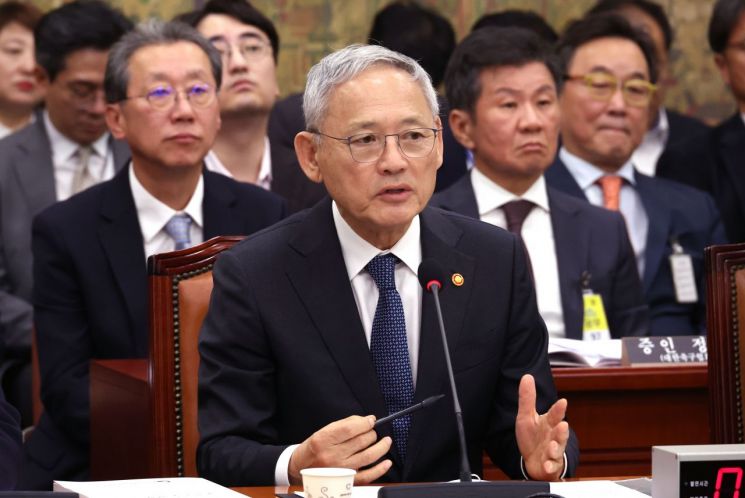 On the 24th, at the comprehensive audit of the Ministry of Culture, Sports and Tourism held at the National Assembly, Minister Yoo In-chon of the Ministry of Culture, Sports and Tourism is responding to questions from lawmakers.
 [Photo by Yonhap News]
Currently, Moon is suspected of illegally operating lodging businesses with a detached house in Hallim-eup, Jeju, and an officetel in Yeongdeungpo-gu, Seoul. To operate shared lodging businesses like Airbnb domestically, registration as a 'tourist accommodation business,' 'rural homestay business,' 'foreign tourist urban homestay,' or 'hanok experience business' is required. Moreover, under current law, officetels are designated as office facilities and cannot be used for lodging businesses.
To operate lodging businesses, facilities and equipment must comply with the Public Health Act, and a public hygiene business report must be filed with the local district office. Accordingly, Jeju City and Yeongdeungpo District Office have requested police investigations, and the Yeongdeungpo Police Station has initiated an internal investigation. If proven guilty of illegally operating lodging businesses, penalties under the Public Health Management Act include imprisonment for up to two years or fines up to 20 million KRW.
© The Asia Business Daily(www.asiae.co.kr). All rights reserved.
!["The Woman Who Threw Herself into the Water Clutching a Stolen Dior Bag"...A Grotesque Success Story That Shakes the Korean Psyche [Slate]](https://cwcontent.asiae.co.kr/asiaresize/183/2026021902243444107_1771435474.jpg)

















