Pollsters Who Missed 2016 and 2020 US Election Results
Addressing Undervaluation of Trump and Seeking Solutions
Harris-Trump Polls Show Tight Race Within Margin of Error
With the U.S. presidential election just ten days away, Democratic candidate Vice President Kamala Harris and Republican candidate former President Donald Trump are locked in an ultra-close race within the margin of error in various polls. There has been criticism in the past regarding polls that failed to predict the actual results in the 2016 and 2020 elections, raising significant interest in whether polls can achieve accuracy in this year’s election.
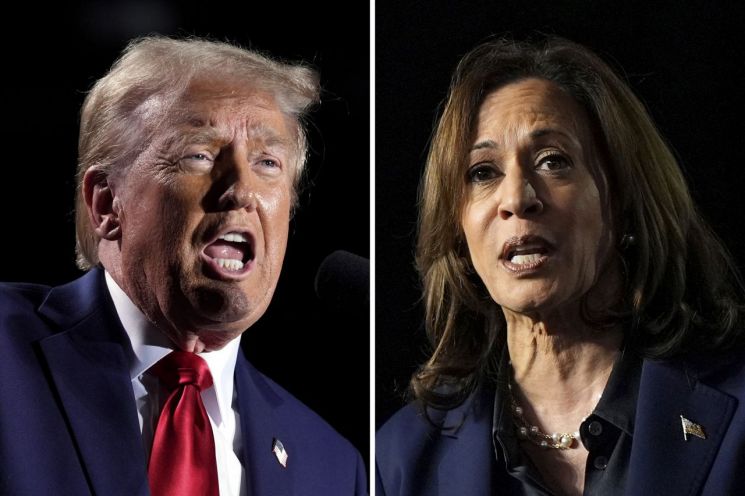 Former U.S. President and Republican presidential candidate Donald Trump (left in photo) and Democratic candidate Vice President Kamala Harris [Image source=AP Yonhap News]
Major U.S. media outlets such as The Wall Street Journal (WSJ) and The New York Times (NYT) recently reported that polling firms have been striving to improve the accuracy of their surveys based on experiences from previous elections. The headlines of related articles expressed both hope and concern, asking, "Will this year’s polls be wrong again?"
The reason U.S. media are so focused on poll accuracy is due to the discrepancies between polls and actual results in the 2016 and 2020 elections. In 2016, the electoral college polls were off, and in 2020, nationwide polls predicted the opposite outcome, causing confusion. Both elections featured tight races, and later analyses suggested that factors overlooked by polling firms influenced the election results.
According to an NYT analysis of an average of about 1,000 polls conducted in the U.S., the national average margin of error from 1988 to 2020 was 2.3 percentage points. State-level polls have had an average error of 3.1 percentage points since 2000. In 2016 and 2020, there was a tendency to underestimate support for former President Trump.
Polling firms focused on identifying problems after their surveys significantly diverged from election outcomes in the two previous elections. In particular, they discovered that they had underestimated support for former President Trump during the polling process and have worked to improve this. They adjusted for voters’ education levels, considering that many Trump supporters do not have a college education.
They also sought changes recognizing that many Trump supporters distrust polls and may not respond accurately. The underestimation of white and elderly voter proportions led to an overestimation of President Joe Biden’s support in 2020, prompting the development of measures to address this issue.
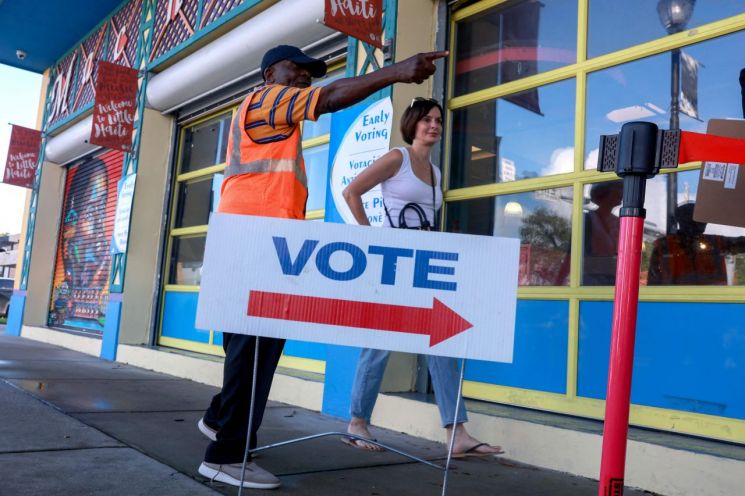
In addition to telephone surveys via landlines and cell phones, polling firms are adopting various methods such as online surveys and real-time interviews. They are also adjusting respondent proportions to more accurately reflect the demographic characteristics of the electorate.
However, there are ongoing criticisms about whether these methods are being properly implemented. John Krosnick, a political scientist at Stanford University, described the use of unproven new online sampling methods as "heading toward a bigger disaster." Courtney Kennedy, a team leader at the Pew Research Center, said, "The polling industry is trying to assure that it will not underestimate former President Trump’s support," but added, "They are working to fix errors, but there is no magic cure for this problem."
Meanwhile, ahead of this year’s election, various polls show Vice President Harris and former President Trump in a tight race. According to a presidential poll conducted by U.S. economic media Forbes and polling firm HarrisX from November 21 to 22, surveying 1,244 likely voters nationwide and released on the 23rd (with a margin of error of ±2.5 percentage points), former President Trump led Vice President Harris 51% to 49%. In a survey conducted by the same firm last month, Harris led by 4 percentage points. The British magazine The Economist predicted that former President Trump would secure 276 electoral votes, surpassing Vice President Harris’s 262, and win the election.
© The Asia Business Daily(www.asiae.co.kr). All rights reserved.
![Clutching a Stolen Dior Bag, Saying "I Hate Being Poor but Real"... The Grotesque Con of a "Human Knockoff" [Slate]](https://cwcontent.asiae.co.kr/asiaresize/183/2026021902243444107_1771435474.jpg)












