Tensions Rise After 2020 Galwan Valley Bloodshed Incident
China and India, which have been engaged in armed conflicts for years in the Himalayan border region, have agreed on an agreement regarding military patrols in the area, BBC reported on the 21st (local time).
According to the report, Vikram Misri, India's Deputy Foreign Minister, stated in a press release that "(both countries) have agreed to separate and resolve the 'border area issues' that occurred in 2020," and announced, "China and India have decided to resume patrols along the Line of Actual Control (LAC) in the border area." A senior Indian officer said that the armies of both sides plan to patrol the disputed border area according to an agreed schedule to avoid clashes.
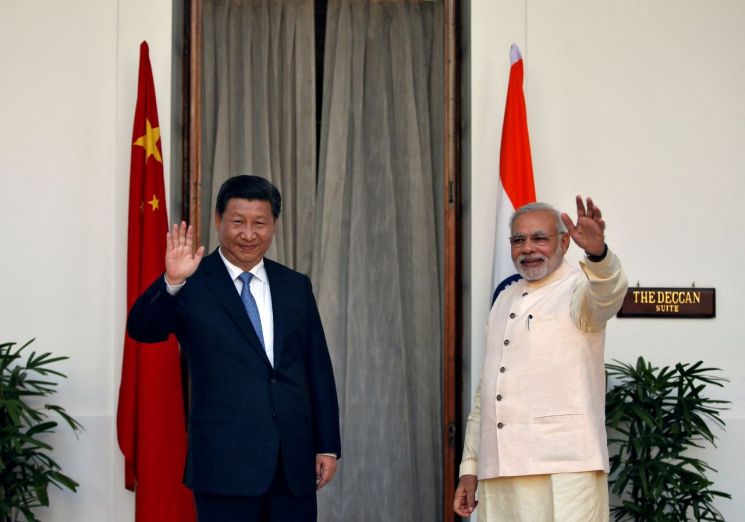
The 'border dispute' mentioned by Deputy Minister Misri refers to the bloody clash between Indian and Chinese troops near the Galwan Valley in the Ladakh region in 2020. At that time, hundreds of soldiers from both countries armed with sticks and clubs clashed, resulting in the deaths of 20 Indian soldiers and 4 Chinese soldiers. Border disputes continued in 2021 and 2022, and both countries have intensified tensions by concentrating fighter jets and tanks in the area.
One of the main reasons for the frequent disputes between the two countries is their vast territories and the geographical peculiarities of the border region. BBC pointed out, "The fundamental cause of the dispute between the two countries is the 3,440 km-long border," adding, "There are rivers, lakes, and snow-covered mountains along the border, causing the boundary line to frequently change, leading soldiers from both sides to encounter each other at multiple points and resulting in clashes."
Subrahmanyam Jaishankar, India's Foreign Minister, emphasized, "Only today have we finally reached an understanding of each other," and added, "We have always pondered the question of how the rest of the relationship could develop without peace and tranquility." Former Indian officer and border region commander Dipendra Singh Hooda evaluated, "Both sides need to build new trust, but at least the deadlock has been resolved."
This announcement came a day before Indian Prime Minister Narendra Modi left for Russia to attend the BRICS summit on the 22nd. Indian officials pointed out that this agreement increases the likelihood of a bilateral meeting between Prime Minister Modi and Chinese President Xi Jinping separately from the BRICS summit. If this bilateral meeting takes place, it will be their first meeting in four years since 2020.
Meanwhile, Russia, the BRICS chair country this year, will host the BRICS summit in Kazan for three days starting on the 22nd. BRICS is an alliance of emerging economies led by Brazil, Russia, India, China, and South Africa, serving as an anti-Western economic bloc countering the G7. The theme of this summit is "Strengthening Multilateralism for Fair Global Development and Security." With 36 countries and 6 international organizations participating, the Kremlin announced that Russian President Vladimir Putin plans to hold bilateral meetings with almost all leaders attending this event.
© The Asia Business Daily(www.asiae.co.kr). All rights reserved.
![Clutching a Stolen Dior Bag, Saying "I Hate Being Poor but Real"... The Grotesque Con of a "Human Knockoff" [Slate]](https://cwcontent.asiae.co.kr/asiaresize/183/2026021902243444107_1771435474.jpg)
















