A Pair of Giant Pandas Recently Arrived in the US
China Demands High Fees for Lending Pandas
Contract Includes Clause for Cancellation if Regulations Are Violated
Recently, a pair of giant pandas arrived at the National Zoo in Washington, drawing attention, while The New York Times (NYT) criticized China's panda diplomacy. On the 19th (local time), NYT reported on five demands China makes in exchange for lending pandas. Contracts related to pandas are kept highly confidential, but NYT obtained documents concerning the pandas at the National Zoo in Washington and the San Diego Zoo to verify the contract details.
NYT stated, "Compared to past contracts, American zoo administrators are increasingly ceding more authority to the China Wildlife Conservation Association." This phenomenon occurs because China holds a dominant position in panda diplomacy.
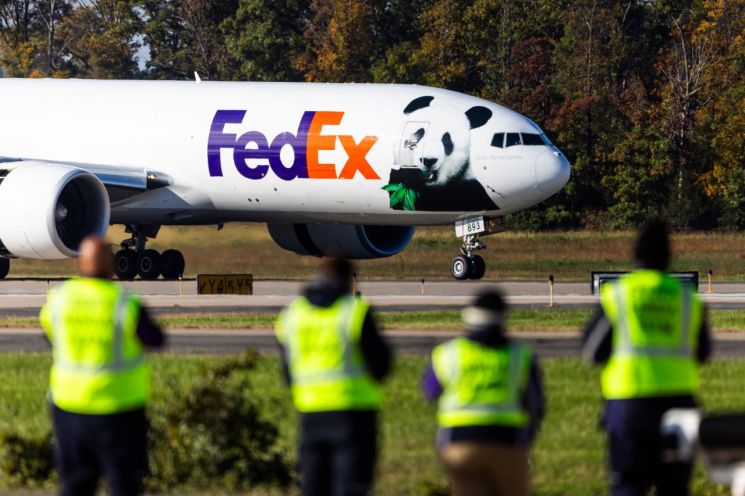 A pair of giant pandas recently arrived at the National Zoo in Washington, drawing attention, while The New York Times (NYT) criticized China's panda diplomacy.
 [Photo by EPA·Yonhap News]
According to the report, in the case of the San Diego Zoo, administrators cannot discuss panda diseases, deaths, or other significant issues without first consulting Chinese experts. Even when attempting to disclose related information to the media, prior approval from China is required. The zoo reportedly pays an annual fee of $1.1 million (approximately 1.5 billion KRW) to lease the pandas. The China Wildlife Conservation Association also prohibits disclosing this cost.
The association specifies in the contract that commercial terms such as 'lease,' 'rental agreement,' or 'contract' must not be used. Accordingly, the Washington Zoo now refers to what was previously called a 'rental' as a 'joint research and breeding agreement.' Additionally, the zoo must bear the costs of Chinese panda experts traveling regularly to the U.S. to provide advice. NYT noted that the contract states, "The U.S. must pay the experts directly in cash or by other means."
Live video is also restricted. The contract between the San Diego Zoo and China states, "Only approved video footage or images may be displayed." Last year, footage showing the Memphis Zoo's panda Lele dying and another panda, Yaya, in poor condition sparked controversy.
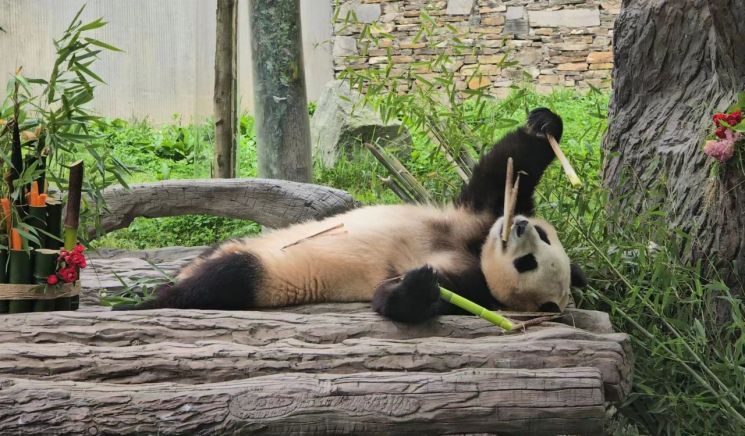 The giant panda 'Fubao,' returned to China last April, was unveiled to the public on June 12 at the Sichuan Panda Base after about two months.
 [Photo by Yonhap News]
Furthermore, the China Wildlife Conservation Association can terminate the contract for various reasons and recall the pandas to China at any time. Reasons for recall may include unauthorized public disclosure of the pandas' condition, improper feeding management, or health issues, according to NYT. Previously, Fubao, who was much loved domestically before returning to China, faced ongoing health concerns, but China released edited videos showing Fubao doing well. However, among domestic fans, there were suspicions that the videos were staged.
© The Asia Business Daily(www.asiae.co.kr). All rights reserved.
![Clutching a Stolen Dior Bag, Saying "I Hate Being Poor but Real"... The Grotesque Con of a "Human Knockoff" [Slate]](https://cwcontent.asiae.co.kr/asiaresize/183/2026021902243444107_1771435474.jpg)

















