The world's economic weakness has been identified as 'fragile confidence.' While economic activities in major countries, including the United States, are showing relatively steady levels, confidence indicators reflecting the sentiment of economic agents continue to lag. The rapidly growing political uncertainty ahead of the U.S. presidential election in November and geopolitical tensions are cited as the underlying reasons. The International Monetary Fund (IMF) is expected to release an update on the global economic outlook this week.
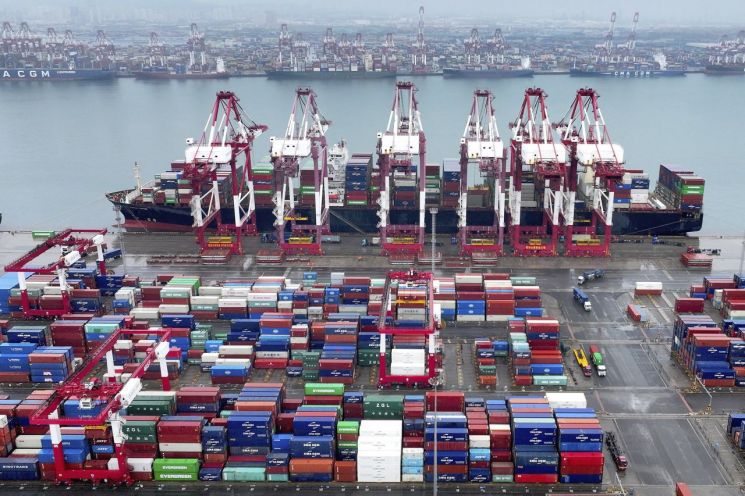
The think tank Brookings Institution revealed this in its report titled "TIGER Update: Calm on the Surface, Turbulence Below," released on the 20th (local time). The TIGER index tracks the global economic recovery based on key indicators such as GDP, stock prices, and trade of major countries.
As of July, the composite index stood at 5.425, slightly down from the previous month (5.913) but up from the same month last year (3.852). However, confidence indicators among economic agents remained negative at -1.082. Eswar Prasad, a senior fellow at the Brookings Institution and author of the report, pointed out, "The global economy is gaining growth momentum but remains weak and fragmented. It is mainly driven by the strong performance of the U.S. economy," adding, "Corporate and consumer confidence worldwide is fragile."
This is analyzed as a reflection of political uncertainty ahead of the U.S. presidential election in November, the prolonged Ukraine war, and geopolitical instability originating from the Middle East. As a result, confidence among key economic agents such as major corporations and households has declined. The report noted, "The fragmentation of the global economy is related to a significant gap between growth momentum and outlook," and "Although financial markets have improved and stock markets are favorable in some countries with weak growth prospects, private sector confidence is generally declining."
By country, the U.S. and India are running in so-called 'high gear' according to the indicators, showing a boom, while other advanced economies and most emerging economies showed sluggish performance. However, even in the U.S., where expectations for a soft landing are growing, consumer confidence has deteriorated despite recent positive news such as easing inflation, rising stock markets, and the Federal Reserve's initiation of interest rate cuts.
The report stated, "Surprisingly, despite these positive news, consumer confidence reflects dissatisfaction with the economic situation and is becoming a major issue in the upcoming election," adding, "The fiscal deficit problem, expected to worsen further depending on election pledges, poses a risk to macroeconomic stability." Locally, concerns are pouring in that regardless of who wins the November election, fiscal issues are bound to worsen during the implementation of campaign promises.
In Europe, economic powerhouses Germany and France have not escaped recession concerns. The report particularly pointed out that the German economy is struggling due to high energy costs, aging industrial infrastructure, and eroded productivity. Germany is expected to experience two consecutive years of negative growth for the first time since 2002-2003. France, in a hung parliament state, is also feared to face increased economic and political instability due to fiscal deficit concerns.
Meanwhile, Japan ended its long-standing negative interest rate policy earlier this year by raising rates, but this move was evaluated as having little effect in stimulating household consumption. China, the world's second-largest economy, has seen rallies in stock markets through recent stimulus measures, but the report diagnosed that these measures alone are insufficient to overcome deflationary pressures caused by weak domestic demand.
Researcher Prasad emphasized, "Household consumption and private corporate investment remain lukewarm, and private sector confidence has also been hit due to unclear policy directions from the Chinese government," adding, "Fundamental reforms alongside restoring private confidence are essential to get the economy back on track."
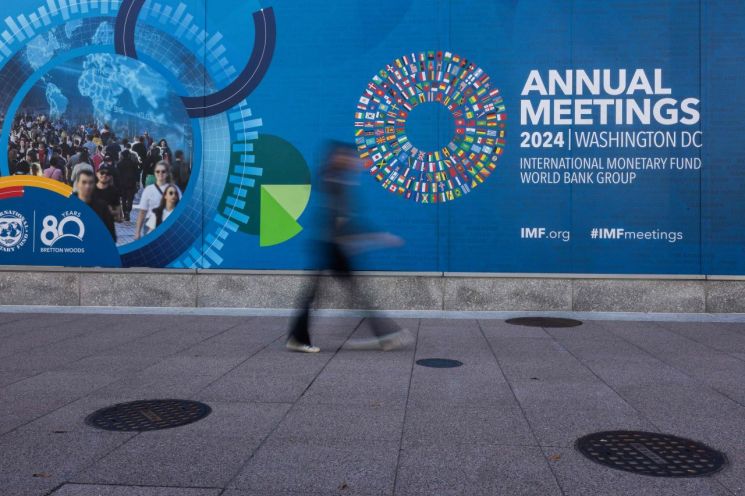
This diagnosis has attracted attention as it was released ahead of the IMF and World Bank annual meetings held this week in Washington, D.C. Recently, IMF Managing Director Kristalina Georgieva warned, "The future looks difficult due to the unforgiving combination of low growth and high debt." The IMF is also scheduled to update the World Economic Outlook (WEO) report on the 22nd. The July report had projected growth of 3.2% this year and 3.3% next year.
On the same day, Bloomberg News also diagnosed that the fault line in the global economy has shifted from inflation to politics and debt. The news agency reported, "The economic outcomes of the world economy will vary dramatically depending on the outcome of the U.S. presidential election," and noted rising tensions due to surging government debt, deepening Middle East conflicts, and the prolonged Ukraine war.
Bloomberg Economics projected the global economic growth rate at 3% for this year. However, it forecasted that if the Middle East war intensifies, pushing oil prices above $100 per barrel and triggering risk-averse moves in financial markets, the fourth-quarter growth rate could be cut by 0.5 percentage points from the current forecast.
© The Asia Business Daily(www.asiae.co.kr). All rights reserved.
![Clutching a Stolen Dior Bag, Saying "I Hate Being Poor but Real"... The Grotesque Con of a "Human Knockoff" [Slate]](https://cwcontent.asiae.co.kr/asiaresize/183/2026021902243444107_1771435474.jpg)

















