CDMO Forecasted to Outgrow Pharmaceuticals
SAMBA's 'World No.1' Production Capacity Projects Annual Sales of 4 Trillion KRW
Traditional Pharma Firms Like Daewoong Bio, ST Pharm, Hanmi Join In
Contract Development and Manufacturing Organization (CDMO) is emerging as a new growth engine in the domestic pharmaceutical and bio industries. Compared to new drug research and development (R&D), CDMO is expected to have greater growth potential and offers high efficiency relative to capital investment. As a result, not only large corporations aiming to enter the bio industry but also existing pharmaceutical and bio companies are actively entering the CDMO market.

Celltrion recently announced its entry into the CDMO business, stating, "We will establish a wholly-owned subsidiary within this year and begin full-scale facility expansion and sales activities starting next year." It is known that they plan to invest trillions of won from next year to build a large factory with a production capacity of 180,000 liters.
The bio industry is particularly regarded as an industry where the capabilities of contract manufacturers are crucial. Since biopharmaceuticals are administered to the human body, they require high quality. Even if R&D and clinical trials are successfully completed, production issues can prevent approval. This is why global big pharma companies increasingly prefer to outsource production to CDMOs with high-quality capabilities rather than taking on risks through in-house manufacturing.
For this reason, CDMO is expected to have higher growth potential than the general bio industry. Market research firm Frost & Sullivan forecasts that while the global biopharmaceutical market will grow at an average annual rate of 9.0% from 2023 to 2029, the biopharmaceutical CDMO market is expected to grow from $19.7 billion (approximately 27 trillion won) to $43.9 billion (approximately 60 trillion won) during the same period, at an average annual growth rate of 14.3%. Additionally, a policy-driven positive factor is the proposed Biosecurity Act in the U.S. aimed at regulating WuXi Biologics, a major Chinese CDMO. Expectations are rising that Korea, which maintains a friendly relationship with the U.S., will benefit from this legislation once it passes.
 A bird's-eye view of Lotte Biologics' Incheon Songdo Bio Campus. Starting with the completion of Plant 1 (center) in 2025, the goal is to complete Plant 2 (right) in 2027 and Plant 3 in 2029.
 [Photo by Lotte Biologics]
Among domestic companies, Samsung Biologics is by far the strongest in the CDMO sector. Having completed up to its 4th plant, it has secured the world's largest production capacity of 784,000 liters. In terms of quality, it has obtained over 300 manufacturing approvals, including 39 from the U.S. Food and Drug Administration (FDA), and has raised its batch success rate to 99%, continuing its achievements. Following the industry's first annual sales of 3 trillion won in 2022, it is expected to surpass 4 trillion won this year, reflecting these successes in its performance.
In this growth trend, not only Celltrion but also existing large corporations and traditional pharmaceutical companies are challenging entry into the CDMO market. Lotte Biologics is constructing a 120,000-liter production plant in Songdo, Incheon, aiming for operation by 2027. This will be its second production base following the U.S. Syracuse plant acquired from Bristol-Myers Squibb (BMS), with plans to complete the 2nd and 3rd plants by 2029 to increase production capacity to 400,000 liters. SK Group is also nurturing SK Pharmteco, and SK Bioscience recently acquired IDT Biologika, a German vaccine and toxin CDMO company.
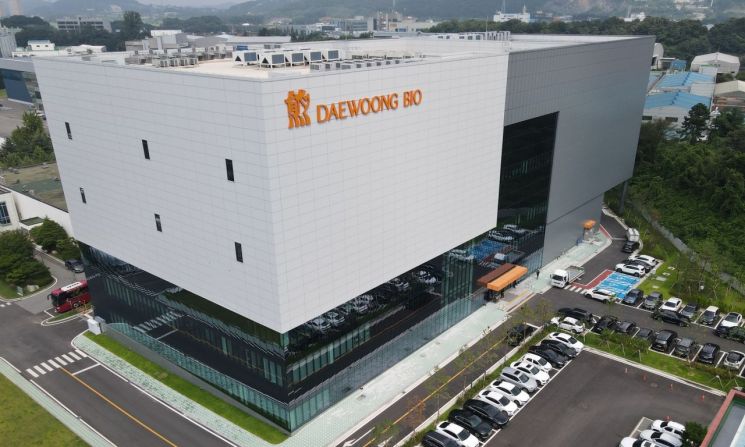
Daewoong Group is developing Daewoong Bio, one of its affiliates, as a production-specialized company. It recently completed the Hyangnam Bio Plant in Hwaseong, Gyeonggi Province, announcing its entry into the microbial-based biopharmaceutical CDMO sector. The plan is to obtain FDA Good Manufacturing Practice (GMP) certification by 2027 and expand globally. Dong-A Socio Holdings is also expanding its CDMO business through ST Pharm, and Hanmi Pharmaceutical has announced plans to enter the CDMO market using its bio plant in Pyeongtaek, Gyeonggi Province, capable of producing microbial biopharmaceuticals.
However, there are concerns that companies that have developed new drugs so far may face significant risks when entering the CDMO business. CDMO requires clients to outsource production, but it is not easy to receive orders from companies that were previously competitors. This is why Celltrion is entering the industry through a subsidiary, and traditional pharmaceutical companies are also operating CDMO businesses through separate entities such as ST Pharm and Daewoong Bio.
Jung Yoon-taek, head of the Pharmaceutical Industry Strategy Institute, analyzed, "Due to potential compliance issues with competitors, Samsung Biologics created a separate entity, Samsung Bioepis, to enter the biosimilar business. Establishing subsidiaries and thoroughly separating the CDMO and R&D divisions to strengthen management systems will be key to gaining client trust and determining success."
© The Asia Business Daily(www.asiae.co.kr). All rights reserved.



















