Professor Han Mei, Writer Han Kang's Representative Works Detailed Introduction
As the first Asian woman to receive the Nobel Prize in Literature, Han Kang's works were detailedly introduced by a Chinese scholar who said, "Han Kang's works possess a mysterious power."
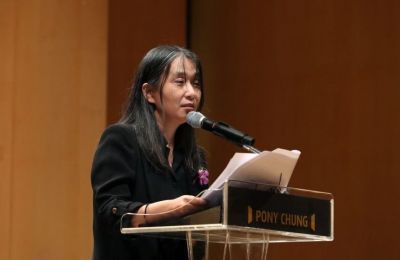
On the 20th, the Chinese weekly magazine Caixin published a critique by Han Mei, a professor at the School of Asian Studies, Beijing Foreign Studies University. Professor Han stated, "Han Kang surprised many by becoming the first Asian female writer to win the Nobel Prize, which seemed to indicate a change in the Nobel Prize in Literature," but emphasized, "However, upon closer examination, Han Kang's award is by no means a coincidence." He added, "At only 54 years old this year, she is truly a 'junior' compared to the average age of 65 for past Nobel laureates, but her achievements over 30 years of literary activity are not far behind."
Professor Han introduced Han Kang's background, including her birth, family environment, literary debut, and detailed the content and implications of her representative works such as The Vegetarian and Human Acts. Regarding Han Kang's representative work The Vegetarian, he described it as "a question about the complex struggles of humans," and introduced it as "revealing the predicaments and wounds Koreans have experienced in family and society, as well as their unhappiness and pain, with the meticulousness and sensitivity unique to a female writer."
He explained, "Han Kang's depiction of women and the contradictions of the world is particularly profound, partly because she is a woman and it is easier for her to empathize with the female perspective, but it is difficult to categorize Han Kang's novels strictly as women's literature based on this. The men she portrays also experience frustration and near collapse in their workplaces and families. Objectively, Han Kang has already transcended attention to gender differences."
Regarding the work Human Acts, which deals with the May 18 Gwangju Democratization Movement, he evaluated, "Han Kang broke the tradition of viewing this event from a political angle and tried to interpret the nature of the incident starting from a more universal humanity. She focused on the memory of the wounds and the ongoing pain this event left for everyone."
Professor Han said, "Han Kang's novels have relatively simple plots, relatively loose structures, and a rather somber tone, so they may not seem very captivating," but added, "However, these novels possess a mysterious power that makes readers unable to let go and leaves a deep impression even after closing the book."
He expressed, "Han Kang's literature has been constantly evolving, and the 'young' Han Kang is still growing. Han Kang's Nobel Prize in Literature signifies that Korean literature, and more broadly Asian literature, is gaining attention from the Western literary world. I believe more Asian writers will enter the view of Western readers."
 Portrait of Korean novelist Han Kang painted by Niklas Elmehed, Nobel Prize laureate portrait artist.
 [Image source=Nobel Foundation]
On the 10th, Han Kang became the first Korean to win the Nobel Prize in Literature. The Swedish Academy highly praised Han Kang's works, which confronted pain and violence, for possessing global universality beyond Korea. The Academy described Han Kang's literary world as "a powerful poetic prose confronting historical trauma and revealing the fragility of human life," explaining the reason for the selection. They added, "Han Kang directly confronts historical trauma and invisible domination in her works, revealing the fragility of human life. She has a unique perception of the connection between body and soul, the living and the dead, and has become an innovator of modern prose with her poetic and experimental style."
© The Asia Business Daily(www.asiae.co.kr). All rights reserved.


















