Hana Financial Research Institute Publishes '2025 General Industry Outlook' Report
Improvement in Semiconductor, Secondary Battery, and Retail Performance
Prolonged Weakness in Steel, Petrochemicals, and Construction
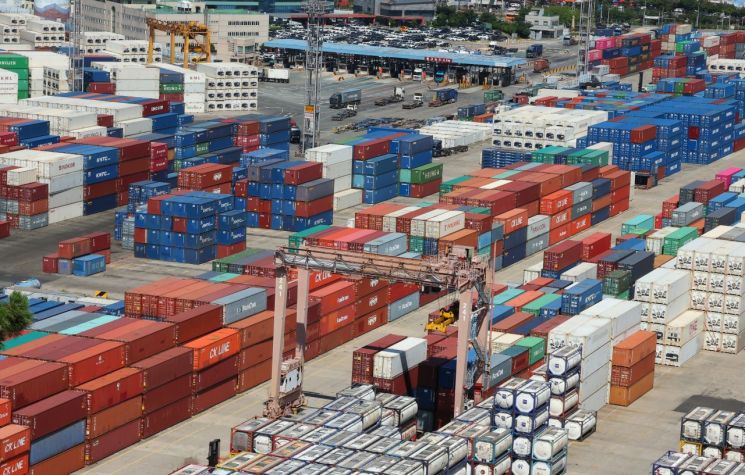
Hana Financial Research Institute forecasted that the sales of high value-added products such as semiconductors will increase in 2025 as macroeconomic conditions stabilize. However, it anticipated that the growth rate will weaken compared to this year due to accelerated aging and a slowdown in demand from major export markets.
On the 20th, Hana Financial Research Institute announced the publication of the '2025 General Industry Outlook' report containing these insights.
The institute projected that domestic demand and service sectors, which underperformed this year, will slightly recover in 2025 as real purchasing power improves and consumer sentiment revives following interest rate cuts. However, it analyzed that export growth rates will decline compared to this year due to weakening external demand and base effects, increasing growth slowdown pressures centered on export industries such as semiconductors.
By major industries, semiconductors, secondary batteries, telecommunications, and retail distribution are expected to see performance improvements, while automobiles, shipping, and petroleum sectors will experience growth deceleration, and steel, petrochemicals, and construction sectors will continue to struggle.
Hana Financial Research Institute identified "polarization, the uncomfortable guest brought by low growth" as the key issue for 2025.
It observed that the low-growth trend in the domestic economy after the pandemic has deepened compared to the past, with capital and manpower concentrating only in some sectors with growth opportunities, thereby expanding polarization across society. In other words, it pointed out that the biggest problem currently facing domestic industries is the "Ouroboros dilemma," where low growth causes polarization and polarization further intensifies low growth.
The Ouroboros refers to a snake biting its own tail, and the "Ouroboros dilemma" describes a contradictory situation arising from an endlessly repeating self-circulating structure.
Hana Financial Research Institute diagnosed the intensifying polarization phenomenon from three perspectives: industry, companies, and consumption.
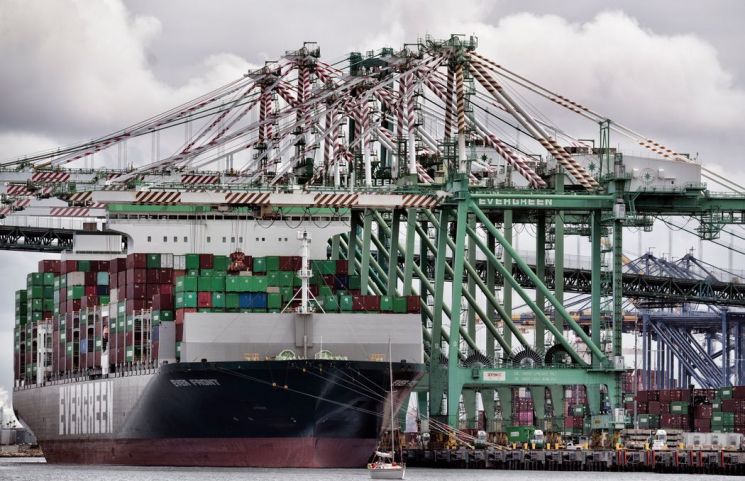
First, regarding industrial polarization, growth is expected to concentrate around some advanced industries with high export dependence, while traditional manufacturing and service industries focused on domestic demand are expected to underperform relatively. Investment opportunities in future growth engines and US-China conflicts were also cited as factors accelerating industrial polarization.
From the corporate perspective, the performance and productivity gap between large corporations and small and medium-sized enterprises (SMEs) is expected to widen further. It analyzed that differences in the speed of adoption and utilization of new technologies such as automation and digital transformation will strengthen the trend where technological gaps between large corporations and SMEs lead directly to corporate disparities.
On the consumption side, although interest rate cuts have sparked a recovery in domestic demand, income disparities and aging that have emerged in the low-growth era may dilute this effect. It also judged that the consumer market structure, divided into low-priced and high-priced segments due to asset polarization such as real estate and debt burdens, is likely to become entrenched. It added that the expansion of access to low-priced products, including the influence of c-commerce, also contributes to the separation of the consumer market.

Hana Financial Research Institute warned that if this polarization phenomenon intensifies, it could lead to an overall decline in economic vitality.
Researcher Oh Yujin suggested, "Policy efforts are needed to balance industries and companies, such as strengthening measures to address low birth rates, expanding support for SMEs and mid-sized companies for balanced growth, and discovering new growth engines."
The institute also analyzed the impact of the US presidential election results on domestic industries, noting that effects on key domestic sectors such as secondary batteries and steel are inevitable.
In the event of Trump's re-election, significant changes are expected in areas such as green energy, supply chain restructuring, and trade policies, which could negatively affect major domestic industries including secondary batteries, steel, solar power, automobiles, and semiconductors.
Specifically, it analyzed concerns such as deteriorating profitability in the secondary battery and electric vehicle industries due to the reduction or repeal of the Inflation Reduction Act (IRA), and export contraction in steel and automobile industries caused by increased US import tariffs. However, it also presented a positive outlook that the defense industry could see expanded export opportunities amid escalating global geopolitical conflicts.
Researcher Kim Namhun stated, "In 2025, domestic industries are expected to continue the overall low-growth trend while polarization by industry and company size persists. The government and companies must proactively respond to this trend and strengthen efforts to discover new growth drivers."
© The Asia Business Daily(www.asiae.co.kr). All rights reserved.



















