Consulting on the Entire Corporate Credit Process
Fluctuations Including Nine Financial Regulatory Sanctions Over Five Years
Mexico Shinhan Bank, which has experienced ups and downs including sanctions from local financial authorities, has stepped up efforts to strengthen its lending operations. In particular, it plans to comprehensively review the corporate finance workflow and enhance its business processes. As the first domestic bank to start operations in Mexico, it is expected to further expand its financial services for domestic companies.
According to the financial sector on the 18th, Shinhan Bank is currently conducting consulting related to corporate lending processes such as collateral conversion at Mexico Shinhan Bank. The goal is to comprehensively consider local regulations, supervisory rules, and precedents related to Mexican collateral and to advance the overseas lending business process. A Shinhan Bank official stated, “Rather than being limited to collateral conversion, we plan to cover the entire collateral-related process when handling corporate loans.” The reason for examining the collateral system is that it is the core of corporate lending. A financial sector official said, “Corporate loans are never made purely on credit,” adding, “Loans are secured not only by real estate collateral but also by movable assets such as machinery, and various procedures from notarization to guarantees are involved.”
Since related consulting was conducted in 2015, Shinhan Bank is taking a closer look at the Mexican financial system again. First, it reviews the Mexican collateral acquisition system and acquisition procedures. In addition to formal collateral such as real estate, legal analysis related to factoring (a system where financial companies purchase accounts receivable from companies and provide funds) is also conducted. Interviews with local banks are held to benchmark corporate lending practices. Since appraisal, which is important in collateral acquisition, was mainly focused on retail loans such as mortgage loans in 2015, the corporate lending aspect will be strengthened. Suggestions on Mexico Shinhan Bank’s loan strategy will also be received. Shinhan Bank explains that understanding the local supervisory authorities’ management of reserves and asset soundness classification standards is necessary beyond simple legal analysis.
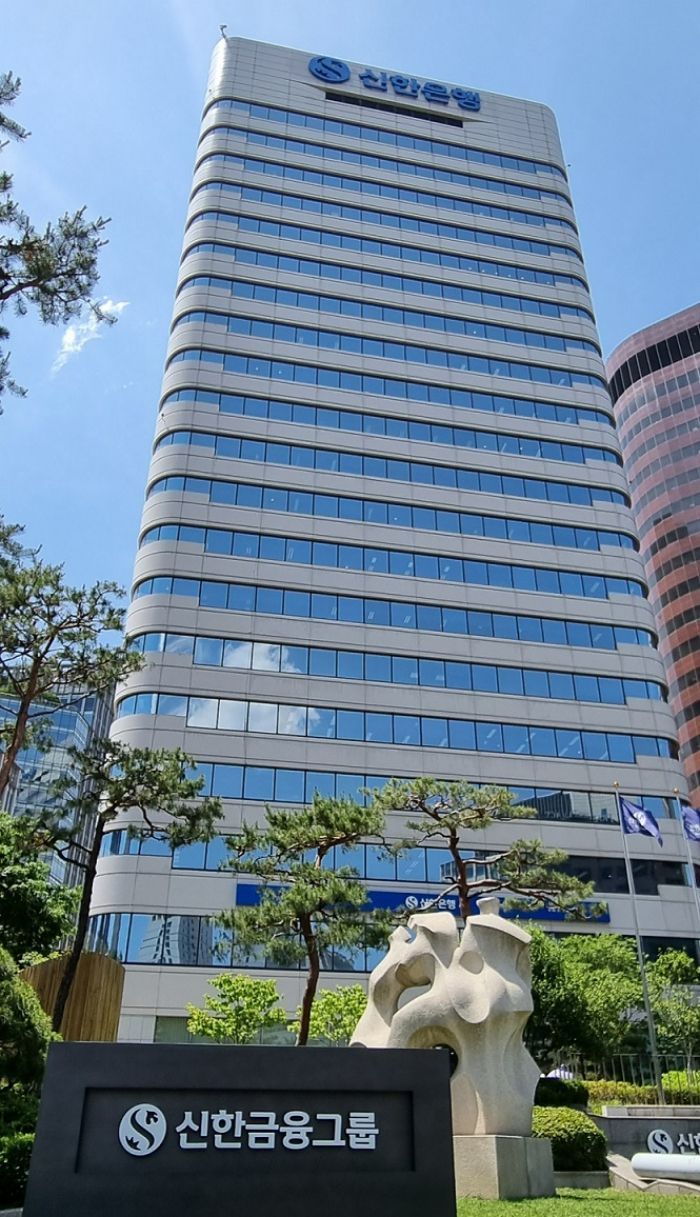
So far, Mexico Shinhan Bank has experienced ups and downs, including several sanctions from local financial authorities. According to the “Overseas Branches and Subsidiaries Financial Accidents and Cases of Fines, Penalties, and Business Suspensions” received by the office of Yoo Dong-su, a member of the Democratic Party of Korea, Mexico Shinhan Bank received nine sanctions from local supervisory authorities from 2021 to April this year. The total amount of fines was 2,892,649 pesos (approximately 202 million KRW). Specifically, the Mexican Consumer Protection Agency imposed fines twice for delayed or unreported consumer complaint reports. The Mexican Financial Supervisory Authority pointed out deficiencies in LCR (Liquidity Coverage Ratio), internal controls, compensation system manuals, and regulatory ratio monitoring. The Mexican Central Bank imposed fines due to errors in supervisory reports on foreign currency funds and inadequate liquidity monitoring.
Shinhan Bank is the first domestic commercial bank to enter Mexico. Mexico has emerged as the biggest beneficiary of the North American supply chain restructuring, holding the number one share in the U.S. import market, leading to active corporate entry. Hana Bank established its Mexican subsidiary in 2019 and added an office in the Monterrey area last September, five years after its establishment. Shinhan Bank recognized Mexico’s growth potential early and opened a representative office in 2008. Entering the local subsidiary establishment process in 2015, Shinhan Bank launched Mexico Shinhan Bank in 2018 as the first Korean bank. In July of this year, it opened the Monterrey branch. Its performance is also strong. Although it recorded a net loss of 2.886 billion KRW at its launch in 2018, it turned a profit in 2020 (net income of 1.815 billion KRW) and posted a net income of 9.063 billion KRW last year.
© The Asia Business Daily(www.asiae.co.kr). All rights reserved.
![Clutching a Stolen Dior Bag, Saying "I Hate Being Poor but Real"... The Grotesque Con of a "Human Knockoff" [Slate]](https://cwcontent.asiae.co.kr/asiaresize/183/2026021902243444107_1771435474.jpg)
















