Highlighting the Biden Administration's Middle East Policy Failures
Shaken Arab American Voters

There are concerns that Israel might carry out an airstrike on mainland Iran just before the U.S. presidential election in November, potentially shaking up the election landscape. Analysts suggest that Israeli Prime Minister Benjamin Netanyahu could time a retaliatory attack on Iran to coincide with the U.S. election to bolster former President Donald Trump, who pursues pro-Israel policies. If Israel's retaliatory attack begins, it could highlight the Biden administration's failures in Middle East policy and cause Arab American voters, who had leaned toward Vice President Kamala Harris, to withdraw their support.
Iran Offensive Expected Just Before U.S. Election... Middle East Policy Failures Highlighted
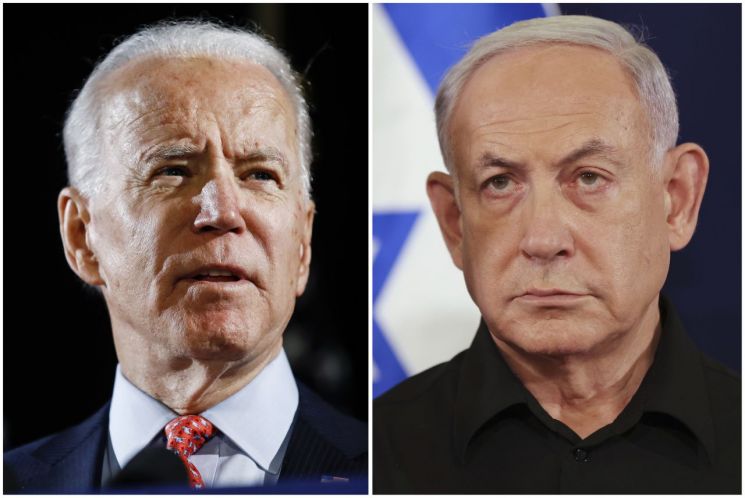
CNN recently cited U.S. government sources reporting that "Israel will carry out a retaliatory attack on Iran before November 5, early next month." The report added, "Once the attack begins, the Biden administration's failures in Middle East policy will become more apparent to the public," and noted, "Prime Minister Netanyahu is well-versed in American politics and politically astute. He is highly sensitive to the potential political repercussions Israel's retaliatory attack could have on the U.S. election."
Previously, Iran launched an offensive of about 200 ballistic missiles on Israeli territory, after which the Israeli government considered retaliatory strikes, causing friction with the Biden administration. Although the Biden administration secured assurances from Israel to exclude attacks on Iran's nuclear and oil facilities, it failed to halt Israel's overall retaliatory attack plans.
The Biden administration has pressured Israel to restrain escalation, concerned about the potential spread of conflict across the Middle East and fluctuations in international oil prices and stock markets if Israel launches a large-scale retaliatory attack on Iran. On the 15th, Secretary of State Tony Blinken and Secretary of Defense Lloyd Austin jointly sent a letter to Israel's defense and foreign ministers urging the prompt improvement of humanitarian conditions in the Palestinian Gaza Strip within 30 days.
However, since the letter lacked signatures from President Biden and Vice President Harris, it is widely believed that Israel did not feel significant pressure. CNN pointed out that the Biden administration appears to be cautious of Israel, as it recently announced additional support of THAAD (Terminal High Altitude Area Defense) missile defense systems to Israel.
Arab American Votes Drift Away from Harris... A Major Variable in a Tight Race
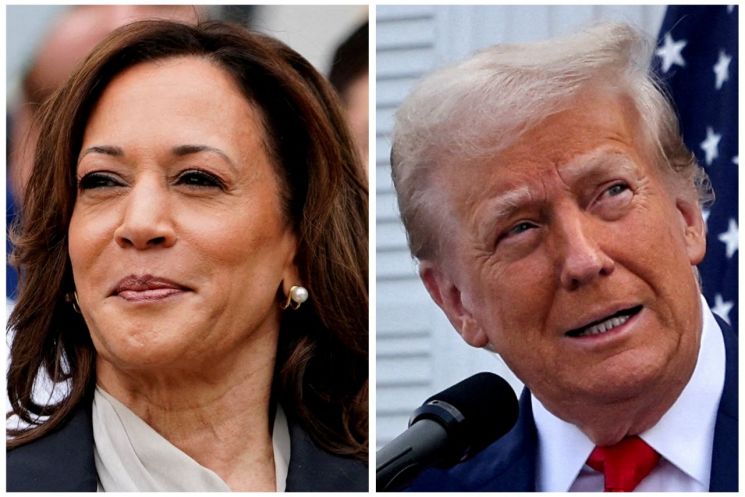
If Israel's retaliatory attack on Iran materializes just before the U.S. election, its impact on the election is expected to be significant. Since the election is anticipated to be extremely close, it could strongly influence the votes of Arab Americans concentrated in key battleground states.
According to The New York Times (NYT), the Arab American Political Action Committee (AAPAC), which supported President Biden in the 2020 election, has declared it will not support any candidate in this election. The reason for withdrawing support is that despite increasing civilian casualties caused by Israeli forces in the Palestinian Gaza Strip, the Biden administration has not ceased military support to Israel.
If Israel initiates retaliatory attacks on Iran, the Biden administration's failures in Middle East policy will inevitably be further highlighted. Although Arab Americans number about 3.5 million, roughly 1% of the total U.S. population, most reside in key battleground states such as Pennsylvania, Michigan, Arizona, and Ohio, making them an important factor in the election.
Should the election remain extremely close until the final stages, the value of Arab American votes is expected to increase. According to an NBC News poll on the 13th, the nationwide support gap between Vice President Harris and former President Trump was tied at 48%. On the same day, an ABC poll in seven key battleground states showed both candidates with 49% support each.
© The Asia Business Daily(www.asiae.co.kr). All rights reserved.



















