Over the past three years, the unused budget for energy vouchers allocated to Incheon has amounted to 8.6 billion KRW.
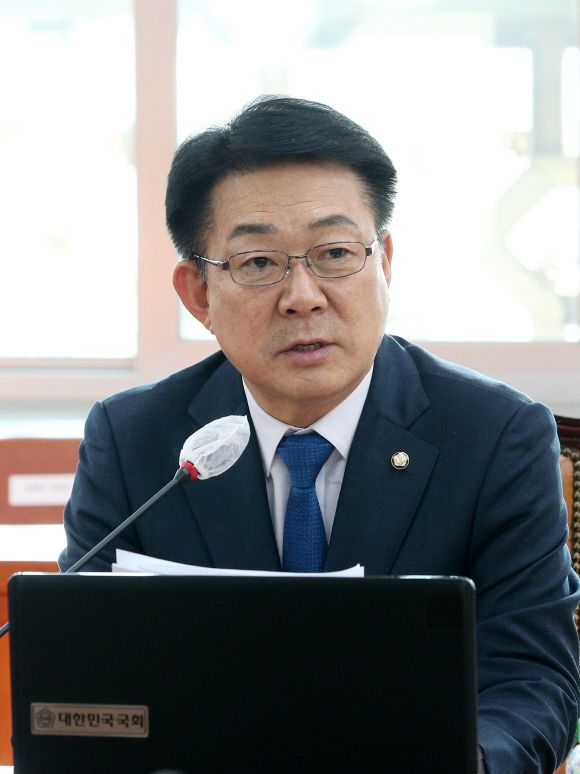
According to the 'Incheon Area Energy Voucher Status' received by Democratic Party lawmaker Heo Jong-sik (Incheon Dong-gu Michuhol-gu Gap) from the Korea Energy Agency, the total amount of vouchers issued from 2020 to 2022 was 39.1 billion KRW, of which 8.6 billion KRW (22.1%) remained unused.
By year, the unused amounts were 580 million KRW (11.6%) in 2020, 842 million KRW (12.7%) in 2021, and 7.224 billion KRW (26.2%) in 2022, showing an increasing trend and raising questions about the effectiveness of policies supporting energy-vulnerable groups.
Over the past three years, the amount of energy vouchers issued by district was highest in Namdong-gu at 8.244 billion KRW, followed by Bupyeong-gu with 7.694 billion KRW, Michuhol-gu with 6.344 billion KRW, Seo-gu with 5.832 billion KRW, and Gyeyang-gu with 4.105 billion KRW.
The unused rate by district was highest in Ongjin-gun at 50.0%, followed by Yeonsu-gu at 25.0%, Dong-gu at 24.3%, Jung-gu at 24.0%, Bupyeong-gu at 23.3%, and Michuhol-gu at 22.6%.
By household size, 16.7 billion KRW was issued to single-person households over three years, with 4.2 billion KRW unused, accounting for 48.7% of the total unused amount. By household characteristics, the unused voucher amount was highest among elderly households at 3.286 billion KRW (24.2%), followed by households with disabled persons (22.5%), patients (20.5%), and pregnant women (20.0%).
In summary, it was analyzed that single-person households, elderly households, disabled persons, and patients are in blind spots where energy welfare benefits do not reach. Lawmaker Heo's office pointed out that as the unused amount has been increasing every year, it is necessary to analyze whether the government's demand forecasting was off or if local governments' efforts to identify energy-vulnerable groups have been insufficient.
The energy voucher system supports energy-vulnerable groups by providing assistance to purchase electricity, city gas, district heating, kerosene, LPG, and briquettes. It has been operated since 2015 to support winter heating costs and since 2019 to support summer cooling costs.
Only households that meet both income criteria (recipients of livelihood, medical, housing, and education benefits) and household member characteristic criteria (elderly, infants, disabled persons, pregnant women, patients with severe diseases, single-parent families, and child-headed households) can apply for energy vouchers.
Lawmaker Heo emphasized, "The increase in unused energy voucher funds shows a gap between demand forecasting and budget execution," and added, "A close cooperative system between the government and local governments must be established so that energy-vulnerable groups can receive practical assistance."
© The Asia Business Daily(www.asiae.co.kr). All rights reserved.
![Clutching a Stolen Dior Bag, Saying "I Hate Being Poor but Real"... The Grotesque Con of a "Human Knockoff" [Slate]](https://cwcontent.asiae.co.kr/asiaresize/183/2026021902243444107_1771435474.jpg)
















