Anti-Korean Sentiment in Southeast Asia After K-ETA Implementation
Financial Losses Due to Unclear Approval Criteria

Since the implementation of the Electronic Travel Authorization (K-ETA), it has been reported that anti-Korean sentiment is rising among some Thai people. In fact, 9,947 group tourists canceled their trips to Korea last year.
On the 16th, Kang Yoo-jung, a member of the National Assembly's Culture, Sports and Tourism Committee from the Democratic Party of Korea, received from the Korea Tourism Organization the 'Annual Group Visit Cancellation Status Cases after K-ETA Implementation.' According to the data, at least 91 groups totaling 9,947 people in Thailand canceled their trips to Korea last year.
Most of the Thai group tourists were corporate incentive travelers with verified identities. However, due to unclear approval criteria of K-ETA, they were denied entry into Korea. This caused financial losses such as accommodation and airfare costs, and ultimately, these travelers shifted their destinations to neighboring countries like Japan or Taiwan, where visa-free entry is possible.
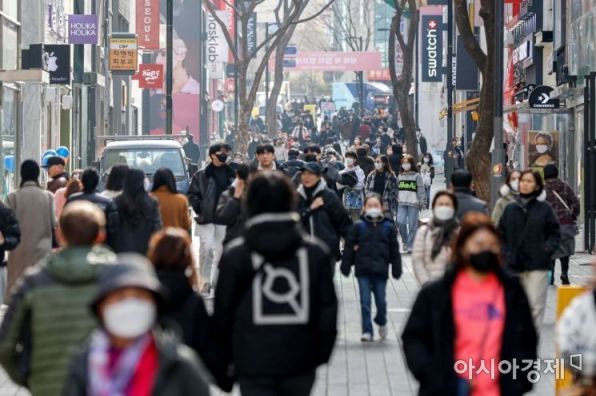
K-ETA is a system that determines travel authorization by receiving information in advance before departure for nationals of countries eligible for visa-free entry. It applies to nationals of 112 countries, including Thailand.
In 2022, a Thai company applied for a group tour to Korea, but out of 165 tourists, only 70 received K-ETA approval while 95 were denied. Those who were not approved canceled their reservations to Korea, but they could not get refunds for the 165 pre-booked airline tickets and accommodation fees, resulting in losses.
The K-ETA fee is also a barrier that discourages visits to Korea. It is reported that 4,000 incentive group tourists scheduled to visit Korea in 2025 turned to other countries after the additional travel cost of about 40 million KRW, calculated at 10,000 KRW per person for the K-ETA fee, was imposed.
Additionally, some Thai people who had unpleasant experiences with K-ETA shared their stories online. For example, the family of a famous Thai actress planned a luxury trip to Korea with a travel budget of 40 million KRW, but after receiving a K-ETA denial, they could not enjoy the tour. This story was shared on local social networking services (SNS). As a result, some nationals from K-ETA applicable countries such as Thailand and Malaysia seem to have developed negative perceptions about visiting Korea.
Before the COVID-19 pandemic, Thailand was the top Southeast Asian country for visits to Korea, but based on data from January to August this year, it fell to fourth place. During the same period, the number of Thai visitors to Korea was 203,159, which is only 57.2% of the 2019 level. This contrasts with Singapore, a country temporarily exempt from K-ETA, whose visitor numbers increased by 156.6%.
Assembly member Kang stated, "Since the introduction of K-ETA, illegal stays have actually increased," and criticized, "If the Ministry of Justice strengthens crackdowns and punishes illegal employers, that should solve the problem. Locking the doors like a closed country policy for tourists who visit Korea with goodwill only pours cold water on the Korean Wave."
© The Asia Business Daily(www.asiae.co.kr). All rights reserved.
![Clutching a Stolen Dior Bag, Saying "I Hate Being Poor but Real"... The Grotesque Con of a "Human Knockoff" [Slate]](https://cwcontent.asiae.co.kr/asiaresize/183/2026021902243444107_1771435474.jpg)












