Analysis of Card Data in Gwanghwamun, Gangnam, Yeouido, etc.
Number of Food Service Businesses Decreased After Work Hours
An analysis revealed that office workers board the subway 19 minutes earlier after finishing work. This is interpreted as being influenced by the implementation of the 52-hour workweek and the COVID-19 pandemic. On the 16th, KB Kookmin Card announced the results of an analysis of subway boarding times during the commute hours of office workers in five major business districts in Seoul and the metropolitan area (Gwanghwamun, Gangnam, Yeouido, Guro, Pangyo).
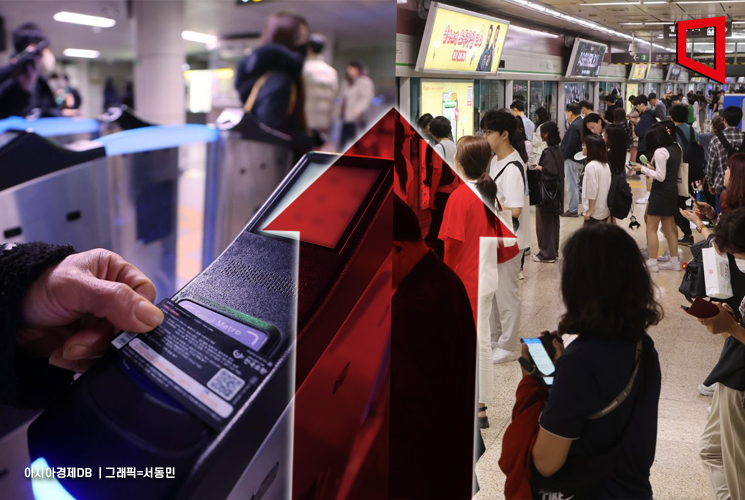 An analysis revealed that the time when office workers board the subway after finishing work has become 19 minutes earlier. This is attributed to the implementation of the 52-hour workweek and the impact of the COVID-19 pandemic.
 [Photo by Seodongmin, Asia Economy]
As a result, the average time shifted from 6:47 PM in 2019 to 6:28 PM this year, moving about 20 minutes earlier. This figure compares evening commute usage between 2019 and January to August of this year for individual customers who boarded or alighted at subway stations near the five business districts more than 10 times per month between 6 AM and 10 AM. The proportion of people boarding the subway between 5 PM and 6 PM in the five business districts also rose from 13% in 2019 to 23% this year, an increase of 10 percentage points. This indicates that more people are leaving work earlier. Conversely, the proportions for 6 PM to 7 PM and 7 PM to 8 PM decreased by 2 and 3 percentage points, respectively.
By business district, the area with the earliest shift in commute time was Guro (21 minutes). This was followed by Gwanghwamun and Gangnam (20 minutes), Pangyo (17 minutes), and Yeouido (14 minutes). In 2019, Yeouido had the earliest average commute time at 6:36 PM, but this year Guro recorded the earliest at 6:20 PM.
After Work, Personal Time... Increase in Leisure Activities like Yoga and Fitness
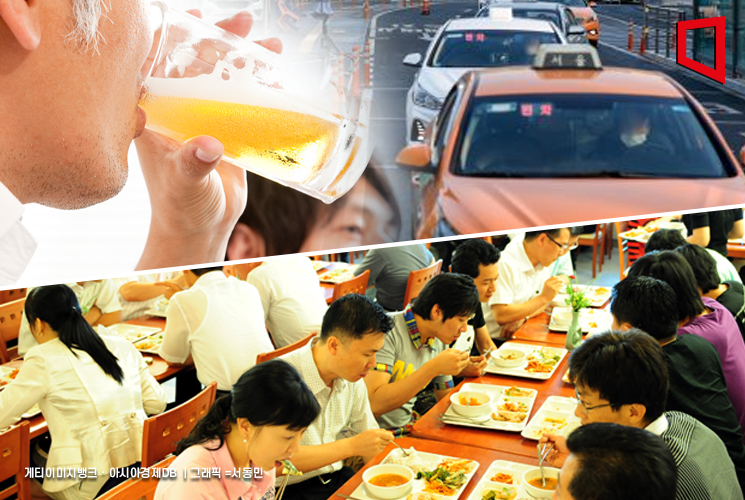 After working hours, sales in the food sector decreased while leisure activities increased. The number of sales transactions in the food sector during the evening dropped by about 8% compared to five years ago, reaching 4.7 transactions. On the other hand, spending related to leisure activities rose from an average monthly amount of 72,000 won in 2019 to 86,000 won this year, and the number of uses per person also increased from 2.1 to 2.3.
 [Photo by Seodongmin, Asia Economy]
Regarding sales after commute hours, consumption in food-related sectors decreased while leisure activities increased. The number of transactions in food-related sectors during evening hours dropped by about 8% compared to five years ago, down to 4.7 transactions. However, due to factors such as inflation, the amount spent per transaction increased, resulting in a monthly usage amount of 127,000 KRW, about 15% higher than five years ago. Examining the evening food-related consumption of office workers in the five business districts in 2024, the districts with the highest consumption were Yeouido, Gwanghwamun, Gangnam, Pangyo, and Guro, in that order. Yeouido office workers ranked first in average monthly spending, number of transactions, and amount spent per transaction.
Among these, spending related to leisure activities increased from an average monthly amount of 72,000 KRW in 2019 to 86,000 KRW this year, and the number of transactions per person rose from 2.1 to 2.3. In 2019, the leisure activity sector with the highest share of spending was yoga and Pilates (21%). This year, sports centers took first place with 21%. Following that, health clubs accounted for 18%, ranking second, while yoga and Pilates ranked third with 14%.
© The Asia Business Daily(www.asiae.co.kr). All rights reserved.
![Clutching a Stolen Dior Bag, Saying "I Hate Being Poor but Real"... The Grotesque Con of a "Human Knockoff" [Slate]](https://cwcontent.asiae.co.kr/asiaresize/183/2026021902243444107_1771435474.jpg)

















