"Some 'Meoktwi' Just Get Permanent Residency and Withdraw Investment"
"Need for Diversifying Investment Countries, Regional Distribution, and 'Meoktwi' Prevention"
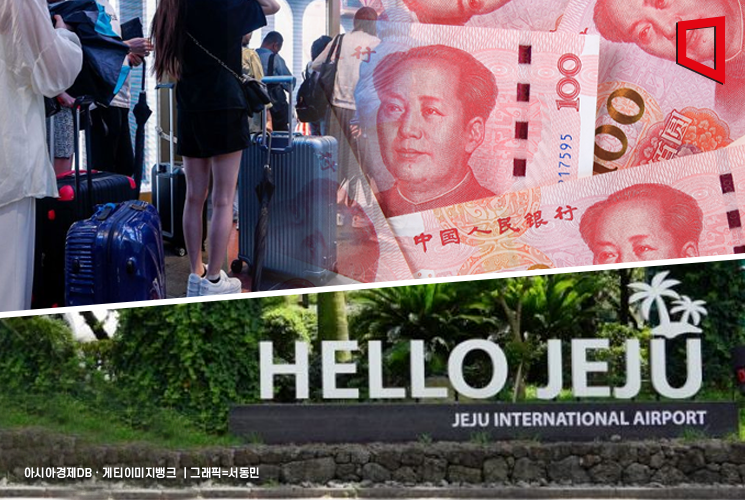
Over the past five years, 8 out of 10 foreign investors who came to Korea through investment immigration were Chinese investors in Jeju Island. The investment immigration system is a program that allows foreigners who invest above a certain amount in tourism and leisure facilities in designated areas announced by the Minister of Justice to stay in Korea.
According to data received by Jeon Hyun-hee, a member of the Democratic Party of Korea, from the Ministry of Justice on the 14th, among 116 investment immigrants from 2019 to 2023, 104 were Chinese nationals, accounting for 89.7% of the total. Among them, 92 Chinese investors (79.3%) came to Jeju Island through investment immigration.
In terms of investment amount, Jeju Island attracted a total of 79.51 billion KRW, concentrating 87.3% of the total domestic investment through the investment immigration system (91.07 billion KRW).
On the other hand, there were no investment immigrants attracted to the Dong Busan Tourism Complex in Busan, Alpensia in Pyeongchang, Gangwon Province, Jeongdongjin District in Gangneung, or the Gyeongdo Marine Tourism Complex and Hwayang District in Yeosu, Jeollanam-do over the past five years.
During this period, a total of 340 people, including 116 investment immigrants, their spouses, and minor children, received the F-2 visa granting free residence status. A total of 1,476 people maintained their investments for more than five years and newly received permanent residence visas (F-5). The investment amount standard was raised from 500 million KRW to 1 billion KRW last year.
Rep. Jeon stated, “Since the purpose of the investment immigration system is to attract high-quality foreigners and promote balanced regional development, diversification of investment countries and dispersion of investment areas are necessary,” adding, “There have been cases of ‘eat-and-run’ where investors obtain permanent residency and then withdraw their investments, so I will request the Ministry of Justice to improve the system.”
As the number of Chinese investors in Jeju Island has recently increased, there have been repeated criticisms that “Jeju Island is turning into a Chinese island.” In response, Jeju authorities rebutted in June, stating, “Among the total area of 1,850 km² of Jeju Island, land owned by foreigners of Chinese nationality accounts for only 0.5%,” and added, “Calling it a ‘Chinese island’ is an excessively exaggerated expression.”
© The Asia Business Daily(www.asiae.co.kr). All rights reserved.

















