Discussion at the Korean International Economic Association Fall Seminar
"US Economy: Soft Landing Rather Than Recession... Gradual Interest Rate Cuts Expected"
"Bank of Korea to Lower Rates Gradually and Cautiously Going Forward"
Professor Joo Sang-young of Konkuk University’s Department of Economics (former member of the Bank of Korea’s Monetary Policy Committee) evaluated that the Bank of Korea will inevitably have to lower interest rates gradually and cautiously in the future.
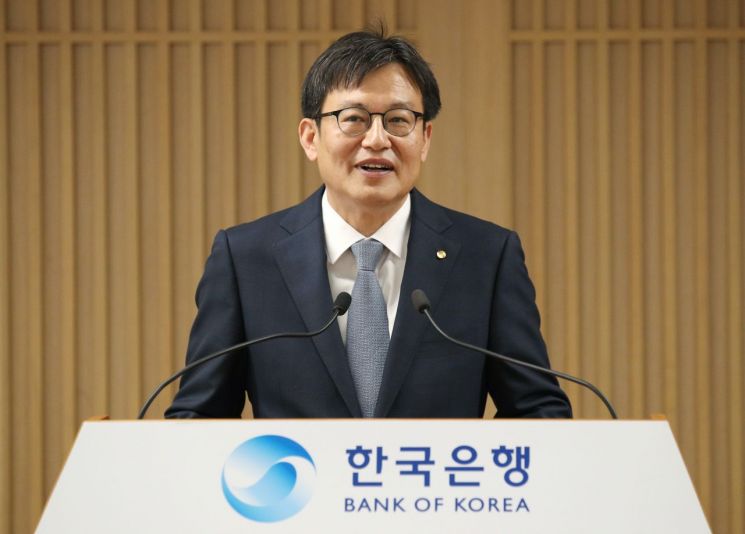
On the 14th, Professor Joo made these remarks during the comprehensive discussion of Session 2 at the Korean International Economic Association’s autumn seminar held at the Bankers’ Hall in Myeong-dong, Jung-gu, Seoul, on the theme of "Global Monetary Policy Transition and Korea’s Policy Response."
He said, "It seems that the U.S. economy has achieved a soft landing rather than falling into a recession," adding, "Going forward, the U.S. interest rate cuts are likely to be quite gradual." He further stated, "Considering the increasingly strong synchronization of interest rates between Korea and the U.S., when the U.S. gradually lowers rates, Korea will inevitably have to do so gradually as well."
He continued, "In the earlier presentation, it was mentioned that there appears to be a structural change in Korea’s inflation dynamics, with increased sensitivity to demand pressures recently," and added, "Taking this into account, it seems that the Bank of Korea will inevitably have to lower interest rates gradually and cautiously, and this is an important implication."
Professor Joo expressed concerns about the widening neutral interest rate gap between Korea and the U.S. in future monetary policy. He said, "Although the synchronization of market interest rates between Korea and the U.S. has strengthened, I think there might be a slight widening of the neutral interest rate gap between the two countries," evaluating, "While Korea’s neutral interest rate is likely to remain at the current level or possibly decline, the U.S. neutral rate may rise somewhat due to the AI investment boom and continued fiscal expansion amid hegemonic competition." He added, "If Korea operates monetary policy based solely on domestic conditions, the won may continue to weaken."
He also raised the possibility of a tightening bias in monetary policy. He expressed concern, saying, "From the perspective of the domestic economy, Korea actually needs to lower rates significantly, but if the U.S. neutral rate rises, the U.S. will have to lower rates gradually," and "If the U.S. lowers rates slowly, Korea may not be able to lower them quickly or significantly, which could lead to a tightening bias in Korea’s monetary policy."
There was also an opinion that the dilemma between domestic demand and financial stability is likely to worsen. Professor Joo said, "Looking at the GDP gap, the economy is not in a very bad situation, but when considering households’ real income, it has been almost stagnant and sluggish for about one and a half to two years," adding, "There is also a possibility that the core inflation rate could fall below 2%, and if that happens, the trade-off between price stability and financial stability may become more pronounced."
© The Asia Business Daily(www.asiae.co.kr). All rights reserved.
!["The Woman Who Threw Herself into the Water Clutching a Stolen Dior Bag"...A Grotesque Success Story That Shakes the Korean Psyche [Slate]](https://cwcontent.asiae.co.kr/asiaresize/183/2026021902243444107_1771435474.jpg)
















