Pregnant Woman Badges Face Sold-Out Situation
No Regulations on Reissuance and Collection
To Be Managed with Local Government Budgets Starting Next Year
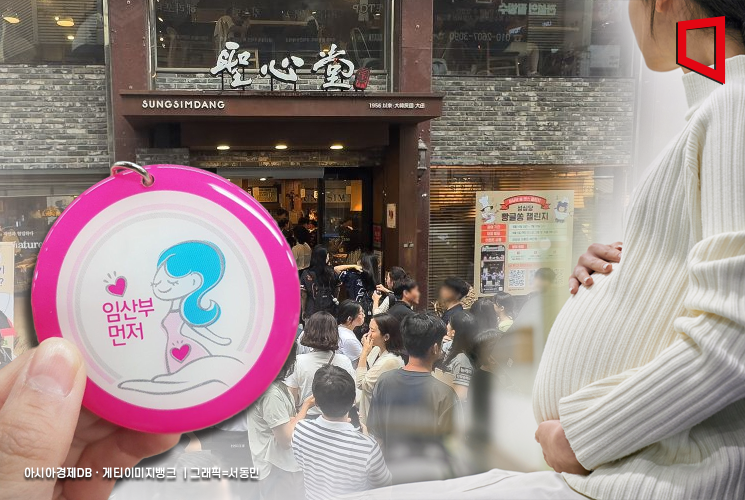
Recently, Seongsimdang, a famous bakery in Daejeon, started offering discounts and a 'free pass' benefit that allows pregnant women to enter immediately without waiting. However, cases have emerged where people who are not pregnant misuse the pregnant women badges.
On the 15th, checking various secondhand trading sites and social networking services (SNS), it was found that pregnant women badges were actually being bought and sold. Several posts were listed, ranging from free giveaways to prices as high as 30,000 KRW. These posts appeared around the time Seongsimdang introduced the discount benefits and the 'free pass' system for pregnant women. As controversy arose in online communities over this situation, Seongsimdang changed the verification method to confirm pregnancy not only with the badge but also with pregnancy certificates or maternal health handbooks.
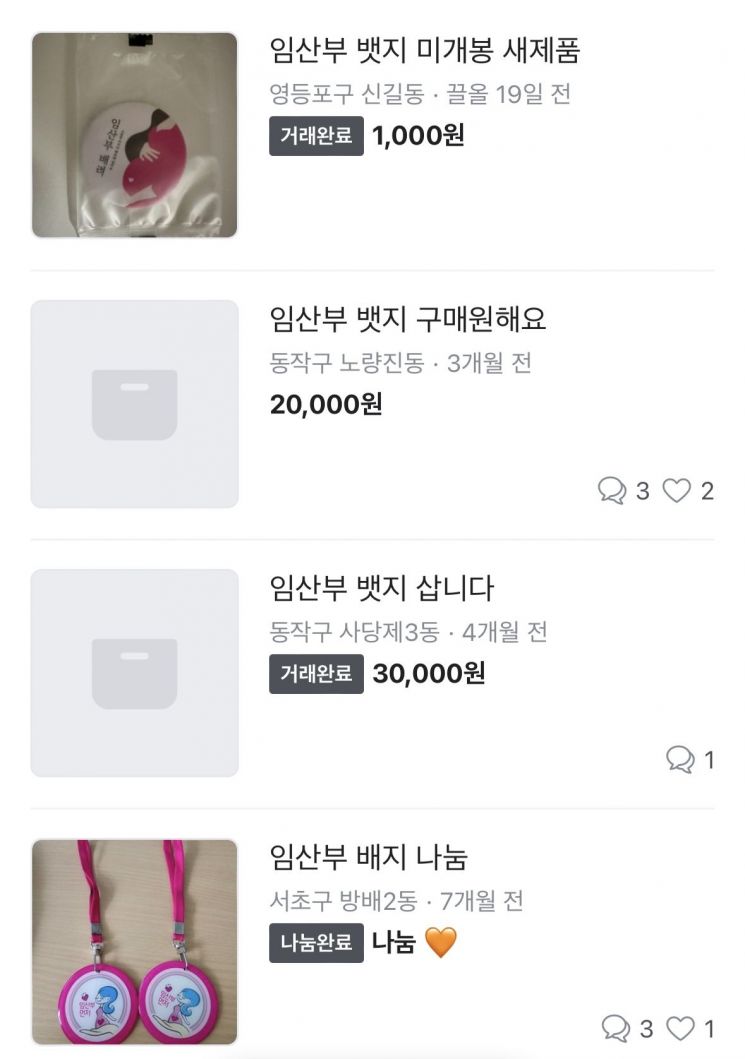 Buying and selling of maternity badges are taking place on secondhand trading sites.
 [Photo by Danggeun]
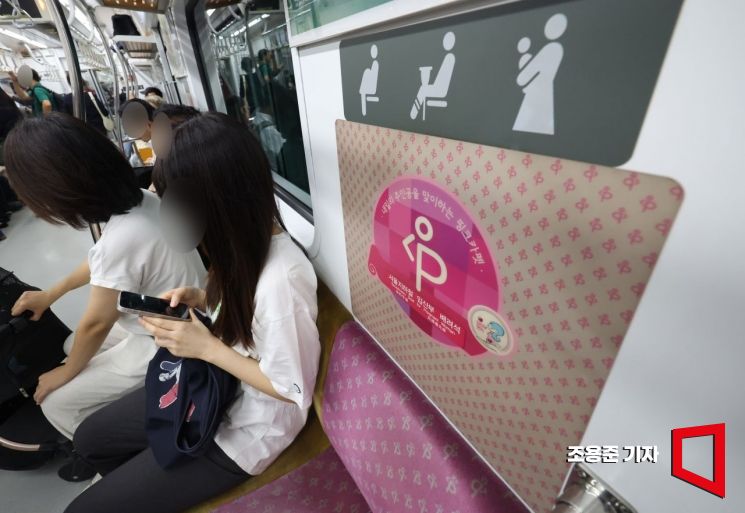
The pregnant women badge is a bag hook-type badge engraved with the phrase "Pregnant Women First," designed to allow pregnant women to receive seat consideration when using public transportation such as buses and subways. The badge makes it easy to visually identify pregnant women, enabling them to receive help first in emergencies. It can be issued by visiting public health centers or subway customer safety centers, or applied for through the Government24 website and received by mail. Recently, beyond priority seats on public transportation, many restaurants and cafes have also been offering various benefits through the pregnant women badge, leading to frequent cases of trading or misuse like the 'Seongsimdang incident.'
Meanwhile, since June, there have been incidents nationwide, including at the Gangseo Public Health Center in Seoul, where pregnant women badges ran out. On popular mom cafes and other online communities used by pregnant women, posts have been continuously uploaded stating that despite registering as pregnant, they could not receive badges due to insufficient quantities. The Population and Welfare Association, responsible for production, explained that badges are produced only once a year in bulk, causing shortages at some public health centers. A representative from the Population and Welfare Association said, "All production was completed in September, and supply to public health centers and subway customer safety centers nationwide has been fulfilled," adding, "Since badges are provided once a year, there have been incidents of shortages or surpluses."
The bigger problem is the lack of proper regulations to prevent this. Currently, the main entities managing pregnant women badges are the Ministry of Health and Welfare, the Population and Welfare Association, and local governments. However, none have clearly stipulated regulations regarding reissuance or collection of badges, leaving no way to prevent misuse.
Regarding this, a Ministry of Health and Welfare official said, "We are aware of concerns and issues related to pregnant women badges and have discussed measures such as changing the badge color each year," but added, "Even after hearing opinions from pregnant women at meetings, most reactions were negative, and since collection involves costs and administration, it seems practically difficult to establish regulations."
Experts emphasize that social consensus should come before regulation of the pregnant women badge. Jae-eun Seok, a professor in the Department of Social Welfare at Hallym University, stated, "Since the badge was created to accommodate early-stage pregnant women who are not visibly noticeable, excessive regulation and fatigue are unlikely," and added, "What is most needed is the manifestation of mature civic consciousness that actively leads in caring for pregnant women."
The government intends to prevent the resale of pregnant women badges at a premium. To this end, starting next year, each local government will be responsible for everything from demand surveys to production. Previously, badges were funded through national subsidies and local budgets, but from next year, production will be funded 50% by city funds and 50% by district funds, allowing local governments to produce badges independently. A representative from the Population and Welfare Association said, "Due to the limitations of bulk production, management responsibility will be transferred to local governments from next year," adding, "Since production and supply will be carried out smoothly according to each local government's demand and circumstances, shortages like those this year are not expected to occur."
© The Asia Business Daily(www.asiae.co.kr). All rights reserved.
!["I'd Rather Live as a Glamorous Fake Than as a Poor Real Me"...A Grotesque Success Story Shaking the Korean Psyche [Slate]](https://cwcontent.asiae.co.kr/asiaresize/183/2026021902243444107_1771435474.jpg)


















