This Week's Major Bank Earnings Announcements
Netflix, Procter & Gamble, and Other Consumer Indicator Companies Also Report
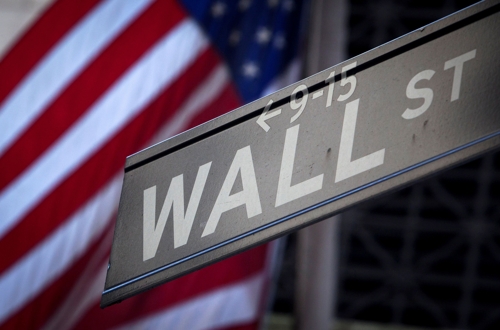
The U.S. corporate earnings season for the third quarter begins on the 14th (local time). Following last week's record highs in the U.S. stock market, led by large-cap stocks in the S&P 500 index and blue-chip stocks in the Dow Jones Industrial Average, attention is focused on whether the upcoming earnings announcements from U.S. companies can inject new momentum into the market.
This week, earnings reports are expected from major U.S. banks such as Bank of America (BoA), Citi, and Goldman Sachs on the 15th, and Morgan Stanley on the 16th. Earlier, JP Morgan and Wells Fargo, which reported earnings on the 11th, posted results that exceeded market expectations, causing their stock prices to surge by 4% and 5%, respectively. Several regional banks that faced crises due to commercial real estate defaults will also release their earnings during this period.
Companies that serve as barometers of U.S. consumer activity, such as Netflix (on the 17th), American Express, and Procter & Gamble (on the 18th), will also announce their earnings this week. The market is expected to closely watch these companies' results to gain insights into consumer spending, which accounts for more than two-thirds of U.S. economic activity.
Over the next two weeks, more than 150 S&P 500 companies are scheduled to report earnings. FactSet and LSEG IBES estimate that third-quarter earnings for S&P 500 companies increased by 4.6% and 5.4%, respectively, compared to the same period last year. LSEG IBES has reported that 79% of companies that have already reported third-quarter earnings have exceeded expectations.
This strong performance by U.S. companies is expected to fuel optimism that the economy can avoid a recession despite prolonged high interest rates, supported by indicators of a robust U.S. labor market. According to the U.S. Department of Labor's employment report released on the 4th, nonfarm payrolls increased by 254,000 from the previous month, marking the largest increase in six months. This figure significantly surpassed market expectations (147,000) and the August increase (159,000).
This earnings season is the first since the U.S. cut interest rates for the first time in four years, drawing attention to how small and mid-sized companies, which struggled under high interest rates, will respond going forward. Mike Dickson, Head of Research at Horizon Investments, emphasized, “If these companies discuss significantly reducing debt repayment pressures, small and mid-cap stocks could perform strongly.”
The S&P 500 index has set record highs dozens of times this year, with a year-to-date gain of 22.61% as of the close on the 11th. During the same period, the Nasdaq and Dow Jones indices rose 24.22% and 13.65%, respectively.
While some critics argue that the U.S. stock market's rally is overheated, there is keen interest in whether this third-quarter earnings season can provide the catalyst for a year-end rally.
Tom Heinlein, Investment Strategist at US Bank, told Business Insider, “(In the third-quarter earnings) signs of easing inflation, interest rate relief, and strong earnings outlooks for 2025 are needed for stock prices to rise through the end of the year.” Binky Chadda, Senior Equity Strategist at Deutsche Bank, analyzed, “Earnings seasons are generally positive for stocks, but since the market has been on a continuous upward trend, the market reaction may be muted.”
The fact that U.S. Treasury yields remain high despite the rate cuts could act as a limiting factor for stock price gains. According to the U.S. Treasury, the 10-year U.S. Treasury yield reached 4.104%, the highest since the end of July.
Meanwhile, this week will see the release of the New York Federal Reserve's September consumer inflation expectations, retail sales data, industrial production and manufacturing output, and weekly initial jobless claims figures.
© The Asia Business Daily(www.asiae.co.kr). All rights reserved.
![Clutching a Stolen Dior Bag, Saying "I Hate Being Poor but Real"... The Grotesque Con of a "Human Knockoff" [Slate]](https://cwcontent.asiae.co.kr/asiaresize/183/2026021902243444107_1771435474.jpg)











