This summer, due to prolonged heat waves, the number of heat-related illness patients and deaths who visited emergency rooms for heatstroke and heat exhaustion was the second highest on record, following 2018.
According to the results of the heat-related illness surveillance system operated by the Korea Disease Control and Prevention Agency (KDCA) from May 20 to September 30 this year, targeting about 500 emergency medical institutions, the total number of heat-related illness patients during this period was 3,704, an increase of 31.4% compared to the previous year. The estimated number of deaths from heat-related illnesses was 34, a 6.3% increase from last year (32 deaths).
The total number of heat-related illness patients this year was the second highest after 2018 (4,526 patients), and the number of deaths also ranked second after 2018 (48 deaths). Among the deceased, 23 were elderly aged 60 and above, a 14.8% decrease from last year (27 deaths), but 11 deaths occurred in those under 60, a sharp increase of 120% compared to one year ago (5 deaths). Among the deceased, 20 were male and 14 were female. The highest number of deaths by age group was among those aged 80 and above (10 deaths), and most deaths (28) occurred outdoors. The estimated cause of death was mainly heatstroke (94.1%).
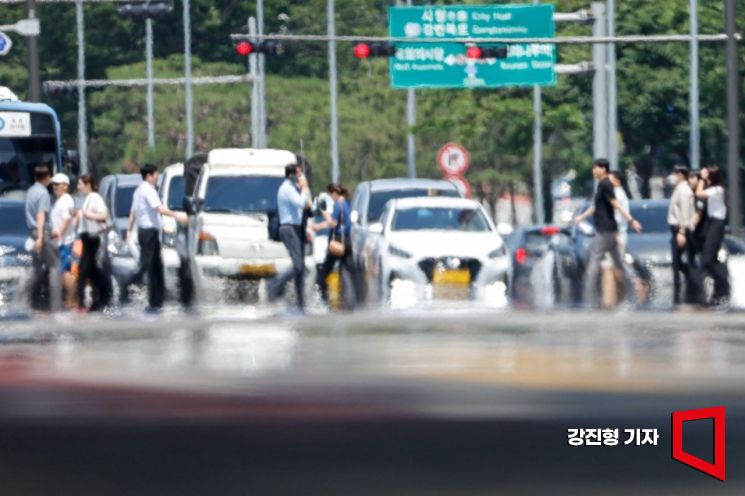 'Heatwave advisory will be in effect in the Seoul area starting from 11 a.m.'
 An emergency alert message arrived on the cellphone with a loud notification sound. This is not the typical midsummer situation of late July to early August. It is a heatwave advisory issued in mid-June. Due to global warming, the entire world is suffering from abnormal weather patterns. The four distinct seasons in South Korea are now a thing of the past. Photo by Kang Jin-hyung aymsdream@
By region, Gyeongnam had the highest number of deaths (6), followed by Chungnam, Jeonnam, and Gyeongbuk (5 each), and Seoul, Gyeonggi, and Gangwon (2 each). Among all heat-related illness patients, 2,908 were male, accounting for 78.5%. By age group, those in their 50s were the largest group with 716 patients (19.3%), followed by those in their 60s (678), 40s (538), and 30s (478). Elderly people aged 65 and above accounted for 30.4% of all patients, and the number of reported patients per 100,000 population was highest among those aged 80 and above (15.4).
By period, 28.2% (1,045 patients) of all heat-related illness cases occurred in early August. Deaths were also concentrated in early August, with 15 deaths, nearly half of the total. The average maximum temperature in early August was 33.6°C, 1.2°C higher than last year.
By disease type, heat exhaustion accounted for more than half with 2,060 patients. There were also many patients with heatstroke (732), heat cramps (556), and heat syncope (302). By region, the highest number of patients were reported in Gyeonggi (767), Jeonnam (407), Gyeongnam (377), Gyeongbuk (290), and Chungnam (244). The place of disease occurrence was 3.7 times higher outdoors (2,914 patients) than indoors (790 patients). By occupation, simple labor workers were the largest group with 947 patients (25.6%).
Ji Young-mi, director of the KDCA, said, "We will continue to make efforts to reduce health damage to the public caused by heat waves by providing detailed, customized prevention guidelines according to the location and situation for climate-sensitive groups."
© The Asia Business Daily(www.asiae.co.kr). All rights reserved.
![Clutching a Stolen Dior Bag, Saying "I Hate Being Poor but Real"... The Grotesque Con of a "Human Knockoff" [Slate]](https://cwcontent.asiae.co.kr/asiaresize/183/2026021902243444107_1771435474.jpg)
















