Jeon Young-hyun's Judgment to 'Save Memory First'
Adjusting Foundry Investment Speed
Estimated 500 Billion Won Foundry Loss in Q3
Early November Personnel and Organizational Reshuffle Expected
Major Overhaul of DS Executive Team Anticipated
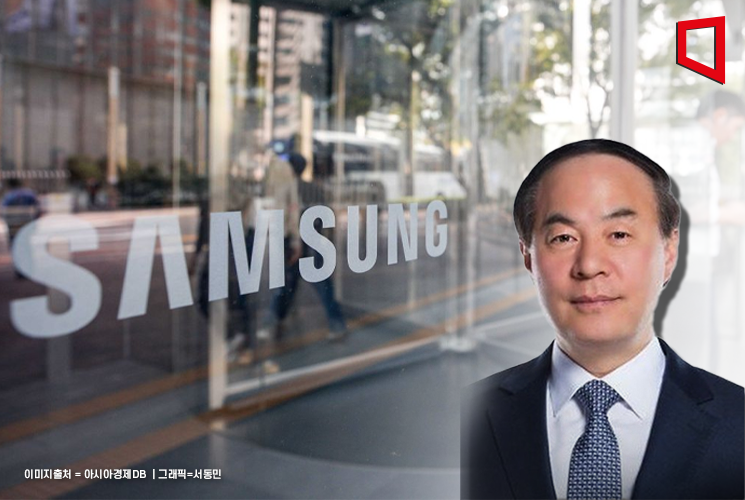
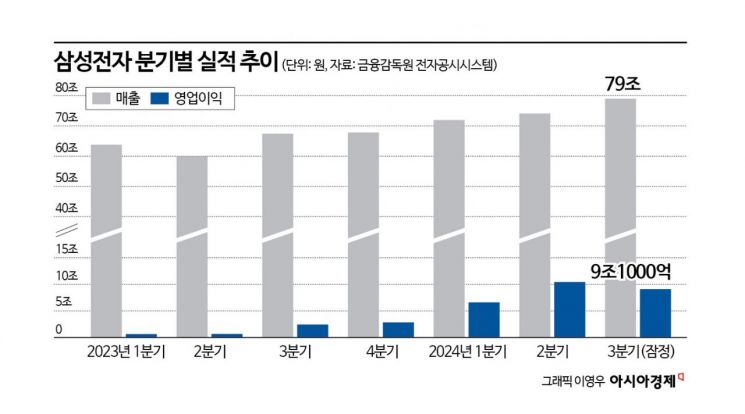
Samsung Electronics is reportedly considering a plan to transfer a large number of personnel from its foundry (semiconductor contract manufacturing) division to the memory division in order to resolve the 'semiconductor crisis theory.' As the crisis deepened, with operating profits in the third quarter falling short of market expectations, the judgment to 'save the core business of memory first' gained credibility. It is expected that the company will put all its efforts into expanding competitiveness not only in advanced products such as High Bandwidth Memory (HBM) but also in general-purpose products like Double Data Rate 5 (DDR5) by maximizing the use of its limited semiconductor talent pool.
According to industry sources on the 11th, Samsung Electronics is discussing a plan to reassign personnel who had been brought in to strengthen the foundry business to the memory division. As foundry order performance has been poor and the possibility of continued losses has increased, the company is said to have adopted a 'selection and concentration' strategy focusing on memory.
This move is also related to the adjustment of the foundry investment pace. Samsung Electronics had planned to start ordering fab equipment for a new foundry plant to be built in Taylor, Texas, in the second half of this year, but due to schedule delays and other factors, the timeline has been postponed to early next year. Personnel dispatched to Taylor have returned to Korea. Additionally, some operations at foundry plants such as Pyeongtaek P2 and P3 have been partially suspended to secure personnel for the memory business.
The foundry business is overwhelmingly dominated by Taiwan's TSMC. Samsung Electronics reportedly incurred a 500 billion KRW loss in the foundry sector alone in the third quarter of this year. As of last year, TSMC held a 59% share of the global foundry market, while Samsung held 10%. Market research firm TrendForce predicted that this gap would widen further this year, with TSMC's share increasing to 62%. On the 10th (local time), AMD CEO Lisa Su, while unveiling a new artificial intelligence (AI) chip, dismissed the possibility of choosing Samsung foundry by stating, "We have no plans to use any manufacturer other than TSMC."
Samsung Electronics has also advanced memory development personnel within its semiconductor research institute to the business division. The research and development sector for memory chips, including DRAM and NAND flash, within the semiconductor research institute has been moved under the development office within the business division. This is connected to the strategy to reclaim leadership in HBM. The company’s top management believes that close collaboration between development and production is essential to secure dominance in memory.
Currently, Samsung Electronics is conducting a management diagnosis targeting the memory division to identify the causes of declining product competitiveness and find improvement measures. It is also reviewing the 10-nanometer (nm) class 6th generation (D1c) DRAM process technology to be applied after next year.
Next month, personnel announcements and organizational restructuring are also expected. Although Samsung Electronics generally announces personnel changes in early December, it is widely anticipated that this time the timing will be moved forward and the scope of replacements will be expanded. In particular, Jeon Young-hyun, Vice Chairman and head of the Device Solutions (DS) division overseeing the semiconductor business, recently mentioned in an apology that "all responsibility lies with the management leading the business," raising accountability issues toward the top management.
In this regard, Lee Jung-bae, President and head of the Memory Division, and Choi Si-young, President and head of the Foundry Division, were appointed as division heads in December 2020 and are now in their fourth year. Park Yong-in, President and head of the System LSI Division, is in his third year this year.
A plan to significantly reduce executives is also reportedly under consideration. As of the second quarter business report, Samsung Electronics DS division had 438 executives, accounting for 38% of the total 1,164 executives. Compared to competitor SK Hynix, which has 199 executives, Samsung has more than twice as many.
© The Asia Business Daily(www.asiae.co.kr). All rights reserved.
![Clutching a Stolen Dior Bag, Saying "I Hate Being Poor but Real"... The Grotesque Con of a "Human Knockoff" [Slate]](https://cwcontent.asiae.co.kr/asiaresize/183/2026021902243444107_1771435474.jpg)

















