[2024 US Presidential Election]③
Unified Voice on Reviving US Manufacturing
Trump Warns of 'Tariff Bomb'
China Containment to Continue Regardless of White House Occupant
Harris Supports Multilateralism, Trump Advocates Isolationism
With the U.S. presidential election scheduled for the 5th of next month, the world’s attention is focused on the new administration’s industrial and trade policies. While Democratic candidate Vice President Kamala Harris and Republican candidate former President Donald Trump have significant differences on issues such as taxes, abortion, and climate policy, they share many commonalities in industrial, trade, and China policies. These include "America First" and "China containment." Regardless of whether Harris or Trump enters the White House, there is a growing call to thoroughly prepare for a tougher America First policy centered on manufacturing revival and protectionism.
Both Trump and Harris Agree on Reviving U.S. Manufacturing… Trump Warns of 'Tariff Bomb'
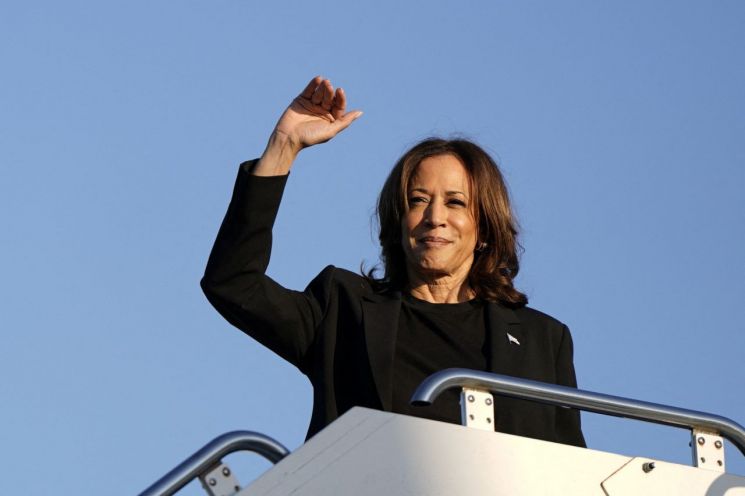
If Vice President Harris assumes power, the U.S. industrial policy is expected to continue the Biden administration’s focus on manufacturing revival. The Biden administration provides a total of $280 billion in subsidies to companies building semiconductor plants in the U.S. through the CHIPS and Science Act (CSA), and offers tax incentives to companies producing electric vehicles and batteries in the U.S. based on the Inflation Reduction Act (IRA). Furthermore, Vice President Harris plans to expand support beyond semiconductors to other advanced technology industries. On the 25th of last month, Harris unveiled an economic policy pledge titled "A New Path Forward for the Middle Class" in Pennsylvania, introducing a manufacturing revival strategy involving $100 billion in tax credits over the next decade. Supported industries include artificial intelligence (AI), quantum computing, blockchain, clean energy, biotechnology, and semiconductors. Traditional manufacturing sectors such as steel and automotive will also receive tax credit benefits. Earlier, Harris expressed opposition to the sale of U.S. Steel, a symbol of American manufacturing, to Japan’s Nippon Steel, signaling the strong political will in the U.S. to revive manufacturing by even putting brakes on allied Japanese companies.
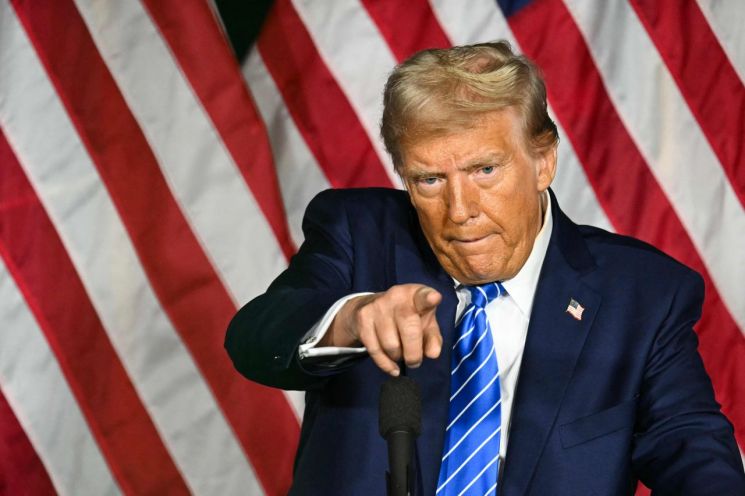
Former President Trump also champions manufacturing revival. While the Biden-Harris administration offers subsidies and tax credits as carrots, Trump’s key weapon is tariffs as a stick. Trump has announced plans to introduce a universal tariff, raising the current average U.S. tariff rate of about 3% to between 10% and 20% on all imports worldwide. This means that to sell products in the U.S., companies must either pay an entry fee or build factories in the U.S., create jobs, and produce goods domestically. The aim is to restore the collapsed manufacturing sector and create jobs. On the 25th of last month, during a rally in Georgia, Trump openly expressed this intention. He said that if re-elected, he would appoint a manufacturing ambassador to "steal jobs from other countries," predicting a massive exodus of manufacturing from China to Pennsylvania, from South Korea to North Carolina, and from Germany to Georgia. Additionally, Trump is likely to use tariffs as leverage to negotiate trade deals favorable to the U.S. He also indicated plans to lower the corporate tax rate from 21% to 15% and ease regulations to improve the investment environment for businesses.
Experts predict that regardless of who occupies the White House, America First will become a 'new normal' rather than just political rhetoric. David Park, a partner attorney at the U.S. law firm Arnold & Porter, said, "Both the Trump administration and the Biden-Harris administration shared many commonalities in industrial and trade policies, including protectionism in manufacturing and trade sectors," adding, "Whether Harris or Trump wins the November election, protectionist measures such as tariffs will continue."
Maintaining a Hardline Stance on China… Harris Advocates Multilateralism, Trump Isolationism
A hardline stance on China is a common thread in the foreign policies of both Vice President Harris and former President Trump, alongside manufacturing revival. Both the Democratic and Republican parties view China as a strategic competitor and have cooperated across party lines to curb China’s influence, including establishing a China Special Committee in the U.S. House of Representatives. It is anticipated that regardless of who wins the presidential election, U.S. pressure on China will intensify.
Former President Trump has announced plans to impose ultra-high tariffs of 60% on all Chinese imports if re-elected. This signals a likely resurgence of the second round of the U.S.-China trade war, which began in 2018 with 25% tariffs on Chinese goods during his first term. Trump also intends to demand China fulfill the Phase One trade agreement signed in 2020 during his administration. At that time, China agreed to purchase additional U.S. products and services but failed to meet the commitments due to the COVID-19 pandemic and worsening U.S.-China tensions. Trump is expected to intensify his offensive against China by imposing ultra-high tariffs and revoking China’s most-favored-nation status.
Vice President Harris is also expected to continue President Biden’s de-risking strategy toward China. Biden, who showed continuity with Trump’s China policy, has maintained the high tariff rates imposed by Trump and, in May, significantly raised tariffs on Chinese electric vehicles, batteries, and solar panels. Moreover, the administration has tightened export controls on advanced technologies such as semiconductors and AI, building a more comprehensive containment strategy against China than Trump’s. Ellen Kim, a senior fellow at the Center for Strategic and International Studies (CSIS), noted, "Officials from the Trump administration were not critical of Biden’s de-risking policy, reshoring, and supply chain protection," suggesting that China policy will maintain continuity regardless of the election outcome.
However, differences are expected in methodology depending on whether Harris or Trump takes office. Like Biden, Harris is likely to pressure China by rallying allies under a multilateral framework and strengthen economic and security cooperation in supply chains. Conversely, if isolationist-leaning Trump wins, cooperation with allies, including South Korea, may loosen relatively. Consequently, there are calls for South Korea to prepare for the uncertainty of a potential second Trump term.
Kim said, "Harris will strengthen bilateral and multilateral cooperation and welcome an expanded role for South Korea in the international community," adding, "Trump still views South Korea as a trade adversary and a free rider in security. If Trump returns to power, he is likely to impose universal tariffs of 10-20% on South Korea and seek to renegotiate the Korea-U.S. Free Trade Agreement (FTA)."
© The Asia Business Daily(www.asiae.co.kr). All rights reserved.


















