Total Fertility Rate 0.72 Last Year... Lowest in OECD
Food Industry Hit Hard by Population Decline and 'Fewer Mouths to Feed'
Food Companies Offering Bold Benefits for Infertility and Childbirth Issues
On the 10th, marking 'Pregnant Women's Day,' the food industry’s solutions to low birth rates are gaining attention. Since 2005, the government has designated October 10th as a legal commemorative day to spread positive awareness about pregnancy and childbirth, overcome low birth rates, and create a social atmosphere that considers and protects pregnant women.
Last year, South Korea's total fertility rate was 0.72, the lowest among OECD countries and the lowest ever recorded. This year is no different. In the first half of the year, the number of newborns in South Korea was 117,312, a 2.7% decrease compared to the previous year. If this trend continues, the population, currently around 52 million, is expected to shrink to 38 million by 2070.

The industry most vulnerable to the low birth rate crisis is the 'food sector.' As the population decreases, fewer mouths to feed lead to shrinking demand and a direct hit to sales. The infant formula market, directly linked to the number of births, has long been on a downward trend, and the domestic market for snacks and ice cream is shrinking as the number of children and adolescents declines.
Although the popularity of K-Food is helping companies find opportunities beyond borders, low birth rates have emerged as the biggest variable shaking the foundation of the domestic food industry. Childbirth has become an issue that goes beyond individuals and determines corporate survival.
Accordingly, more food companies are taking the lead in addressing low birth rates by strengthening in-house welfare. Beyond the legally guaranteed minimum policies such as maternity leave, parental leave, reduced working hours during pregnancy, and fetal examination time, these companies are seeking additional measures to solve the low birth rate problem.
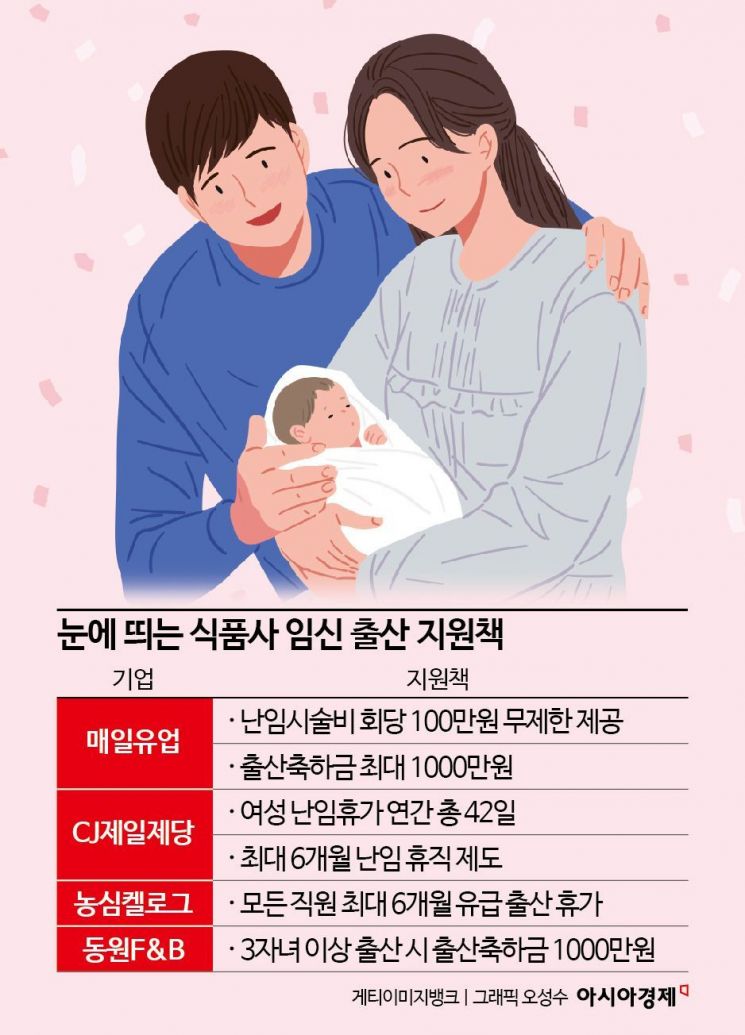
A representative company is Maeil Dairies. Its most groundbreaking policy is support for infertile couples. Maeil Dairies provides unlimited infertility treatment expenses of 1 million KRW per procedure, regardless of the number of times, to encourage employees' pregnancy and childbirth. For childbirth congratulatory money, up to 10 million KRW is supported at once: 4 million KRW for the first child, 6 million KRW for the second, and 10 million KRW for three or more children. Additionally, infant formula worth about 2 million KRW is provided for one year, and congratulatory gifts are given timed to the child's first birthday.
A Maeil Dairies official said, "Maeil Dairies plans to continue various support activities so that employees and, more broadly, our society can reduce the burden of childbirth and parenting and help new lives grow up healthily."
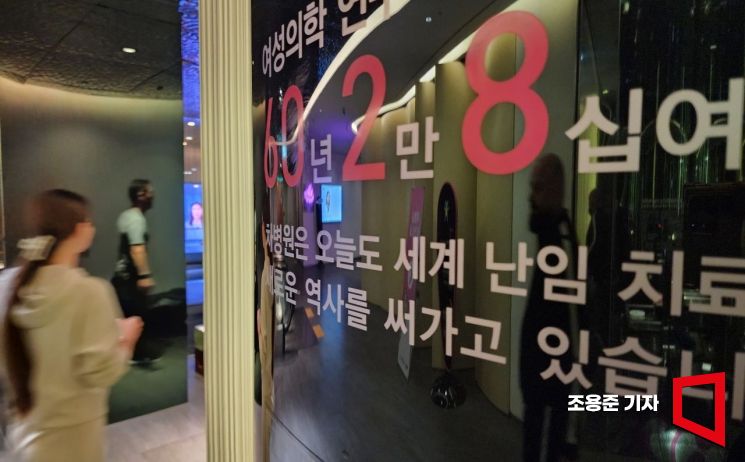 Infertility-related project sketch - The Seoul Station Infertility Center of Cha Women's Medical Research Institute. Photo by Jo Yongjun jun21@
Besides Maeil Dairies, CJ CheilJedang is the company most actively supporting infertile couples. CJ CheilJedang offers infertility support funds and infertility leave for infertile couples. Female employees can apply for a total of 42 days of infertility leave annually, which is much more than the legally guaranteed 3 days per year. Recently, a new infertility leave system allowing up to 6 months off was established to create an environment where infertile couples can focus on pregnancy. In addition, the company supports maternity leave before and after childbirth, congratulatory gifts, and childbirth expenses.
Nongshim Kellogg has introduced a ‘Parent Premium Leave’ system that provides up to 6 months of paid maternity leave to all employees. This system applies to all employees, including contract workers, regardless of length of service or employment type. Both primary and secondary caregivers can take one month of paid leave. A Nongshim Kellogg official said, "This is to help all employees continue their careers while raising children without career interruption."
Additionally, Dongwon F&B operates a multi-child childbirth congratulatory money system, providing 1 million KRW for the first child and 10 million KRW for three or more children. Lotte Wellfood delivers 48 cans of Pasteur infant formula over one year, matched to the child's growth stages. Ildong Foodis provides free infant formula for 12 months and offers up to 600,000 KRW in product purchase coupons for children on its online mall for two years. Namyang Dairy also supports childbirth congratulatory money, infant formula, and childcare products. Since July this year, Nongshim has been operating the 'Baeksansu Childbirth Support System,' providing Baeksansu mineral water monthly to households during pregnancy and newborn childcare periods.
© The Asia Business Daily(www.asiae.co.kr). All rights reserved.
![Clutching a Stolen Dior Bag, Saying "I Hate Being Poor but Real"... The Grotesque Con of a "Human Knockoff" [Slate]](https://cwcontent.asiae.co.kr/asiaresize/183/2026021902243444107_1771435474.jpg)













