Jeju Samdasoo Age Extended from 18 to 30 Years Starting Next Year
Professor Yoon Seongtaek's Team at Korea University Department of Earth Environmental Sciences
Verified through Isotope Analysis
Mid-Mountain Land Management Needed to Maintain Long-Term Purity
Starting next year, the age of 'Jeju Samdasoo' will increase from the current 18 years to 30 years. Volcanic bedrock water like Jeju Samdasoo is known to have enhanced filtration effects and higher mineral content such as vanadium and silica the longer it interacts with geological formations. This increase in age is expected to improve trust in the water as well as aid domestic and international marketing efforts.
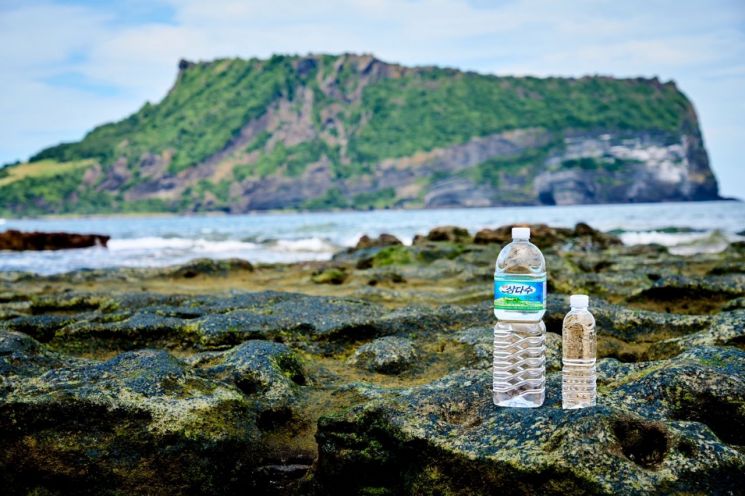
According to industry sources on the 9th, from next year, the age of Jeju Samdasoo will change from the existing 18 years to 30 years. Jeju Samdasoo, a volcanic bedrock water, was previously known to take 18 years for rainwater to pass through the volcanic pumice layer and become groundwater. However, recent tracking investigations over the past few years have produced a new figure of 30 years, and after objective verification, the official age of the water will be changed to 30 years starting next year.
The previous age of Jeju Samdasoo was announced in 2001 through a groundwater age survey conducted in Jeju Island. At that time, Jeju Special Self-Governing Province, together with the Korea Institute of Geoscience and Mineral Resources, measured the age of 34 groundwater and spring water sources in Jeju and concluded that rainwater falling on Jeju takes about 18 years to pass through the volcanic bedrock layer and descend to a depth of 420 meters underground.
However, since more than 20 years have passed since the survey was conducted and analytical technologies have advanced, the need for re-investigation was raised. The research team led by Professor Yoon Sung-taek of the Department of Earth and Environmental Sciences at Korea University, who conducted the verification of this age study, sampled rainwater and groundwater from the Pyoseon watershed where Jeju Samdasoo is produced, and carried out an integrated study of hydrochemistry, water isotopes, and age dating. The measurement results showed that the average age of Jeju Samdasoo is 30.5 years.
Professor Yoon Sung-taek explained, "Surface water such as rivers is vulnerable to changes in quantity due to heavy rains and climate change as well as water pollution, whereas groundwater is relatively free from the risks faced by surface water due to its long formation period." He added, "A longer age indicates an advantage in terms of purity." Although the proposition that older groundwater is necessarily better water does not always hold, in the case of volcanic bedrock water like Jeju Samdasoo, the longer it reacts with geological formations, the more the filtering effect is enhanced and the mineral content can increase. Therefore, the increase in age helps improve the reliability of the water.
Unlike hard water, which has high contents of trace elements such as calcium and magnesium, Jeju Samdasoo is soft water with relatively low calcium and magnesium but high mineral components such as vanadium and silica.
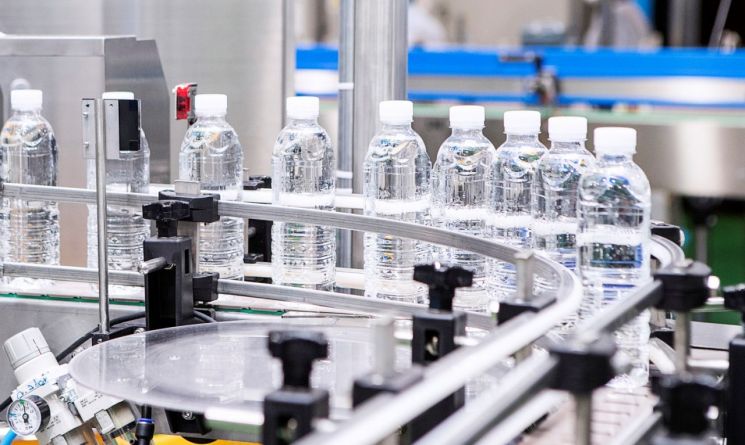
Jeju Development Corporation, which produces and distributes Jeju Samdasoo, plans to actively utilize this age increase for marketing purposes in the future. Although the increase in age does not cause changes in water quality, it can sufficiently contribute to emphasizing purity. Kang Kyung-gu, head of marketing at Jeju Development Corporation, said, "With the advancement of groundwater age determination technology, the fact that Jeju Samdasoo is 30 years old has gained academic objectivity," and added, "We plan to actively conduct related advertising and promotions starting next year." He also said, "Since we now know more accurately the birth and origin of the drinking water, it has its own significance," and added, "It will be important to connect this well with quality."
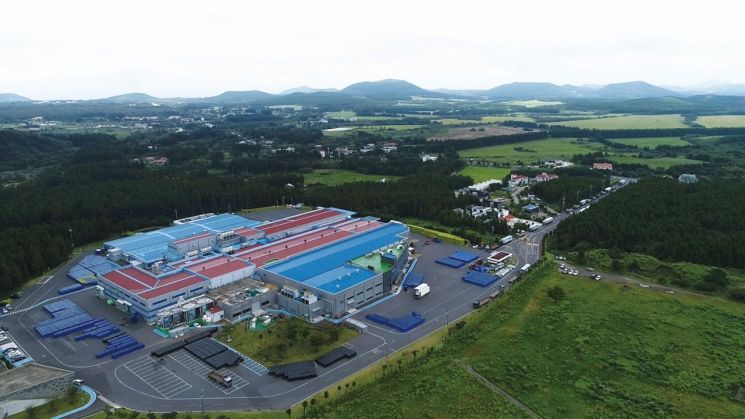
Jeju Island is a volcanic island formed by long-term volcanic activity, with a geological structure that allows water to easily permeate underground. It consists of a unique stratigraphic structure with layers of lava and sediment averaging 2 to 3 meters thick stacked one on top of another. Jeju Samdasoo, produced in this distinctive volcanic terrain, is purified rainwater that has seeped at an altitude of 1,450 meters within Hallasan National Park, passing through basalt and natural filters such as volcanic pumice layers. Thanks to the volcanic pumice and clinker in the volcanic rock layers, which have excellent pollutant filtering functions, Jeju Samdasoo is produced through simple filtration and ultraviolet sterilization processes without advanced water treatment.
To maintain this clean source water, Jeju Samdasoo undergoes more than 20,000 water quality tests annually and real-time monitoring with random water quality analyses every three hours. Additionally, to protect the clean source water, the corporation has purchased and manages land equivalent to 100 soccer fields around the water intake area. Groundwater levels, water temperature, and electrical conductivity are monitored hourly at water quality observation wells near the intake, and future pollution possibilities are thoroughly analyzed and managed through a water resource observation network.
However, to maintain the purity of Jeju Samdasoo in the future, land use management in the mid-mountain area at altitudes of 100 to 300 meters is expected to be key. Recently, development in the mid-mountain area has expanded, increasing agricultural and livestock facilities as well as housing. Since sewage treatment in the mid-mountain area is relatively weak, this could have long-term adverse effects on groundwater. Professor Yoon emphasized, "The increase in development in the mid-mountain area is a potential risk factor," adding, "Although it is clean now, a long-term groundwater conservation policy must be established to manage it going forward." He also added, "Since the current impact will only become apparent after about 30 years, policy support such as designating certain areas as absolute conservation zones based on scientific data will likely be necessary."
© The Asia Business Daily(www.asiae.co.kr). All rights reserved.
![Clutching a Stolen Dior Bag, Saying "I Hate Being Poor but Real"... The Grotesque Con of a "Human Knockoff" [Slate]](https://cwcontent.asiae.co.kr/asiaresize/183/2026021902243444107_1771435474.jpg)













