[2024 NBCI] 69 Industries, 239 Brands National Brand Competitiveness Index
Average Score 77.2 Points, Up from Last Year
Despite the ongoing economic recession and high inflation, domestic companies' efforts to enhance brand competitiveness are steadily bearing fruit with consumers. It was found that the competitiveness of domestic company brands increased compared to last year across manufacturing and service industries. In manufacturing, large automobiles received the highest scores, while in services, international airlines, online shopping malls, and electronics specialty stores ranked first in brand competitiveness.
On the 10th, the Korea Productivity Center announced the results of the National Brand Competitiveness Index (NBCI) survey for 239 brands across 69 domestic industries this year. The average score of all surveyed brands was 77.2 points, up 0.7 points (0.9%) from last year’s 76.5 points. The NBCI is a representative domestic brand competitiveness measurement index published since 2004, aimed at spreading a management mindset centered on brand value and enhancing national brand value. Now in its 21st year, the NBCI accurately captures the current brand value level perceived by consumers and provides meaningful information to companies and consumers by predicting near-future market conditions. The survey is organized by the Korea Productivity Center and sponsored by the Ministry of Trade, Industry and Energy.
Looking at this year’s NBCI scores by industry, excluding one newly surveyed industry, 40 out of 68 industries showed an increase compared to the previous year. Eighteen industries recorded the same scores as last year, while 10 industries saw a decline. The number of industries with declining scores significantly decreased compared to last year’s 22. The number of industries with rising scores also increased from 28 to 40.
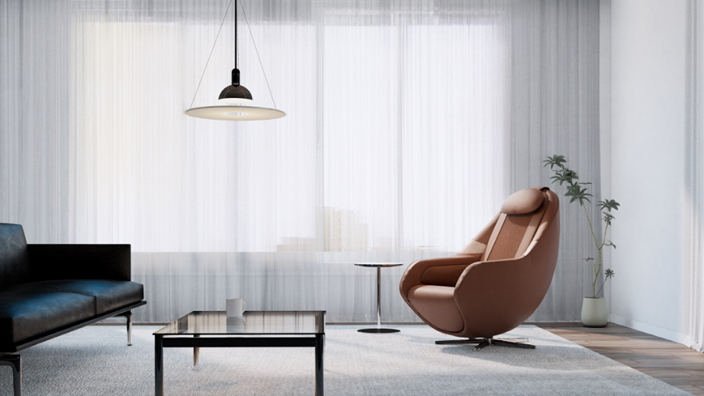
Significant Increase in Brand Competitiveness of Massage Appliance Brands in Manufacturing
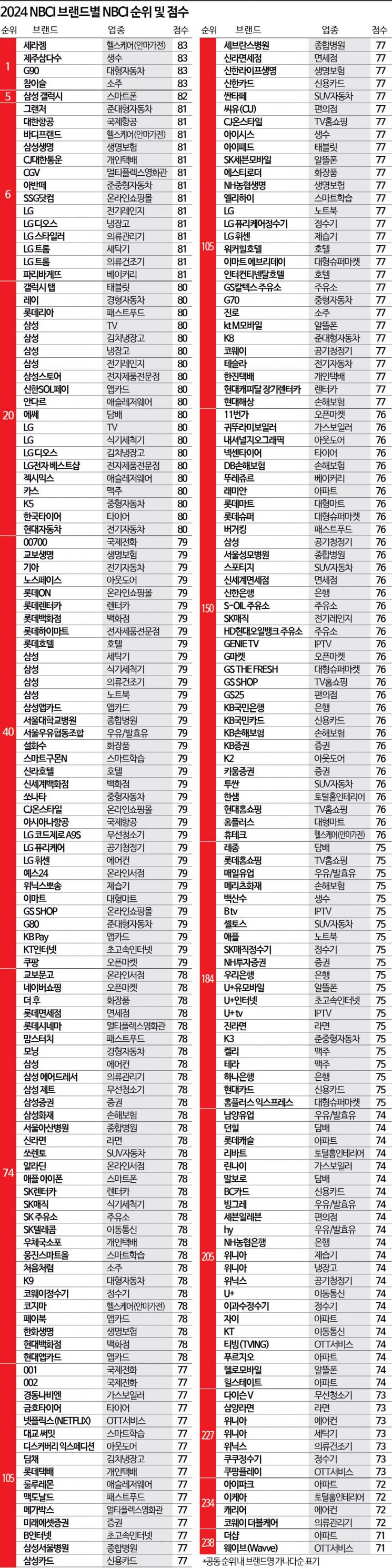
The average NBCI score for 37 manufacturing industries and 120 brands was 77.2 points, up 0.8 points from the previous year. Following last year, large automobiles scored the highest with 81 points. They were followed by smartphones, healthcare (massage appliances), and TVs, each scoring 80 points. In manufacturing, 24 industries showed an increase, 9 remained steady, and 3 declined. Notably, the brand competitiveness of healthcare (massage appliances) rose significantly by 5.3%. Additionally, brand competitiveness increased compared to last year in soju, dehumidifiers, light automobiles, electric vehicles, apartments, water purifiers, gas boilers, air purifiers, kimchi refrigerators, refrigerators, laptops, beer, cordless vacuum cleaners, dishwashers, air conditioners, clothing care devices, clothes dryers, electric ranges, mid-large automobiles, mid-size automobiles, tires, cosmetics, and SUVs. Industries that declined included tobacco, milk & fermented milk, and total home interior. Among the 120 manufacturing brands, Ceragem, Jeju Samdasoo, Chamisul, and G90 received the highest evaluation with 83 points. Samsung Galaxy followed with 82 points.
A key feature of this survey’s results is the increase in the number of manufacturing industries showing an upward trend overall. It is analyzed that the rise in NBCI for manufacturing was driven by improvements in all major evaluation factors: brand awareness, image, and relationships.
Hotel Industry Leads Growth Rate in Services
This year, the average NBCI score for 32 service industries and 119 brands surveyed was 77.2 points, up 0.6 points from last year. International airlines, online shopping malls, and electronics specialty stores scored the highest with 80 points, followed by multiplex cinemas, department stores, bakeries, and app cards at 79 points. Sixteen industries showed an increase compared to last year, nine maintained their previous level, and seven declined. The brand competitiveness of hotels rose notably by 4.0%. Brand competitiveness also increased compared to last year in large supermarkets, duty-free shops, budget phones, convenience stores, international calls, banks, large supermarkets, department stores, bakeries, credit cards, app cards, open markets, electronics specialty stores, gas stations, and high-speed internet. Industries that declined included life insurance, non-life insurance, mobile communications, general hospitals, securities, OTT services, and TV home shopping.
Among service brands, Korean Air, Samsung Life Insurance, Paris Baguette, CJ Logistics, CGV, and SSG.com received the highest evaluation with 81 points. Lotteria, Samsung Store, Shinhan SOL Pay, and LG Electronics Best Shop scored 80 points. The increase in NBCI for services was driven by improvements in brand awareness and image, which rose by 0.9% and 0.8%, respectively.
The overall rise in NBCI across manufacturing and services is analyzed to be due to many brands effectively delivering differentiated value despite the challenging economic environment. This indicates that corporate information was efficiently communicated during customer outreach and that differentiation activities within similar branding companies were well executed. A Korea Productivity Center official stated, "Going forward, companies will need to intensify branding activities to maintain loyal customers and acquire switching customers. In a fiercely competitive business environment where the competitiveness gap among brands within industries is gradually narrowing, effective appeal and marketing activities for one’s brand, as well as relationship-building with customers, will be crucial."
© The Asia Business Daily(www.asiae.co.kr). All rights reserved.
![Clutching a Stolen Dior Bag, Saying "I Hate Being Poor but Real"... The Grotesque Con of a "Human Knockoff" [Slate]](https://cwcontent.asiae.co.kr/asiaresize/183/2026021902243444107_1771435474.jpg)












