Hamas, Hezbollah, Houthi, and Iran in Four-Front War
Nation Growing Weary of Over One Year of Prolonged Conflict
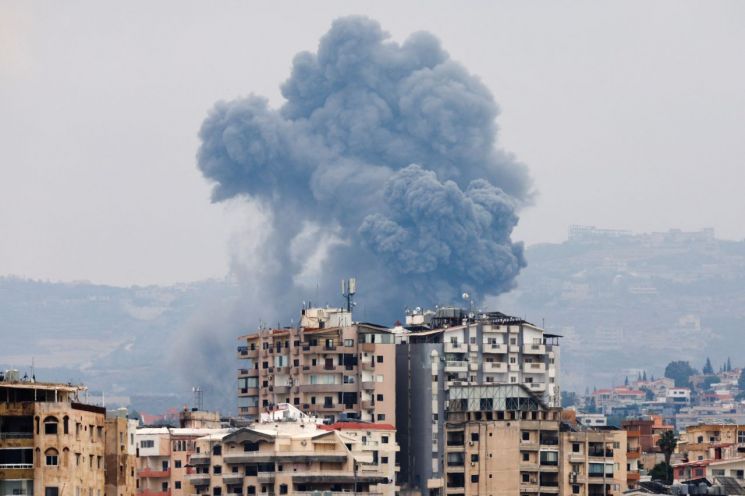
It has been one year since the outbreak of the conflict between Israel and Hamas, known as the "Gaza War," but the war is instead showing signs of escalation. Israel is now directly or indirectly confronting four enemies: Hamas, Lebanon's Hezbollah, Yemen's Houthi rebels, and Iran. Some of the Israeli forces that had been besieging the Gaza Strip have been rapidly deployed to southern Lebanon, adjacent to Hezbollah, resulting in ground battles between the two sides.
However, there are concerns that the southern Lebanon region, where Hezbollah's main bases are located, could see a much longer protracted war than the fighting with Hamas in the flat terrain of the Gaza Strip, due to its mountainous geography. The increased war fatigue and political instability among the Israeli public have emerged as variables in the prolonged conflict.
War Started by Hamas Invasion... Escalates into Four-Front War
According to the Times of Israel, on the 7th (local time), a two-minute memorial siren sounded across Israel at 6:29 a.m., marking the time last year when Hamas launched a surprise attack on southern Israel. Itzhak Herzog, the President of Israel, personally visited the Re'im Kibbutz in southern Israel, which suffered many casualties, to observe a moment of silence and console the bereaved families.
However, during the memorial event, air raid sirens continued to sound in major cities such as Tel Aviv and Dovav. Hamas's Al-Qassam Brigades launched large-scale rocket attacks, and Hezbollah, Yemen's Houthi rebels, and Iran also continued airstrikes using rockets and unmanned aerial vehicles (drones). The New York Times (NYT) pointed out, "All forces backed by Iran are attacking Israel," adding, "One year after the outbreak, the conflict with Hamas has expanded into a confrontation with four forces, and they continue a painful war of attrition."
Over the past year of fighting, an estimated 728 Israeli soldiers have died, and more than 40,000 people have died in the Gaza Strip. The Israeli military announced plans to deploy a total of five divisions to Lebanon by sending two additional divisions, which had been besieging the Gaza Strip, to the northern front.
Lebanon Larger and More Mountainous than Gaza... Prolonged War Inevitable
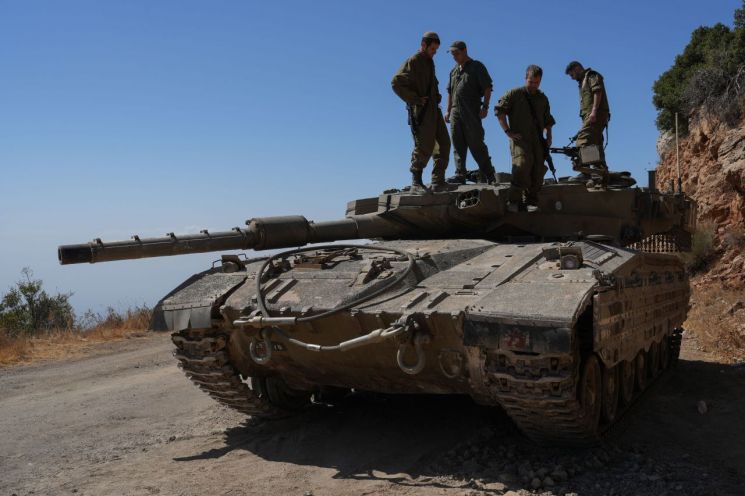
As the Israeli military crosses the Lebanese border to start full-scale war with Hezbollah, concerns arise that the war could last much longer than the conflict with Hamas. Southern Lebanon is larger and mountainous compared to the Gaza Strip, making it difficult for Israel to conduct mobile operations with armored units. Given the heavy guerrilla warfare damage Israel suffered during its 1982 invasion of Lebanon, a short decisive battle is also very unlikely.
According to the British BBC, in 1982, the Israeli military advanced into southern Lebanon and fought the Palestine Liberation Organization (PLO). At that time, Israel succeeded in capturing Beirut, Lebanon's capital, within just a week through a mobile operation involving 30,000 troops and thousands of tanks, but suffered significant damage in return. Although Israel succeeded in expelling the PLO from Lebanon, it incurred heavy losses due to guerrilla warfare by Hezbollah, which was born with Iranian backing and expanded anti-Israel sentiment within Lebanon, eventually forcing Israel to withdraw.
Unlike the Gaza Strip, which is mostly flat and narrow, Lebanon has many mountainous and hilly areas, making a prolonged war inevitable if the opponent initiates guerrilla warfare. Miri Eisen, a researcher at the International Institute for Counter-Terrorism in Israel, told the NYT, "Southern Lebanon is larger and more rugged than the Gaza Strip, making operations difficult," adding, "Hezbollah fighters are better armed and trained than Hamas fighters, so they will be much harder to deal with."
Israeli Public Growing Weary of Prolonged War... "Cannot Live in the Sparta of the Middle East"
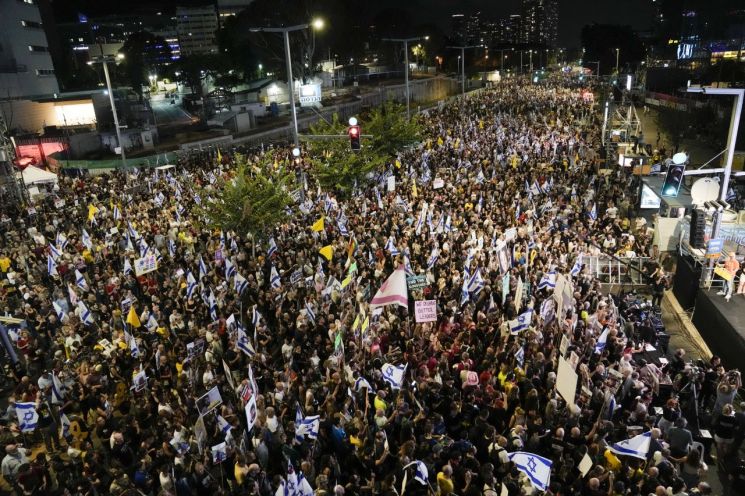
As the conflict surpasses one year, the increasing war fatigue among the Israeli public is expected to become a variable in the prolonged war. The Wall Street Journal (WSJ) reported, "Many Israelis fear that amid the ongoing escalation, Israel will become a country like ancient Sparta, where life is sacrificed solely for war," adding, "Israel's major cities are not battlefields but global tech hubs filled with luxury apartments, and the conscripted citizens are growing weary of the prolonged war."
The prolonged war also threatens Israel's finances. According to the WSJ, concerns over military spending are rising among Israel's political and business circles. If the war continues, military expenditures could rise to as much as 10% of the gross domestic product (GDP), potentially deepening the national debt.
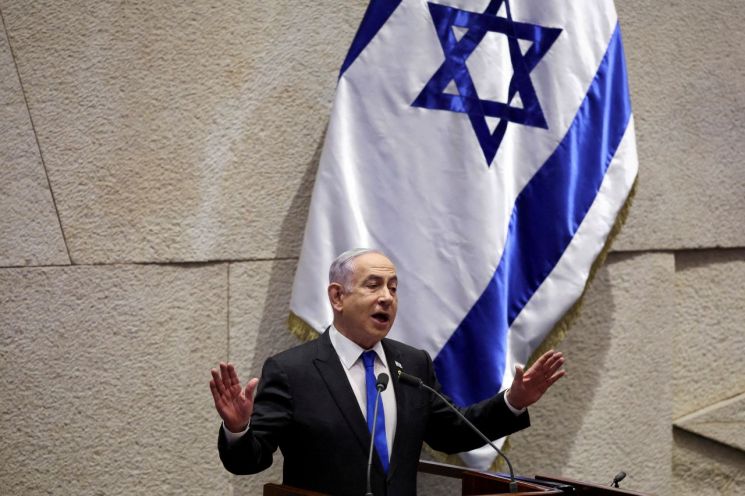
If escalation continues without political or diplomatic solutions, Israel risks not only increased diplomatic isolation but also potential political instability. Tamir Hayman, Executive Director of Israel's National Security Institute, told the WSJ, "After the Gaza War ends, the conflict will continue to Lebanon, then the West Bank, and then Iran," adding, "If Palestinian civilian casualties increase, potential allies like Saudi Arabia, which have so far refrained from direct involvement, could turn hostile, and dissatisfaction with the Netanyahu administration could grow."
© The Asia Business Daily(www.asiae.co.kr). All rights reserved.
![Clutching a Stolen Dior Bag, Saying "I Hate Being Poor but Real"... The Grotesque Con of a "Human Knockoff" [Slate]](https://cwcontent.asiae.co.kr/asiaresize/183/2026021902243444107_1771435474.jpg)


















