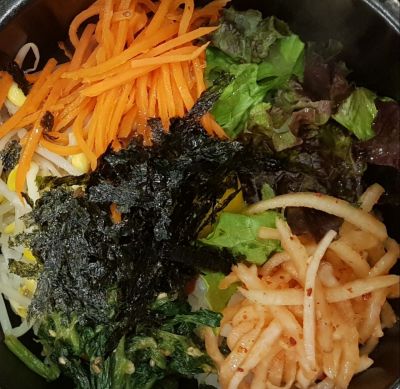
The Embassy in China has issued a caution regarding Jilin Province in Northeast China registering the stone pot bibimbap and garaetteok cooking methods as intangible cultural heritage.
On the 7th, Ambassador Jeong Jae-ho met with domestic media correspondents at the Embassy in Beijing and stated, "Regarding the inclusion of stone pot bibimbap and garaetteok cooking methods in the provincial-level intangible cultural heritage list by the Jilin provincial government in 2021, the Embassy has continuously requested careful attention and cooperation from the Chinese side."
Ambassador Jeong added, "Concerning historical distortion, the Embassy has established a proactive monitoring system and is conducting systematic inspections and responses, focusing on museums and textbooks where the potential for historical distortion and its impact are significant."
This controversy arose after reports last month by Korean media revealed that Jilin Province had newly approved a provincial-level intangible cultural heritage list in 2021 that included 'Joseonjok stone pot bibimbap making skills' and 'Joseonjok traditional rice cake making skills.' Jilin Province, one of the three northeastern provinces of China, has a dense population of Joseonjok centered around the Yanbian Korean Autonomous Prefecture.
According to the Korean Food Culture Dictionary published by the Korea Cultural Centers Association under the Ministry of Culture, Sports and Tourism, stone pot bibimbap first appeared in the 1960s at a restaurant in the Jeonju region after Korea's liberation. Since then, stone pot bibimbap has spread nationwide and is now recognized globally as a representative Korean dish.
Although Jilin Province registered stone pot bibimbap as a Joseonjok dish without providing specific evidence, it is viewed as an extension of the Chinese authorities' policy, which has focused on encompassing and systematizing minority cultures within the country as part of 'Chinese national culture.'
© The Asia Business Daily(www.asiae.co.kr). All rights reserved.

















