Less than 1% of Domestic Care Institutions Are Public Facilities
Lee Gae-ho: "Need to Expand Facilities and Train Personnel"
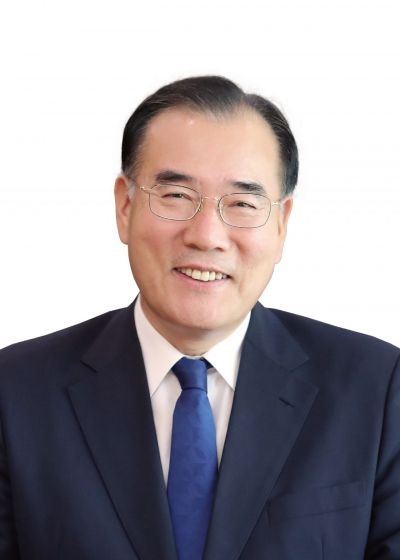
As the country enters a super-aged society, public facilities among domestic nursing institutions for elderly care account for less than 1%, and in the case of Gwangju, there are no public nursing facilities at all.
According to data submitted by the Ministry of Health and Welfare to Lee Gae-ho, a member of the Democratic Party of Korea (representing Damyang, Jangseong, Yeonggwang, and Hampyeong) on the 7th, the number of long-term care institutions and facilities increased by about 3,000 from 25,384 in 2020 to 28,366 last year. However, the number of national and public facilities only increased by 26, from 244 to 270. This accounts for less than 1% of all facilities, and notably, in metropolitan cities such as Gwangju and Daejeon, there are no public facilities installed at all.
Moreover, the outlook is bleak as the budget for supporting nursing facilities has decreased. The budget for constructing national and public nursing facilities reached 64.1 billion KRW in 2020, but this year’s budget dropped by more than 80% to 10.5 billion KRW. Consequently, the number of public facilities either under construction or planned nationwide has fallen from 35 in 2020 to only 3 this year.
The issue of adequate supply of personnel such as care workers to meet the increasing trend of elderly long-term care insurance beneficiaries has also emerged as a challenge. While the number of elderly long-term care insurance beneficiaries has been rapidly increasing every year, about 1.43 million people applied last year, and the number of recognized elderly beneficiaries exceeded 1 million. However, the number of care workers available to care for the elderly is around 650,000, and from next year, supply is expected to become insufficient, with an additional 79,000 personnel needed from 2027. This highlights the need for active government policies and support to increase the state’s responsibility for elderly care.
Rep. Lee stated, “Elderly care is no longer an individual issue but a public problem that our society and nation must bear. Therefore, expanding the insufficient public facilities to improve both the quantity and quality of elderly nursing services through cooperation between the private and public sectors is a progressive direction we must pursue.” He emphasized, “The government must actively engage in training and job education for care workers to meet the increasing demand for elderly nursing and care, as well as improving their poor working conditions.”
© The Asia Business Daily(www.asiae.co.kr). All rights reserved.
![Clutching a Stolen Dior Bag, Saying "I Hate Being Poor but Real"... The Grotesque Con of a "Human Knockoff" [Slate]](https://cwcontent.asiae.co.kr/asiaresize/183/2026021902243444107_1771435474.jpg)
















