"Protection Effects for Farmers and Consumers
Applicable to Exceptions in the Fair Trade Act"
Likely to Influence Similar Cases on Key Issues
The first ruling has been made that the act of companies producing and selling fresh duck meat participating in a meeting body under the Duck Association to jointly limit production volume cannot be regarded as an act of unfairly restricting competition under the Fair Trade Act. It is the first judgment that the Fair Trade Commission's sanction against the production volume restriction between the association and companies for the supply-demand balance of agricultural and livestock products is illegal. Several similar cases disputing this issue are currently pending in court, and this ruling is expected to influence those cases as well.
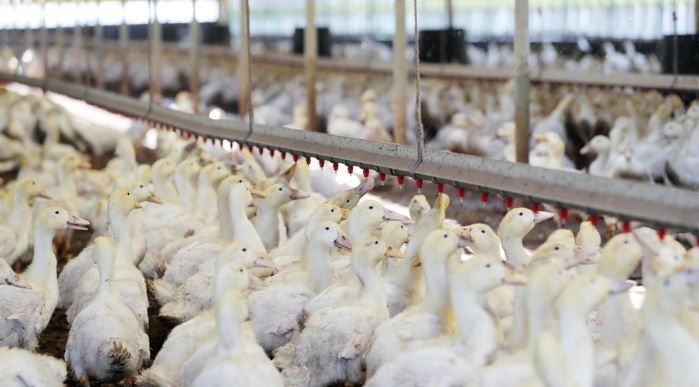
The Administrative Division 3 of the Seoul High Court (Presiding Judge Jung Jun-young, High Court Judges Kim Hyung-jin and Park Young-wook) ruled in favor of the plaintiff on the 26th of last month in the lawsuit (2022Nu61146) filed by Seongsil Nongsan Yeongdong Cooperative Corporation against the Fair Trade Commission seeking cancellation of corrective orders and fines.
Around April 2012, the "whole duck price market price," which serves as the standard for the selling price of fresh duck meat, dropped from 7,200 to 10,200 KRW per duck in the previous year to the production cost level of 6,000 to 6,500 KRW. In response, representatives of six companies including Seongsil Nongsan attended the affiliated council meeting of the Duck Association to discuss measures such as voluntarily reducing the quantity of ducklings by more than 20%. Subsequently, the Duck Association sent official letters requesting active cooperation from member businesses.
By the end of 2015, the supply of fresh duck meat in the domestic market increased, causing prices to fall to levels similar to those in 2012. Representatives of Seongsil Nongsan and others agreed to reduce the number of breeding ducks through a meeting of the affiliated distribution subcommittee of the Duck Association in January 2016. Companies that did not attend this meeting also received and agreed to this information from the association. Thereafter, company representatives repeatedly agreed to reduce production volume through affiliated distribution council meetings and adjusted actual production accordingly.
The Fair Trade Commission viewed their acts of price increase, etc., as "acts of unfairly restricting competition by agreeing with other businesses to jointly limit production or to decide, maintain, or change prices of goods," and issued corrective orders and fines. Seongsil Nongsan, which was fined 509 million KRW, filed a lawsuit in objection.
Seoul High Court: "Allowed as an exception to free competition"
The court ruled that the Fair Trade Commission's disposition was illegal and sided with Seongsil Nongsan. It stated that the activities of self-help organizations of farmers and fishermen can be allowed as an exception to free competition if such activities do not contradict the constitutional intent to specially protect them, which aligns with the economic order under our constitution.
The court explained, "Article 123, Paragraph 4 of the Constitution stipulates that 'The State shall endeavor to balance the supply and demand of agricultural and fishery products and improve distribution structures to stabilize prices and protect the interests of farmers and fishermen,' thereby designating supply-demand balance and price stabilization of agricultural and fishery products as national tasks. Since the agricultural and livestock product market was opened, direct subsidies for income compensation to farmers have been restricted, increasing the need for autonomous supply-demand adjustment among producers for sustainable and stable supply of agricultural and livestock products. Accordingly, the Ministry of Agriculture, Food and Rural Affairs also implements supply stabilization policies supporting autonomous supply-demand adjustment by livestock producers through livestock self-help funds, etc.," the court stated.
The court also cited foreign legislative examples such as the U.S. Capper-Volstead Act (Chapter 12 of the U.S. Federal Agricultural Law), the Treaty establishing the European Community, and German competition law. In the U.S., when agricultural producers organize groups to jointly sell their products, certain joint actions are exempt from the Sherman Act, an antitrust law. The European Council regulations do not apply European competition law prohibiting anti-competitive unfair joint actions to agreements, resolutions, or acts by farmers or agricultural cooperatives regarding production, sale, storage, processing, or use of joint facilities for agricultural products. Germany has similar provisions.
The court stated, "Even foreign legislative examples exempt certain joint actions of agricultural producers or their organizations from antitrust or competition laws to increase farmers' income, ensure stable food supply, and stabilize prices. Their production volume restriction acts ultimately protect consumers and promote balanced development of the national economy, thus constituting an exceptional case that does not substantially contradict the purpose of the Fair Trade Act," the court ruled.
Meanwhile, the court judged, "Separate from production volume control, agreements that unfairly raise market prices can constitute unfair joint acts (price-fixing) under the Fair Trade Act. However, there is no evidence that Seongsil Nongsan participated in meetings or KakaoTalk chat rooms of production company sales managers agreeing on price increases," the court concluded.
Reporter Han Su-hyun, Legal Times
※This article is based on content supplied by Law Times.
© The Asia Business Daily(www.asiae.co.kr). All rights reserved.

















