The US employment data significantly exceeded market expectations, reducing the likelihood of a big cut (a 0.5 percentage point reduction in the benchmark interest rate) by the US Federal Reserve (Fed) next month, putting upward pressure on the won-dollar exchange rate amid a stronger dollar.
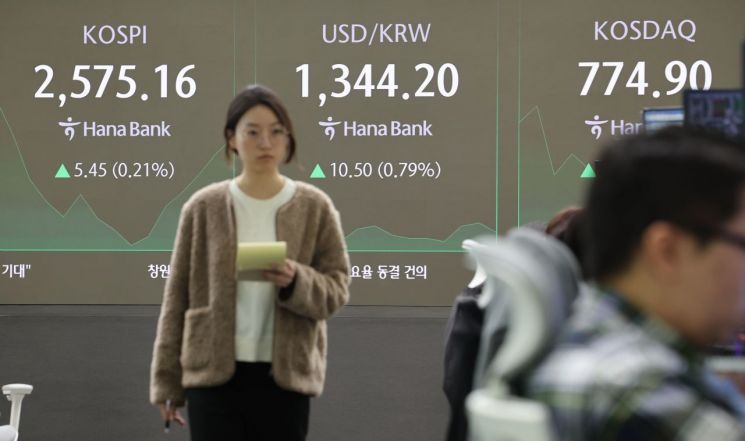
On the 7th, in the Seoul foreign exchange market, the won-dollar exchange rate opened at 1,346.3 won, up 12.6 won from the previous trading day's closing price (3:30 PM). As of 9:20 AM, the won-dollar exchange rate has slightly declined and is trading in the 1,344 won range.
On the 4th (local time), the US Department of Labor announced that nonfarm payrolls in the US increased by 254,000 in September compared to the previous month. This far exceeded the market expectation of 147,000. It was also the largest increase in six months since March (310,000).
The July and August new employment figures, which were the basis for the Fed's big cut, were also significantly revised upward. The nonfarm payroll increase for July was revised up from 89,000 to 144,000, and August was raised from 142,000 to 159,000.
Due to the employment data surprise, the won-dollar exchange rate closed at 1,349.30 won, up 15.6 won from the previous day's closing price at 3:30 PM, in the early morning of the 5th at 2 AM.
Strong employment market indicators have reduced expectations for a big Fed cut in November. According to the Chicago Mercantile Exchange (CME) FedWatch tool, after the September nonfarm payroll announcement, the federal funds futures market raised the probability of a 25 basis point (1bp=0.01 percentage point) rate cut next month to 98.9%. The probability of a 50 basis point cut dropped to 0%.
The dollar is showing strength. The US Dollar Index (DXY), which measures the value of the dollar against six major currencies, was around the 100 level on the 30th of last month but rose to the 102 level after the employment data release.
The won-dollar exchange rate is expected to see increased volatility depending on external indicators. Min Kyung-won, a researcher at Woori Bank, said, "After mid-October, seasonal friction factors such as the book closing of foreign banks may increase volatility in the won-dollar exchange rate."
© The Asia Business Daily(www.asiae.co.kr). All rights reserved.

















