Google Search Market Share to Fall Below 50% Next Year
AI Boom and TikTok Cause Major Shifts in Search Market
The dominance of Google in the approximately $300 billion (about 404.61 trillion KRW) search advertising market is reportedly being shaken, according to the Wall Street Journal (WSJ) on the 6th (local time).
Market research firm eMarketer forecasts that Google's share of the U.S. search advertising market will fall below 50% for the first time in 10 years next year. Google's market share is estimated at 50.5% this year and 48.3% next year, a significant decrease from 59.9% in 2018.
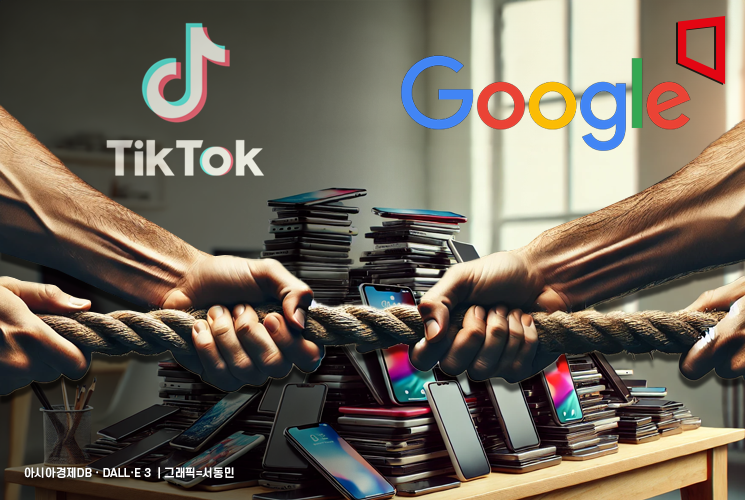
Although Google remains the leader, WSJ analyzed that the surge of generative artificial intelligence (AI) and TikTok are reshaping the search advertising landscape. Ni Ahene, a veteran executive in the digital advertising industry, said, "We may have an alternative to Google for the first time in about 15 years."
Perplexity, an AI search startup supported by Amazon founder Jeff Bezos, plans to introduce ads in AI-generated answers by the end of this month. Dmitry Shevelenko, Perplexity's Chief Business Officer (CBO), revealed that top-tier, widely recognized brands are their first advertisers. They recently conducted presentations for advertisers. According to Perplexity, they processed about 340 million queries last month. Google has stated that it processes approximately 2 trillion searches annually.
Microsoft (MS) has equipped its Bing search engine-connected chatbot with sponsored links and comparison shopping ads. Google has also recently started displaying ads in the AI-generated summary called 'AI Overview' at the top of search results. According to New Street Research, about 60% of U.S. consumers used chatbots to research or make purchasing decisions in the past 30 days.
The short-form video platform TikTok recently enabled advertisers to serve targeted ads based on user search terms. While it previously offered the option to display ads in search results, it could not target them specifically; this is a significant advancement. WSJ described this as a "direct challenge to Google's core business."
Earlier this year, several advertisers tested TikTok's new advertising products. Digital advertising company Tinuiti reported that about 20 clients in sectors such as home appliances, apparel, and beauty have purchased the new TikTok ads, with most showing positive results. Jeremy Confelt, CEO of Tinuiti, stated, "Sometimes we see advertising return on investment comparable to what we see on Google."
According to eMarketer, TikTok's share of the U.S. digital advertising market is only 3.4%, but its U.S. advertising revenue is expected to increase by 38.1% this year.
These market changes are seen as a double burden for Google. Last month, the U.S. Department of Justice initiated a second antitrust lawsuit against Google. The suit alleges that Google eliminated competitors and controlled customers through acquisitions, dominating online advertising technology. Earlier, the DOJ filed an antitrust lawsuit claiming Google paid Apple and others huge sums to set its search engine as the default, winning the case in August.
© The Asia Business Daily(www.asiae.co.kr). All rights reserved.

















