'Emergency Measures for Normalizing Medical School Bachelor's Degree'
Approval After Confirming Intent to Take Leave of Absence
Review of Medical Curriculum from 6 Years to 5 Years
Operation of 'Medical Education Support Center' Sharing Exam Materials
Improvements to Allow Extension and Additional Leave of Absence Applications
The government announced that it will approve leaves of absence on the condition that medical students who have not returned to classes will come back by the start of the first semester next year. However, for students who have no intention of returning, measures such as repeating a year or expulsion will be applied according to each university's academic regulations.
Additionally, as a conciliatory measure to guarantee the right to education for returning students, the government plans to operate a so-called 'Medical Education Support Center' that shares and supports 'jokbo' (exam question banks). To minimize the gap in medical workforce training, the government is also considering shortening the current six-year medical education curriculum to five years.
Leave of Absence Approval on Condition of Returning Next Year
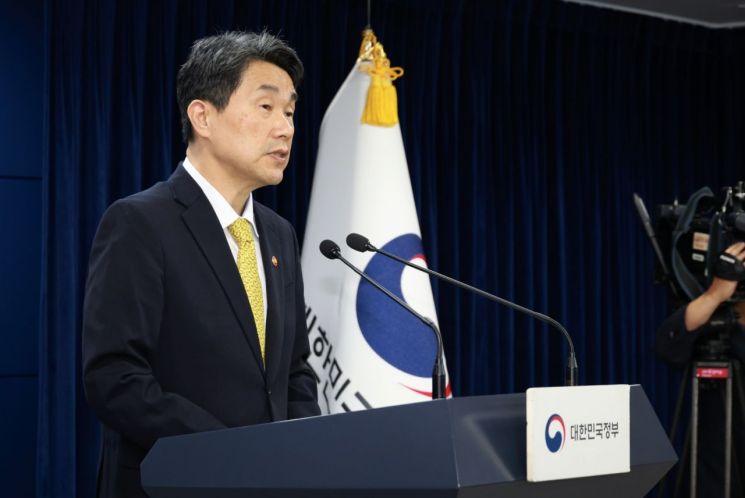
On the 6th, Lee Ju-ho, Deputy Prime Minister for Social Affairs and Minister of Education, held a briefing at the Government Seoul Office and announced the "Emergency Measures for Normalizing Medical School Academic Affairs," which includes these details. This measure was prepared to normalize the academic operations of medical schools, which have been disrupted by large-scale leave of absence applications and class boycotts by medical students since February. At the briefing, the Deputy Prime Minister said, "It has now been eight months since the students have not returned," and added, "This is the golden time and the last chance for students to return."
The Ministry of Education will thoroughly verify the intention and reasons for leave of absence for students who have not returned by the end of December and approve leaves of absence on the premise that they return at the start of the 2025 academic year, rather than approving collective leave of absence. To approve the leave, individual students must go through procedures including ▲re-persuasion for return through individual counseling ▲reconfirmation of leave intention and correction of previously submitted leave applications to clearly confirm no intention of collective leave ▲verification of leave reasons, return intention, and supporting documents ▲approval of leave only if the return date is specified to coincide with the start of the 2025 academic year through counseling.
However, if students fail to provide valid reasons for leave according to academic regulations, they will not be eligible for leave, and if they continue not to return, measures such as repeating a year or expulsion will be taken according to the academic regulations.
Starting this month, universities will set return deadlines while maximizing opportunities for students to return, considering educational conditions and curriculum operations, and actively persuade students to return through counseling. If cases of infringement on the right to education, such as coercion of collective action or public disclosure of online lists, are confirmed during this process, strict measures will be taken. Furthermore, universities will prepare curricula to allow smooth course completion and promotion through flexible academic operations upon return.
Also, from the end of this month, when universities approve students' leaves of absence this year, they will be required to establish and submit plans for curriculum operations for the 2024 and 2025 academic years to the Ministry of Education. Based on this, curricula will be operated to protect the learning rights of students who complete their studies normally in 2024 and those who return, and special programs will be operated to support smooth return and enhancement of medical capabilities for students on leave who return in 2025.
In the 2025 academic year, curricula will be operated considering university-specific enrollment increases, return scales, and educational conditions, with priority given to course registration and class division for new students in 2025, and separate measures will be prepared to protect against coercion of collective actions. Measures will also be prepared to protect the learning rights of students who complete their studies normally this year and those returning in the second semester. The university administration and medical schools will cooperate to operate a 'Medical Education Support Center (tentative name)' that provides grievance counseling and shares and supports past exam questions and learning support materials ('jokbo').
Review of Medical Curriculum Shortening from 6 Years to 5 Years... Legal Basis to be Established
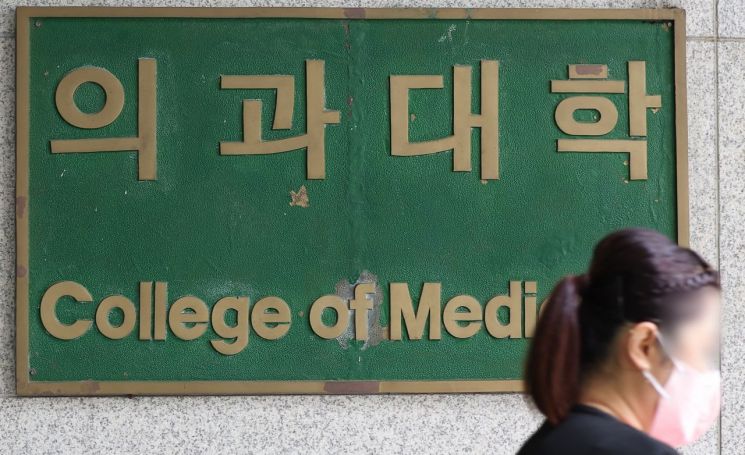
Legal grounds will also be established to respond to the medical students' 'collective leave of absence' incident. The government plans to revise the Enforcement Decree of the Higher Education Act and academic regulations so that universities can manage the scale of leaves of absence and returns, considering the quality and conditions of education for recruitment units related to medical personnel training.
First, the number of students who can be educated beyond the quota, considering educational conditions per semester (academic year), flexible curriculum operation, and utilization of human and material resources of the entire university, will be reflected in the academic regulations, and management will be enforced to prevent academic operations exceeding this number.
Additionally, a regulation limiting continuous leave of absence exceeding two semesters will be added to the academic regulations to enhance predictability and stability of medical personnel. However, in cases of special reasons making education difficult, students may apply for leave extension or additional leave with the president's approval, allowing for supplementary regulations.
To minimize the gap in medical workforce training, plans will be made in cooperation with universities to shorten and flexibly operate the curriculum. The current six-year curriculum, consisting of two years of pre-medical and four years of medical courses, will be shortened to five years to minimize the impact of this year's medical dispute on the number of medical personnel to be produced in the future.
The Ministry of Education explained that this will not only apply to the 2025 academic year but that institutionalization will be pursued to shorten academic operation periods.
The Ministry of Education plans to review universities' curriculum operation plans reflecting the principles and procedures for leave approval under the emergency measures, approval of collective leave, and efforts to guarantee students' learning rights, and incorporate the results into financial support from 2025.
The Deputy Prime Minister said, "I believe it is the responsibility of the government and universities to make the best efforts for students' return until the very end," and added, "Even when universities approve leaves of absence confirming individual reasons rather than collective leave, it is important to prepare academic operations after return in advance to ensure that students' learning rights are not infringed."
© The Asia Business Daily(www.asiae.co.kr). All rights reserved.
![Clutching a Stolen Dior Bag, Saying "I Hate Being Poor but Real"... The Grotesque Con of a "Human Knockoff" [Slate]](https://cwcontent.asiae.co.kr/asiaresize/183/2026021902243444107_1771435474.jpg)

















