Selection of Salary Payment Method and Placement Near User Homes
Work Environment Improvements Including Abolishing 10 PM Return Confirmation
Extension of Stay Period from 7 Months to Within 3 Years
The Seoul Metropolitan Government has decided to change the payment method for foreign domestic workers from a fixed monthly salary system to a selectable system that includes monthly or weekly payments. In particular, it plans to eliminate the headcount verification procedure that sparked a 'curfew' controversy and discuss extending the stay period to within three years.
On the 6th, Seoul announced that it would implement these improvements starting this month to address issues that arose during the 'Foreign Domestic Worker Pilot Project.'
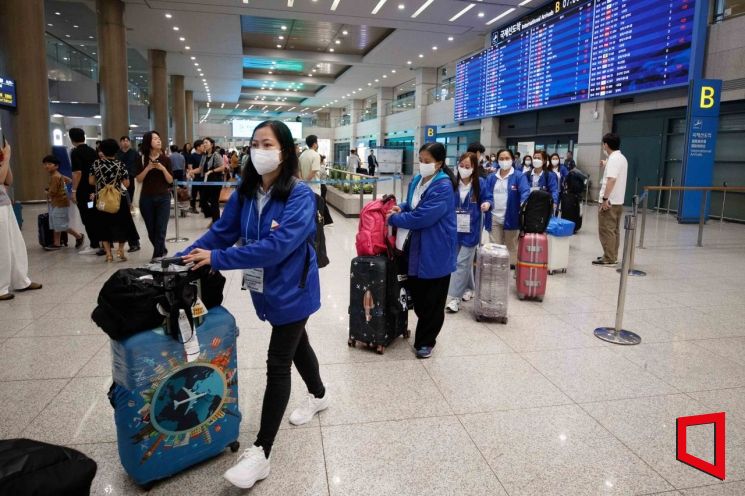 Filipino workers participating in the pilot project for foreign domestic workers are arriving through Incheon International Airport on the 6th. Photo by Airport Photographers Group
Earlier, two Filipino domestic workers who had left their accommodation in Seoul and lost contact were caught the day before at a lodging facility in Yeonje-gu, Busan. The Busan Immigration Office plans to investigate them and then deport them forcibly.
However, during this process, controversies continued regarding the curfew and payment methods applied to domestic workers. In response, Seoul held an emergency meeting on the 24th of last month to gather on-site opinions about the difficulties faced by domestic workers and held an emergency countermeasure meeting with related agencies (Ministry of Employment and Labor, service providers) earlier this month.
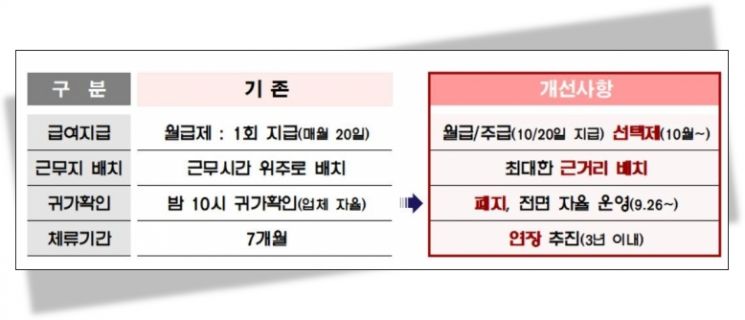
The newly adopted improvement measures include ▲ a selectable payment method (once or twice a month) and minimizing travel distance and time placement ▲ abolition of the 10 PM return confirmation ▲ extension of the stay period after the pilot project ends through review (within 3 years) ▲ strengthening cooperation with the Philippine Embassy for special stay management education.
First, service providers currently implement a monthly salary system paying on the 20th, but considering some domestic workers' economic difficulties, from this month, those who wish can receive payments twice a month on the 10th and 20th. Also, if a domestic worker provides services to two or more households in a day, the households will be assigned as close as possible to minimize the worker's travel time.
For the safety confirmation of domestic workers, service providers had been autonomously confirming return at 10 PM through group leaders, but this will now be converted to autonomous operation. However, to ensure safety, at least on weekends when staying out overnight, workers are required to notify group leaders via alert messages or email.
The stay (visa) period for Filipino domestic workers participating in the pilot project is seven months, which has caused significant employment insecurity. The Ministry of Employment and Labor plans to promote the extension of the stay period for foreign workers under the current Employment Permit System (E-9) so that domestic workers who have worked diligently can continue working.
However, since the Ministry of Justice announced a forced deportation policy for the two Filipino domestic workers who absconded and were caught in Busan, Seoul respects the Ministry of Justice's opinion and states that it will strictly respond to the management of domestic workers' stay according to laws and principles in the future.
Kim Seon-sun, Director of the Seoul Metropolitan Government's Women and Family Office, said, "This improvement plan reflects on the issues after one month of implementing the foreign domestic worker pilot project and actively incorporates on-site opinions. We plan to comprehensively review the problems revealed by the pilot project and the results of research projects and work closely with related ministries to decide the direction for the full-scale project in the future."
© The Asia Business Daily(www.asiae.co.kr). All rights reserved.


















