Estimated Daily Loss up to $5 Billion Due to Logistics Crisis
Harris Faces Test on Pro-Union and Economic Policies
The U.S. dockworkers' union has launched a full-scale strike for the first time in 47 years, putting the Biden administration's leadership to the test once again. President Joe Biden, who is working to resolve the situation, has dismissed the possibility of forcibly ending the strike and appears to be supporting the union. Amid expectations of tens of billions of dollars in economic losses due to the logistics crisis, there are concerns that Vice President Kamala Harris's presidential prospects have also been jeopardized.
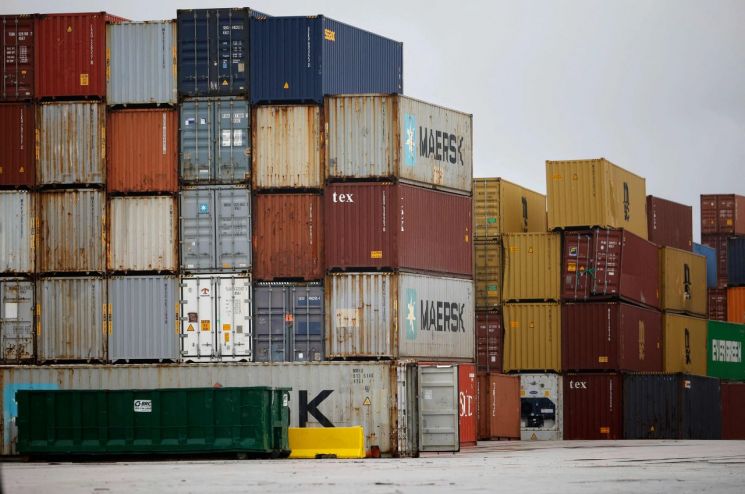
According to the Associated Press and other sources on the 1st (local time), the International Longshoremen's Association (ILA), the largest dockworkers' union in North America, launched a full strike at ports in the southeastern U.S. region, stretching from Maine to Texas, early that morning. Cargo loading and unloading operations at 36 ports along the U.S. East Coast and the Gulf of Mexico were halted, and it was reported that nearly 100,000 containers were waiting to be unloaded at ports near New York.
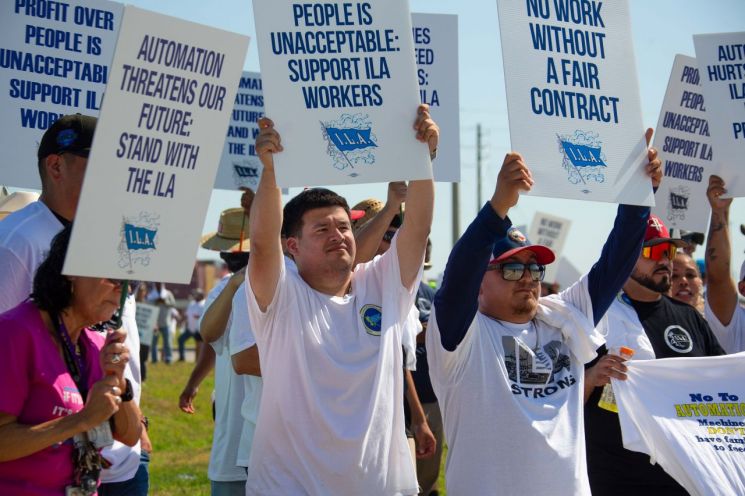
This ILA general strike, the first in 47 years since 1997, resulted from unresolved disagreements between labor and management over wage increase rates and port automation plans. Harold Daggett, ILA chairman, said, "Shipping companies like Maersk have not proposed appropriate wage increases, and they have refused to halt port automation projects that threaten jobs," adding, "We are ready to fight until ILA members receive the wages and job protections they rightfully deserve."
With about 45,000 members, the ILA union is responsible for half of U.S. maritime logistics through southeastern ports, raising concerns about a severe logistics crisis if the strike continues. JP Morgan estimated that the U.S. economy could lose up to $5 billion per day. However, the White House clarified, "At present, the impact on consumers in key sectors including fuel, food, and medicine is expected to be limited."
President Biden, who needs to support Vice President Harris, immediately moved to manage the situation. He emphasized, "Collective bargaining is the best way for workers to receive the wages and benefits they deserve," and added, "Since company profits have been returned to executives' compensation and shareholders, it is fair that workers who took risks during the pandemic receive meaningful wage increases." By dismissing the possibility of forcibly ending the strike through the Taft-Hartley Act, he effectively sided with the union.
Local media view the dockworkers' general strike as a negative factor for Vice President Harris's presidential campaign. CNN stated, "The White House has few good options left," and assessed, "If the government intervenes to forcibly end the strike, Harris's political standing will be compromised, but if it does not intervene, there is little the White House can do." The Biden administration faces a dilemma: intervening risks alienating union voters, while allowing the strike to continue causes economic losses from the logistics crisis.
The Wall Street Journal (WSJ) noted, "This strike occurred at a critical moment when the Biden administration is simultaneously facing multiple crises with political risks," and pointed out, "Harris still trails Trump in polls regarding who can better handle the economy." With Hurricane Helene causing dozens of deaths in the U.S. and escalating Middle East tensions due to clashes between Iran and Israel, Vice President Harris's economic policies, considered a weakness, are expected to be tested once again.
© The Asia Business Daily(www.asiae.co.kr). All rights reserved.
![Clutching a Stolen Dior Bag, Saying "I Hate Being Poor but Real"... The Grotesque Con of a "Human Knockoff" [Slate]](https://cwcontent.asiae.co.kr/asiaresize/183/2026021902243444107_1771435474.jpg)

















