On the evening of the 1st (local time), Iran launched a large-scale ballistic missile attack targeting Israel. Israel immediately announced a counter-retaliation, and concerns over an escalation in the Middle East have not subsided. As the crisis originating from the Middle East intensifies, international oil prices surged by over 5% at one point during trading.
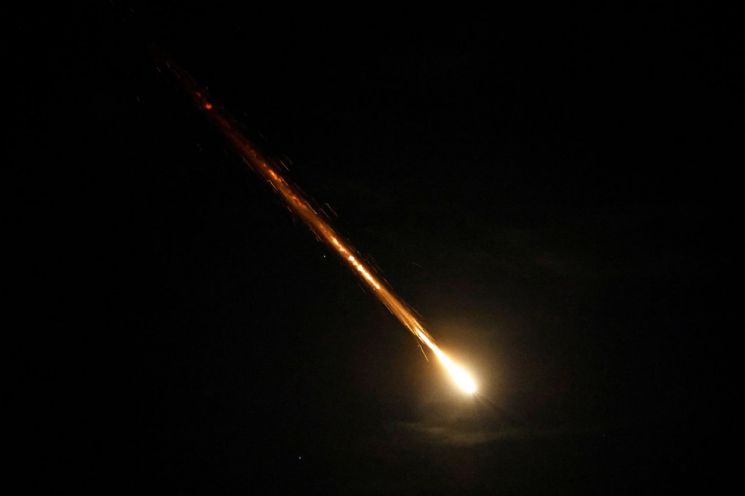
Iran Fires 180 Missiles at Israel
The Iranian Revolutionary Guard Corps (IRGC) announced in a statement that day, "Ballistic missiles were fired targeting important military and security objectives in the heart of the occupied territory (Israel)." This comes about five months after missile and drone attacks on the Israeli mainland in April. The IRGC defined this missile launch as retaliation and self-defense for the deaths of Hamas leader Ismail Haniyeh, Lebanese Shia militant group Hezbollah leader Hassan Nasrallah, and Abbas Nilforoushan, deputy commander of IRGC operations.
Earlier, Iran had warned of strong retaliation against Israel since the assassination of Haniyeh, who visited Iran at the end of July. Recently, as Israel expanded its front targeting so-called 'Axis of Resistance' countries such as Gaza Strip, Lebanon's Hezbollah, and Yemen's Houthi rebels, Iran is analyzed to have carried out this retaliation. Notably, the attack coincided with the time Israel launched a ground military operation targeting southern Lebanon, Hezbollah's stronghold.
Iranian Foreign Minister Abbas Araghchi stated on his X (formerly Twitter) account, "Our actions will end unless the Israeli regime provokes further retaliation," but added, "In such a (further retaliation) scenario, our response will be stronger." This is a warning that while Iran will refrain from additional attacks for now, stronger military actions will follow if Israel retaliates.
The Israeli military announced that Iran fired about 180 missiles that day. It is understood that one Palestinian in the West Bank was killed by missile fragments and several others were injured due to the airstrike. Foreign media including CNN, citing local sources, reported that Iran used its domestically produced 'Fatah-1 supersonic missile' for the first time in this attack. The New York Times (NYT) described it as "an intense bombardment that forced millions of Israelis to hide in shelters for over an hour," and evaluated Iran's attack as the climax of the Middle East crisis that began after Israel deployed ground forces in Lebanon.
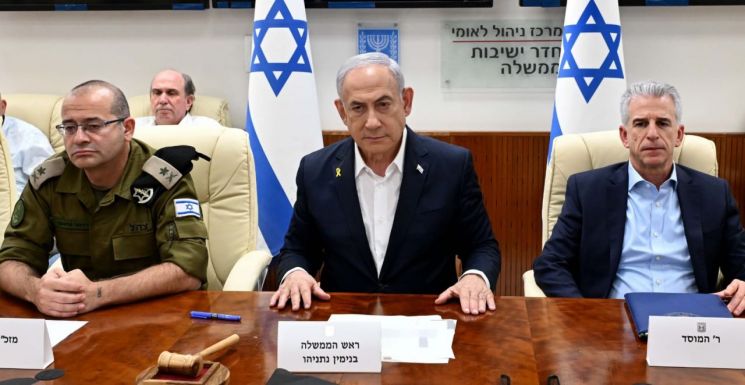
Israel Announces Counter-Retaliation... International Oil Prices Surge
Israel immediately announced a counter-retaliation. Israeli Prime Minister Benjamin Netanyahu convened a security meeting that night and dismissed Iran's attack as a failure, but warned, "Iran made a big mistake tonight and will pay the price." He added, "Iran will soon learn a painful lesson, just as other enemies in Gaza (Hamas) and Lebanon (Hezbollah) have."
As a result, concerns are rising that the already tense situation in the Middle East could worsen further. Major foreign media including CNN analyzed that Iran's attack scale was twice that of April and that there was no prior warning, which could escalate regional tensions. It is also assessed that Israel, which had limited its response under Western pressure in April, may now increase the intensity of its attacks.
CNN reported, "Statements from Israeli officials that day suggest the next response could be stronger," and "The international community is concerned that Israel might decide to attack some of Iran's nuclear facilities." The outlet added, "In April, Israel refrained from such decisions due to concerns about Hezbollah's movements, but now that Hezbollah leaders have died, this factor will be less considered in Israel's calculations."
U.S. President Joe Biden, reaffirming support for Israel, said that "(Iran's) attack was repelled and appears to have been ineffective," and that he would speak with Prime Minister Netanyahu. Former Israeli intelligence officer Danny Citrinowitz assessed, "Tensions are rising to an unpredictable level," and "Israel's response will trigger another Iranian response."
As the Middle East crisis escalated, markets fluctuated that day. Even before Iran's missile attack, statements from White House officials indicating an imminent attack caused the Chicago Board Options Exchange (CBOE) Volatility Index (VIX), known as Wall Street's fear gauge, to surge to the 20 level, and international oil prices soared. Although international oil prices surged over 5% at one point during trading, the gains narrowed after it was confirmed that Israel's damage was less severe than expected. On the New York Mercantile Exchange, November delivery West Texas Intermediate (WTI) crude oil closed at $69.83 per barrel, up $1.66 (2.44%) from the previous session. The three major indices on the New York Stock Exchange all closed lower.
© The Asia Business Daily(www.asiae.co.kr). All rights reserved.


















