Hyundai Motor Achieves Cumulative Production and Sales of 100 Million Units
Production Surpasses 100 Million in Mid-September, Sales Exceed 100 Million on the 30th
Aggressive Overseas Expansion and Technology Development Foundation
Rapid Growth Based on Quality Management and Customer Trust
Hyundai Motor Company has achieved a cumulative vehicle production of 100 million units 57 years after taking its first step into the automobile industry in 1967. Hyundai set a remarkable record as the fastest among major global automakers to reach cumulative vehicle production of 100 million units.
On the 30th, Hyundai held a commemorative event celebrating the achievement of 100 million global vehicle production at the Ulsan Plant Shipping Center, attended by executives and employees including Lee Dong-seok, President of Domestic Production, and Moon Yong-moon, Union Branch Chief. The 100 millionth plus one vehicle sold was Hyundai’s flagship electric vehicle, the 'Ioniq 5.' This car was delivered to a customer in their 20s who chose the Ioniq 5 as their first-ever car.
Hyundai began vehicle production just one year after its founding, in 1968. The first vehicle, the 'Cortina,' was produced at the Ulsan Plant, and in 1975, Hyundai succeeded in mass-producing Korea’s first independent model, the 'Pony.' The Pony paved the way for the popularization of automobiles in South Korea and surpassed 1 million units produced across all models by 1986, just 11 years later.
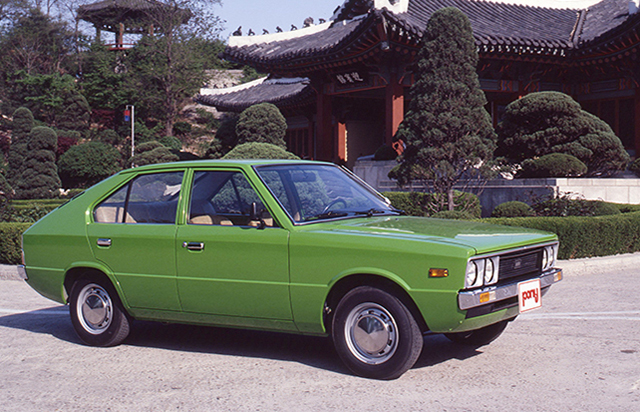
Ten years later, in 1996, Hyundai reached 10 million units produced, and subsequently began full-scale vehicle production at overseas plants in Turkey, India, Alabama in the United States, and the Czech Republic, surpassing 50 million cumulative vehicle production in 2013.
Following the launch of the premium brand Genesis and the high-performance brand N in 2015, Hyundai has led the growth of the electric vehicle market with models like the Ioniq 5, based on the dedicated electric vehicle platform E-GMP. Leveraging excellent electric vehicle technology, Hyundai targeted emerging markets such as Indonesia and India, achieving its best-ever performance since its founding in 2023. In September of this year, Hyundai set the milestone of producing 100 million vehicles cumulatively.
In 57 Years Since Founding... Thanks to Aggressive Overseas Market Expansion and Technology Development
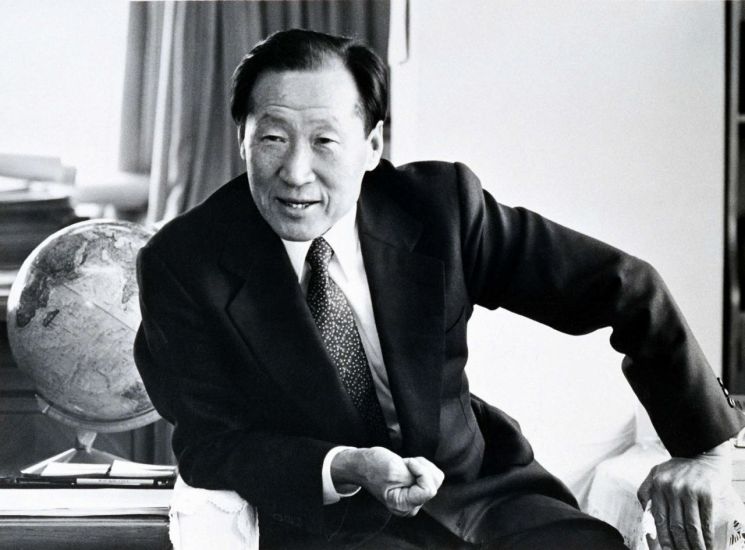
Hyundai Group’s founding chairman Chung Ju-yung said, "If a country’s land is compared to the human body, roads are like blood vessels and cars are the blood flowing through those vessels." Taking advantage of the 1960s national land reconstruction and domestic road expansion, Hyundai was established in December 1967 through partnership negotiations with Ford in the United States.
The following year, Hyundai built an assembly plant in Ulsan and began producing the second-generation Ford Cortina. It was unusual at the time for a car company less than a year old to build a factory and start assembly production.
Hyundai made efforts to produce vehicles suited to domestic conditions but faced limitations with the assembly production method. Ultimately, Chairman Chung decided to develop an independent model using domestic technology, and after about three years of project initiation, succeeded in mass-producing the Pony in 1975.
The Pony was exported overseas for the first time by a Korean passenger car in 1976, including to Ecuador. In 1986, the Pony Excel, Korea’s first front-wheel-drive passenger car, was exported to the United States, the home of the automobile.
Hyundai aggressively expanded its overseas production bases, laying the foundation for a global automotive company. After completing the Turkey plant in 1997, the oldest overseas factory, Hyundai established production plants worldwide including India (1998), Alabama, USA (2005), Czech Republic (2009), Brazil (2012), and Indonesia (2022), achieving an annual global production capacity of about 5 million units.
Hyundai continues to expand production facilities at global sites such as HMGMA (Hyundai Motor Group Meta Plant America) in Georgia, USA, the Ulsan EV-dedicated plant, and the Pune plant in India, adding an additional production capacity of 1 million units.
Continuous technology development also played a crucial role in reaching 100 million units produced. After launching its second independent passenger model, the 'Stellar,' in 1983, Hyundai introduced steady sellers such as the Sonata (1985), Grandeur (1986), and Elantra (currently Avante, 1990). In 1991, Hyundai succeeded in developing Korea’s first independent engine, the 'Alpha Engine,' and in 1994, released the Accent, the first car developed entirely with domestic technology from platform to engine and transmission.
Hyundai’s global cumulative vehicle production surpassed 1 million units in 1986 and reached 10 million units 10 years later in 1996. The intervals between record achievements gradually shortened thereafter. Hyundai exceeded 50 million units in 2013, 80 million units in 2019, and 90 million units in 2022, achieving the historic milestone of 100 million units produced cumulatively by mid-September this year.
Uncompromising Safety and Quality... A History of Challenge and Innovation
The most important factors in achieving 100 million cumulative vehicle production are quality and customer trust. Honorary Chairman Chung Mong-koo, who took office in 1999, strived to enhance the fundamental competitiveness of the company through 'quality management.'
In 2001, Hyundai established a 'Quality Situation Room' at its Yangjae headquarters to receive and handle customer complaints related to quality from around the world in real time, 24 hours a day. The collected data was shared with all on-site employees. Additionally, to drastically reduce defects, Hyundai introduced a full inspection system at global production plants. As a result, in 2004, the 'New EF Sonata' ranked first in J.D. Power’s quality survey, surpassing flagship models of major global brands.
The culmination of quality management was realized with the launch of the premium brand Genesis in 2015. Genesis is a brand led by then Vice Chairman Chung Eui-sun from the initial planning stage through the entire process. Genesis surpassed 1 million cumulative sales in August 2023, just over seven years after its launch, with more than 40% of total sales currently overseas.
Hyundai’s high-performance brand N plays a role in delivering 'driving pleasure' to customers, based on technologies gained from various motorsport competitions such as the WRC (World Rally Championship), TCR World Tour, and the N?rburgring 24-hour endurance race.
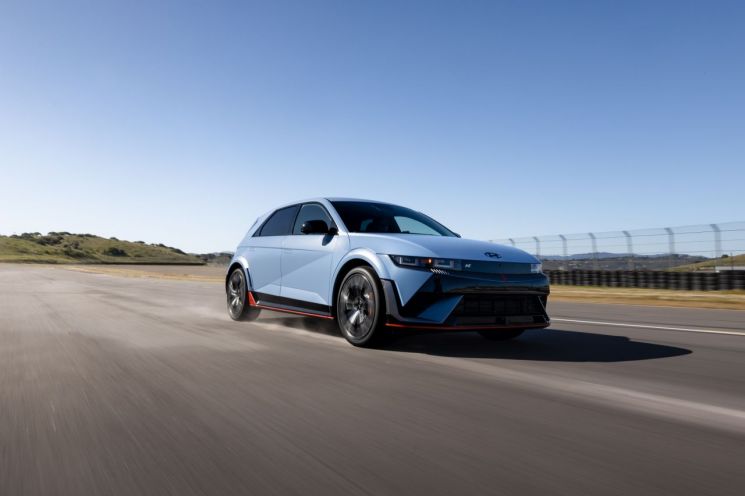
Marking the achievement of 100 million cumulative production, Hyundai has embarked on another innovation as a smart mobility solution provider.
Since taking office in 2020, Chairman Chung Eui-sun has made large-scale investments in new technologies including eco-friendly vehicles such as electric vehicles, hybrid vehicles, and hydrogen fuel cell vehicles, as well as autonomous driving and software-defined vehicles (SDV). Chairman Chung presented a vision to make Hyundai a 'game changer' in the future mobility market.
Hyundai’s electric vehicle models, including the first dedicated electric vehicle 'Ioniq 5' based on the E-GMP platform, have proven their high competitiveness by sweeping prestigious awards hosted by global media.
Furthermore, Hyundai entered the hybrid market in 2011 by developing the world’s first 'parallel hybrid system.' To meet the rapidly increasing demand for hybrid vehicles, next year Hyundai will launch vehicles equipped with a next-generation hybrid system that significantly improves performance and fuel efficiency. The EREV (Extended Range Electric Vehicle), which combines the driving characteristics unique to electric vehicles with a driving range of over 900 km, is also scheduled for sale starting in 2027.
Jang Jae-hoon, CEO of Hyundai Motor Company, said, "The achievement of 100 million cumulative production was possible thanks to the countless global customers who have chosen and supported Hyundai from its founding to the present." He added, "Hyundai has grown rapidly through bold challenges and persistent research, and based on this, we will take one more step toward a new future of 100 million vehicles as a mobility game changer."
© The Asia Business Daily(www.asiae.co.kr). All rights reserved.



















