A court ruling has determined that it is lawful not to pay survivor benefits and funeral expenses to the family of a worker who was bedridden for 34 years due to an industrial accident and died from an intestinal disease.
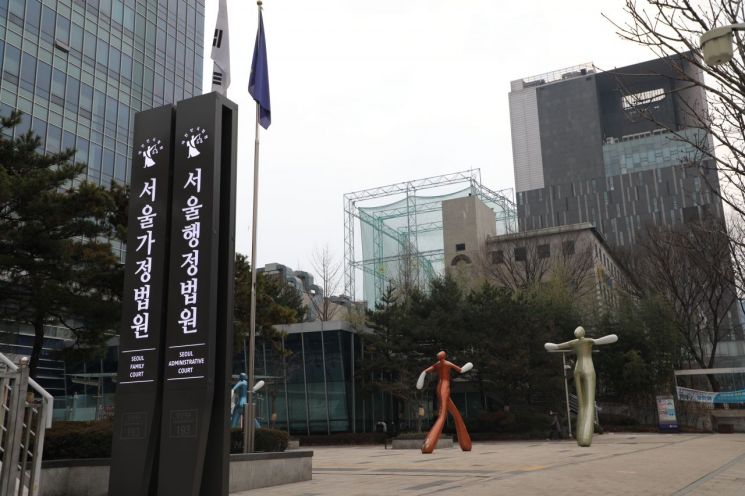
According to the legal community on the 30th, the Administrative Court of Seoul, Administrative Division 3 (Presiding Judge Choi Su-jin) ruled against the plaintiff in a lawsuit filed by the family of Mr. A against the Korea Workers' Compensation and Welfare Service, seeking the cancellation of the denial of survivor benefits and funeral expenses.
Mr. A suffered paralysis in both lower limbs and bladder stones as symptoms from a work-related accident that occurred in 1986. Eventually, in June 2013, he was diagnosed with a disability grade 1. Around the same time, he was also diagnosed with disability grade 3 due to symptoms such as pneumoconiosis and active pulmonary tuberculosis. Mr. A, who had been bedridden and battling illness since the accident, ultimately passed away in September 2020. The direct cause of death was recorded as "toxic megacolon" (a condition where the intestine enlarges).
The family claimed that Mr. A’s death was due to the industrial accident and filed for survivor benefits and funeral expenses with the Korea Workers' Compensation and Welfare Service. However, when the Service rejected the claim stating that "Mr. A’s death cannot be considered due to pre-existing diseases and sequelae," the family filed this lawsuit.
However, the court sided with the Korea Workers' Compensation and Welfare Service. The court stated, "The most common cause of toxic megacolon is inflammatory bowel disease, but it can also develop from sepsis and intestinal infections," and added, "According to the medical opinions of the deceased’s primary physician, the Service’s consulting doctors, and the court-appointed medical expert, the cause of death appears to be toxic megacolon. The death certificate lists the cause of death as 'toxic megacolon' without any mention of previously approved illnesses."
Furthermore, the court noted, "Although the court-appointed medical expert mentioned that 'there are reports that opioid analgesic use can cause or worsen toxic megacolon,' this only refers to the general and theoretical possibility of a correlation between opioid use and toxic megacolon," and concluded, "It is difficult to consider that opioid analgesic use was a cause of death based on concrete evidence or a significant causal relationship."
© The Asia Business Daily(www.asiae.co.kr). All rights reserved.
![Clutching a Stolen Dior Bag, Saying "I Hate Being Poor but Real"... The Grotesque Con of a "Human Knockoff" [Slate]](https://cwcontent.asiae.co.kr/asiaresize/183/2026021902243444107_1771435474.jpg)
















