Charged with Killing 4 Family Members in 1966
Japanese Court Acknowledges Evidence Tampering by Prosecutors at the Time
A former professional boxer in Japan who was sentenced to death for murdering a family of four was acquitted of the murder charge 58 years after the incident. On the 26th, Yonhap News, citing local media such as the Yomiuri Shimbun, reported that the Shizuoka District Court acquitted former professional boxer Iwao Hakamada (88), who had been sentenced to death for robbery and murder.
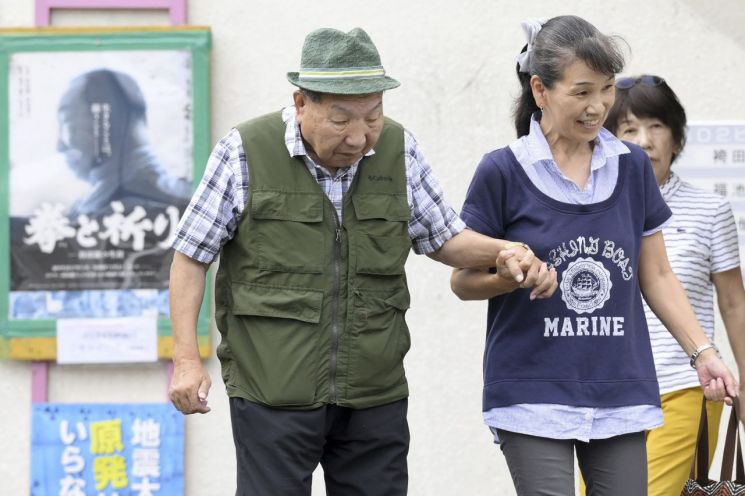 Former professional boxer Iwao Hakamada, who was sentenced to death for the murder of a family of four in Japan, was acquitted of the murder charge 58 years after the incident.
 [Photo by AP·Yonhap News]
The so-called "Hakamada case" frequently arises in discussions about issues in Japan's criminal justice system and debates over the abolition of the death penalty. Previously, in 1966, Hakamada was charged with murdering and setting fire to the family of the executive director of the miso factory where he worked in Shimizu City, Shizuoka Prefecture. During the trial, he claimed, "I was forced to give false testimony due to assault and coercive interrogation," but ultimately, in 1980, the Supreme Court upheld the death sentence.
However, even after the Supreme Court ruling, his sister Hideko consistently asserted her brother's innocence. She pointed out that the bloodstained clothes used as evidence for the death sentence did not fit Iwao and were discovered nine months after the incident. Subsequently, genetic testing revealed that the bloodstains did not match Hakamada's DNA, drastically changing the situation.
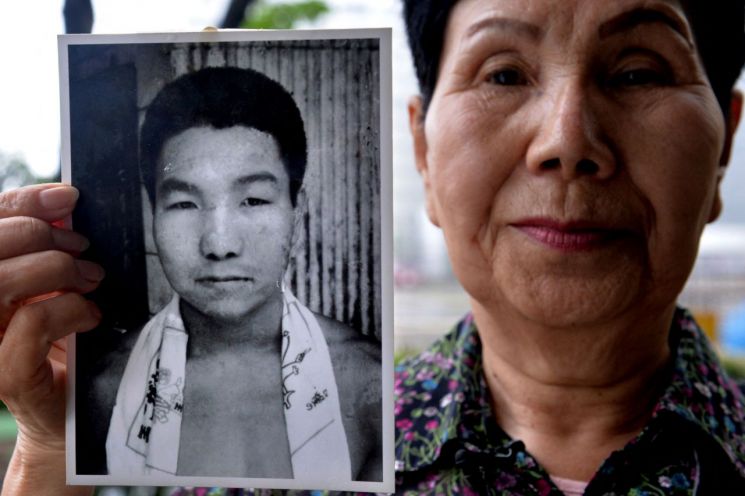 However, even after the Supreme Court ruling, Ms. Hideko, the older sister, consistently maintained her younger brother's innocence. She argued that the bloodstained clothes, which were evidence for the death sentence, did not fit Mr. Iwao's body and were found nine months after the incident occurred. Subsequently, the situation changed rapidly when genetic testing revealed that the bloodstains did not match Hakamada's DNA.
 [Photo by AFP·Yonhap News]
After two retrial requests, a retrial was granted in 2014, and Hakamada was released on bail after 48 years. However, the Tokyo High Court overturned the decision in 2018, citing doubts about the reliability of the DNA test results. Nevertheless, the Supreme Court of Japan, equivalent to the highest court, ordered a re-examination of the bloodstains on the clothes in 2020 and sent the case back to the Tokyo High Court.
The Tokyo High Court accepted the defense's claim that there were issues with the descriptions made by the investigative authorities regarding the bloodstains on the clothes. The authorities had stated that the bloodstains found on the clothes, collected one year and two months after the incident, were "dark red," but the defense argued, "Bloodstains turn black and lose their red color after one year." The Shizuoka District Court also recognized Hakamada's innocence in the retrial, finally clearing his name.
Presiding Judge Koushi Kunii acknowledged that the investigative authorities had fabricated three pieces of evidence, including Hakamada's confession statement and clothing prepared by the prosecution. He apologized, saying, "The court is truly sorry for the long time it took to reach this point." Meanwhile, the true culprit of the Hakamada case has yet to be identified.
© The Asia Business Daily(www.asiae.co.kr). All rights reserved.
![Clutching a Stolen Dior Bag, Saying "I Hate Being Poor but Real"... The Grotesque Con of a "Human Knockoff" [Slate]](https://cwcontent.asiae.co.kr/asiaresize/183/2026021902243444107_1771435474.jpg)

















