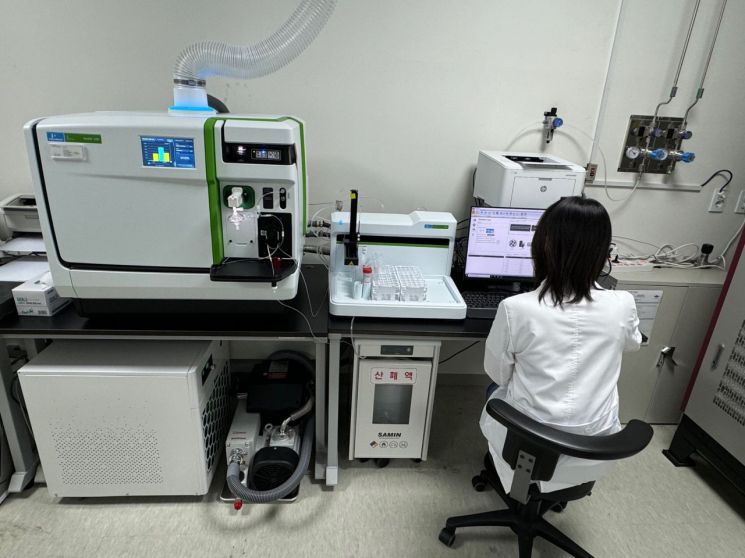
 A researcher from the Gyeonggi-do Institute of Health and Environment is conducting a hazardous substance inspection.
It was found that 99% of seafood distributed in Gyeonggi-do is safe for consumption.
The Gyeonggi-do Institute of Health and Environment announced on the 27th that, after conducting safety tests for harmful substances on 1,957 cases of seafood distributed within the province over the past two years, most seafood except for a total of 3 cases (0.15%) was confirmed to be safe for consumption.
This study was conducted to ensure safe food for consumers. From 2022 to 2023, the Institute carried out a total of 1,957 tests on seafood distributed in wholesale markets and large supermarkets within the province, including ▲ heavy metals (lead, cadmium, mercury) 1,735 cases ▲ residual veterinary drugs 183 cases ▲ shellfish toxins 39 cases.
According to the test results, 2 cases (0.2%) out of 992 in 2022 and 1 case (0.1%) out of 965 in 2023 were judged non-compliant. The remaining 99.85% of seafood met the standards and were deemed suitable.
All 3 non-compliant cases were farmed live flatfish (Neopchi) in which veterinary drug components amoxicillin (standard: 0.05 mg/kg or less) and enrofloxacin (standard: 0.1 mg/kg or less) were detected exceeding the allowable residue limits.
The Institute published the "2022-2023 Gyeonggi-do Distributed Seafood Harmful Substances Statistical Yearbook," summarizing the two-year safety test results, and posted it on the Gyeonggi-do Institute of Health and Environment website (gg.go.kr/gg_health) for public access.
An official from the Institute stated, "We created the statistical report including detailed explanations of seafood safety testing methods and items so that anyone can easily understand," and added, "We will continue to conduct inspections and provide reliable information so that residents can consume seafood with confidence, and do our best to provide safe seafood."
© The Asia Business Daily(www.asiae.co.kr). All rights reserved.

















