Results of Acute Toxicity and Genotoxicity Safety Assessment Published in the Journal of Korean Medicine
The Herbal Medicine Nonclinical Trial Center of the National Institute for Korean Medicine Development published the results of its acute toxicity and genotoxicity safety assessment of Igi-Geopyungsan in the Journal of Korean Medicine.
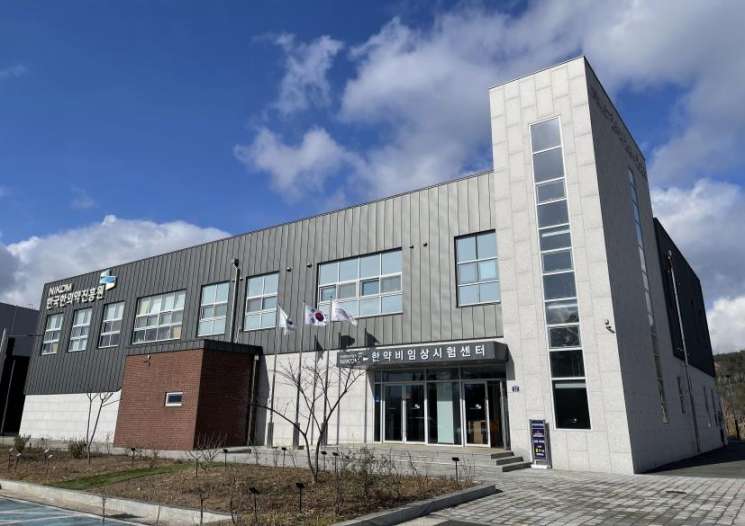
This study has provided evidence for the nonclinical safety of Igi-Geopyungsan, an herbal prescription used for facial paralysis and stroke, which are target diseases of the pilot project for health insurance coverage of customized herbal medicine.
The acute toxicity assessment is useful for predicting toxic reactions that may occur when a drug is administered in excessive amounts, while the genotoxicity assessment is essential for predicting malformations and carcinogenicity caused by gene mutations and chromosomal abnormalities.
These are widely used as standard test methods internationally to verify the safety of pharmaceuticals.
Igi-Geopyungsan contains Cnidium officinale, an herbal ingredient known to cause mild malformations in rodents.
In response, the Genotoxicity Team of the Herbal Medicine Nonclinical Trial Center at the National Institute for Korean Medicine Development evaluated toxicity using rodents, cells, and microorganisms. The results confirmed that Igi-Geopyungsan does not cause gene mutations, chromosomal abnormalities, or acute toxicity.
This safety assessment is distinguished from previous safety assessments of herbal prescriptions conducted in Korea.
The study used herbal prescriptions that had proven safety at the quality stage through Good Manufacturing Practice (GMP) for herbal medicine ingredients and quality certification (no detection of residual pesticides, mycotoxins, etc.), and the nonclinical safety assessment was conducted at a nonclinical testing facility certified by the Ministry of Food and Drug Safety for Good Laboratory Practice (GLP).
The Herbal Medicine Nonclinical Trial Center of the National Institute for Korean Medicine Development plans to continue securing safety evidence for various herbal prescriptions so that the public can safely take herbal medicine. The center also aims to gradually expand its certification fields to promote the Korean medicine industry, including Korean medical devices.
© The Asia Business Daily(www.asiae.co.kr). All rights reserved.
![Clutching a Stolen Dior Bag, Saying "I Hate Being Poor but Real"... The Grotesque Con of a "Human Knockoff" [Slate]](https://cwcontent.asiae.co.kr/asiaresize/183/2026021902243444107_1771435474.jpg)
















