Japan, which had turned away with a passive attitude, faces a crossroads on agreement termination
Will Korea and Japan exchange positions and revive the spark of 'joint development'?
South Korea and Japan will hold a meeting for the joint development of the 7th Offshore Gas Field for the first time in 39 years. The 7th Offshore Gas Field is a continental shelf with potential oil and natural gas deposits. Progress had been limited due to Japan's passive stance, but with the agreement's expiration approaching, attention is focused on the outcome as the two countries sit down again.
According to the Ministry of Foreign Affairs on the 26th, South Korea and Japan will hold the 6th Joint Committee meeting under the "Agreement on the Joint Development of the Southern Part of the Continental Shelf Adjacent to Both Countries (JDZ, hereinafter referred to as the Agreement)" in Tokyo on the 27th to discuss the implementation of the agreement.
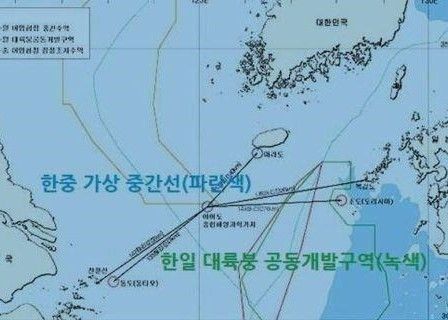
This meeting is being held ahead of the expiration of the agreement. The 7th Offshore Gas Field is a potential oil resource deposit located at the southern end of Jeju Island, which once gave South Korea the dream of becoming an oil-producing country. South Korea and Japan signed an agreement in January 1974 to jointly develop the entire 7th Offshore Gas Field and the adjacent southern waters of Jeju (totaling 82,557 km²). The agreement, which came into effect in June 1978, has a validity period of 50 years, ending in June 2028. However, from three years before expiration, either party can declare the termination of the agreement. From June next year, the continuation of the agreement cannot be guaranteed.
Given Japan's attitude so far, many expect the agreement to end. In two joint explorations conducted between 1978 and 1987 and in 2002, no economically viable oil wells were discovered, leading Japan to effectively withdraw from joint development by not designating any more exploration rights holders (those authorized to explore and extract resources). The Joint Committee also has not convened since the 5th meeting in May 1985, despite South Korea's requests to hold it.
Unlike the early days of the agreement, Japan's passive stance began after 1985 when the International Court of Justice (ICJ) changed the criteria for delimiting the continental shelf boundary in a way favorable to Japan. This has led to analyses suggesting that Japan intends to scrap the joint development agreement and seek renegotiation or independent development.
On the other hand, South Korea is known to hold the position that the agreement should be extended and that additional joint exploration should be conducted to confirm economic viability. Such an exchange of positions is likely to take place at this 6th Joint Committee meeting.
However, a Ministry of Foreign Affairs official drew a line regarding the possibility of discussing the extension or termination of the agreement at the meeting, stating, "It is merely a consultative body discussing practical matters." Nevertheless, the official added, "Both countries can continue to handle the agreement issues amicably," and explained, "We will consider all scenarios, review various response measures, and make every effort to protect national interests."
© The Asia Business Daily(www.asiae.co.kr). All rights reserved.
![Clutching a Stolen Dior Bag, Saying "I Hate Being Poor but Real"... The Grotesque Con of a "Human Knockoff" [Slate]](https://cwcontent.asiae.co.kr/asiaresize/183/2026021902243444107_1771435474.jpg)
















