Bank of Korea's 'Financial Stability Situation' Report
It has been revealed that secured loans from domestic financial institutions have significantly expanded since the second half of last year due to rising housing prices.
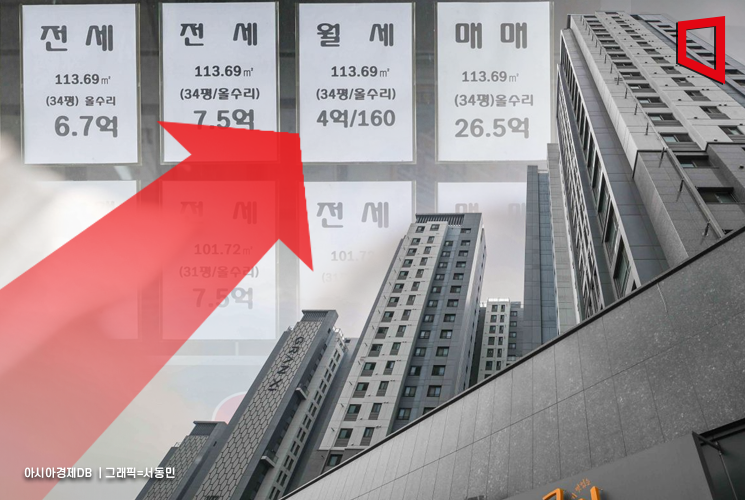
According to the 'Financial Stability Report' released by the Bank of Korea on the 26th, loans from financial institutions increased by 47.2 trillion won in the first half of this year, of which secured loans amounted to 35.3 trillion won, about three times higher than unsecured loans (11.9 trillion won).
By collateral type, housing mortgage loans and non-housing real estate secured loans increased by 17.1 trillion won and 19.6 trillion won respectively in the first half of this year. By sector, banks saw housing mortgage loans and non-housing mortgage loans increase by 18.3 trillion won and 23.6 trillion won respectively. On the other hand, non-bank institutions experienced decreases in both housing mortgage loans (-1.3 trillion won) and non-housing mortgage loans (-4.1 trillion won).
However, delinquency rates are rising mainly among corporations and non-bank institutions. For housing mortgage loans, household delinquency rates remained low at 0.21% in the second quarter of this year, but corporate delinquency rates sharply increased, with savings banks at 14.1% and mutual finance at 6.0%, compared to 1.8% and 2.8% respectively in the first quarter of 2022. Non-housing mortgage loan delinquency rates also rose steeply, especially among non-bank institutions. In the second quarter, the delinquency rate for non-housing mortgage loans was 0.15% for banks, while savings banks and mutual finance recorded 13.6% and 5.4% respectively. By collateral type, delinquency rates for land (5.7%) and commercial real estate (6.2%) significantly increased compared to 2.9% and 3.5% in the first quarter of last year.
Housing Mortgage Loans with LTV Exceeding 60% Rapidly Increasing... Attributed to Loan Regulation Relaxation
The Bank of Korea diagnosed that for housing mortgage loans, loans exceeding a loan-to-value ratio (LTV) of 60% have been rapidly increasing recently, raising the possibility of increased debt burden for borrowing households. Housing mortgage loans exceeding an LTV of 60% amounted to 155.2 trillion won as of the end of June this year, a significant increase compared to 109.3 trillion won in 2020. This is mainly attributed to the relaxation of loan regulations, strengthened support policies for actual demanders, and expanded housing purchase demand, with some factors related to collateral value revaluation also playing a role, according to the Bank of Korea.
In particular, the delinquency rate increase for high LTV loans was large among non-bank institutions. For mutual finance, the delinquency rate in the 40-60% LTV range (1.21%) was 1.8 times lower than that in the over 60% LTV range (2.17%). Savings banks also showed delinquency rates more than twice as high in the over 60% LTV range (5.03%) compared to the 40-60% range (2.28%).
A Bank of Korea official warned, "If loans increase excessively due to expectations of rising housing prices, it is necessary to be cautious about the possibility of rising delinquency rates, especially among borrowers with high principal and interest repayment burdens when conditions deteriorate."
Concerns Over Commercial Real Estate Market Weakness Linger... Need to Be Cautious of Prolongation
Non-housing mortgage loans are diagnosed to carry latent concerns due to weakness in the commercial real estate market. The vacancy rate of small-scale commercial buildings, closely related to the business conditions of self-employed individuals, rose from 6.4% in the first quarter of 2022 to 8.0% in the second quarter. Although investment returns have recently slightly rebounded, they remain lower than in 2022, mainly due to declines in commercial building prices, according to the Bank of Korea. If consumer sentiment recovery is delayed in the future, there is a possibility of prolonged weakness in the commercial real estate market, increasing the need to be cautious about risks related to these loans.
Asset soundness is deteriorating mainly among non-bank institutions, highlighting the need for more proactive risk management. A Bank of Korea official stated, "As concerns about increasing debt burdens grow, especially with the rise of high LTV housing mortgage loans centered on banks, it is necessary to manage soundness from the loan origination stage, focusing on debt service ratio (DSR) regulations to prevent excessive borrowing on secured loans."
He added, "For non-bank institutions, asset quality is deteriorating mainly in non-housing mortgage loans. Considering the weakness in the commercial real estate market, it is necessary to check the risk of defaults on these loans and actively prepare for potential increases in defaults in the future, including proactive provisioning for loan losses."
© The Asia Business Daily(www.asiae.co.kr). All rights reserved.
![Clutching a Stolen Dior Bag, Saying "I Hate Being Poor but Real"... The Grotesque Con of a "Human Knockoff" [Slate]](https://cwcontent.asiae.co.kr/asiaresize/183/2026021902243444107_1771435474.jpg)












