Ministry of Land, Infrastructure and Transport Establishes 'Regional Proposal Specialized Housing'
Strengthening Housing Support for Youth and Elderly
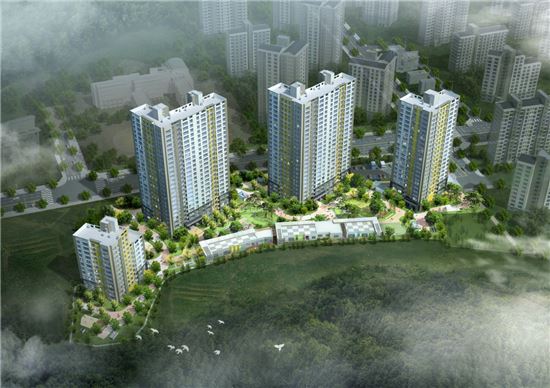 Siheung Mokgam B5 Block LH Apartment Bird's-eye View
The Ministry of Land, Infrastructure and Transport announced on the 26th that it will hold a public contest for specialized public rental housing targeting public housing providers such as local governments, Korea Land and Housing Corporation, and local corporations.
This measure aims to supply customized rental housing tailored to the demands and characteristics of various groups, including youth, the elderly, and local workers.
With the revision of the 'Enforcement Rules of the Special Act on Public Housing' in the second half of this year, a new category called 'Regionally Proposed Specialized Housing' has been introduced in this contest. Public housing providers can set and propose rental plans such as eligibility criteria, selection methods, and residence periods for public rental housing according to regional characteristics.
The contest will be held for about 60 days from the 27th of this month to November 26th. Afterwards, proposal reviews, on-site investigations of proposed districts (by the Ministry of Land, Infrastructure and Transport and LH), and evaluation committee assessments will be conducted, with results expected to be announced in December.
There are four types of contest projects. First, 'Regionally Proposed Specialized Housing' is a region-customized rental housing that allows public housing providers to supply tailored housing based on local demand and characteristics, such as eligibility, selection methods, and residence periods, to encourage childbirth, return to farming or rural areas, etc. The eligible residents will vary depending on the region.
'Youth Specialized Housing' provides rental housing with youth-specialized residential spaces (such as duplexes, shared types, built-in furniture, etc.) and services in excellent locations like areas near subway stations to stabilize housing for young people in urban centers. It targets unmarried youth and 1-2 person households of university students.
'Senior Welfare Housing' is rental housing that combines convenience facilities for vulnerable residents with social welfare facilities, providing both housing and welfare services. It targets homeless seniors aged 65 and older.
'Job-Linked Support Housing' targets workers of small and medium-sized enterprises and industrial complex companies within the region, providing workspaces and community facilities as job-customized rental housing. It is aimed at entrepreneurs, workers in regional strategic industries, and employees of SMEs and industrial complex companies.
Meanwhile, with the revision of the Enforcement Rules of the Special Act on Public Housing, when job-linked support housing is supplied as dormitories for small and medium-sized enterprises, public housing providers can separately set eligibility criteria, which is expected to improve the housing conditions of local workers.
Local governments selected in the contest can supply specialized housing suited to regional conditions through housing and urban funds supported by the government.
Lee Gi-bong, Director of Housing Welfare Policy at the Ministry of Land, Infrastructure and Transport, said, "Specialized public rental housing is a useful program that allows each region to supply housing that meets local demand and conditions," and added, "We ask for active participation and cooperation from local governments and other public housing providers."
© The Asia Business Daily(www.asiae.co.kr). All rights reserved.
















