An Se-yeong's Feet Covered in Blisters
Traces of Blood and Sweat Poured Despite Harsh Conditions
The photo of An Se-young's blistered soles, who won the women's singles gold medal at the 2024 Paris Olympics for the first time in 28 years, fully shows the weight of the 'world No. 1' crown. The photo of An Se-young's feet was revealed to point out the outdated regulations of the Badminton Korea Association, but it is now highlighting An Se-young's efforts to do her best despite wearing uncomfortable shoes. We took a look at the ultimate efforts in various fields that move the hearts of viewers.
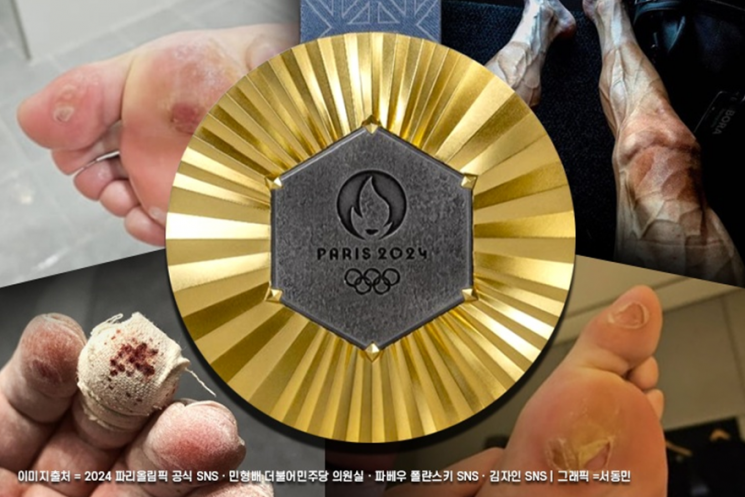
An Se-young's Feet Full of Blisters
On the 24th, Min Hyung-bae, a member of the Democratic Party of Korea, displayed a photo of An Se-young's injured feet during the National Assembly's Culture, Sports and Tourism Committee plenary session and questioned, "Why weren't her shoes changed?" He said, "The athlete herself said that the blisters and inflammation were caused by the shoes," and criticized the association, saying, "The athlete requested a shoe change, but since the regulations are like that, the adults' pathetic handling was unavoidable and incomprehensible."
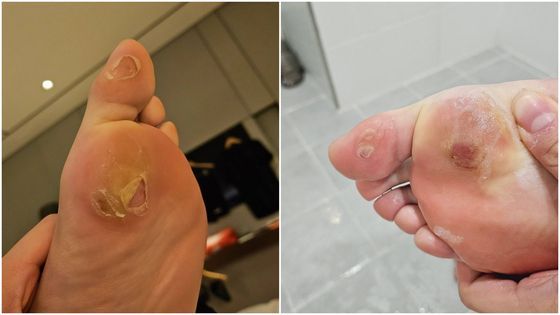
In the photo, An Se-young's feet are covered with wounds. Because she was forced to use the Badminton Korea Association's sponsored equipment, she could not avoid injuries such as blisters on her soles. However, despite these adverse conditions, she did her best to win the gold medal in the women's singles event at the Olympics for the first time in 28 years.
An Se-young has demanded improvements to the national team selection, sponsorship, and contract-related regulations from the association. In particular, she raised her voice against the unfairness of being forced to use only the products of the association-designated sponsor. The Ministry of Culture, Sports and Tourism responded that improvements to sponsorship contracts and participation restriction regulations are necessary in relation to An Se-young's concerns. According to an investigation by the Ministry of Culture, Sports and Tourism, among Olympic and Asian Games sports, badminton and boxing are the only ones that unconditionally force the use of sponsor products, including equipment directly related to performance such as rackets and shoes.
Hands and Feet Covered with Wounds... 'Glorious Scars' to Overcome Limits
The hands and feet of Kim Ja-in, known as a living legend of Korean climbing, are also full of glorious scars. Climbing requires gripping holds (protrusions on the rock wall) with hands and feet, and to increase grip, climbers must wear climbing shoes that are smaller than their actual foot size and wear them barefoot. Moreover, the shoes are curved forward, which puts strain on the feet. The roughness of the holds often causes blisters on the hands.
Kim Ja-in wears climbing shoes 20mm smaller than her actual foot size, 205mm, so her feet are not in good condition. To overcome her small physical stature (153cm), she often jumps, which causes her hands to be covered with calluses and blisters.
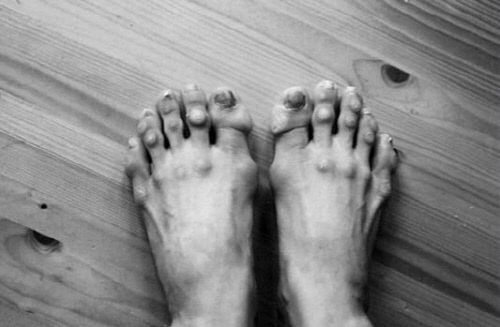
The photo of Kang Su-jin, director of the National Ballet Company, showing her bumpy, scarred feet is also famous. In the photo, Kang's toenails are broken and her feet are deformed with calluses, a result of rigorous training to become a world-class ballerina during her active career. Her passion for ballet is clearly reflected in the photo of her feet, which became a big topic as the 'most beautiful feet in the world.'
There are many athletes around the world who challenge human physical limits and bear glorious scars. Cyclist Pawel Poljanski gained the most attention after completing the 2017 Tour de France. Although he finished 75th overall, far from winning, he attracted attention by posting a photo of his thigh on his social media.
His thigh was sunburned and veins were prominent, clearly showing the effort he endured through extreme pain. He rode 2,829 km over 18 days during the race. At the time, CNN praised his effort, saying, "If you doubt how tough the Tour de France is, just look at Pawel Poljanski's legs."
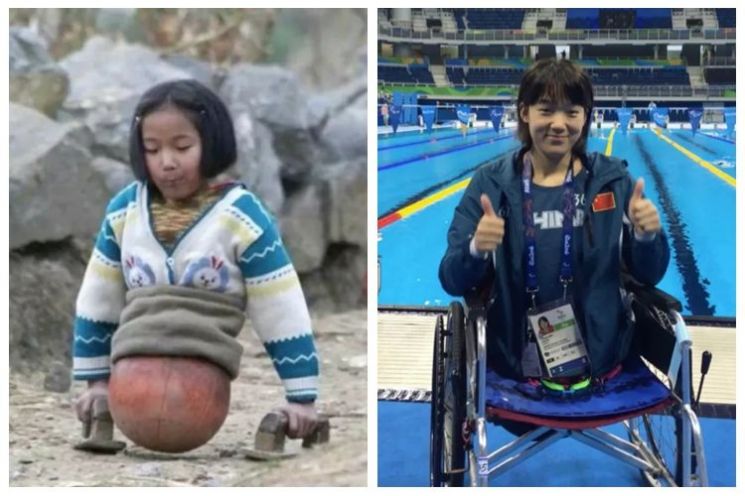
In China, there is Chen Hongyan, who became a swimmer after living with a basketball instead of prosthetic legs due to poverty. Chen Hongyan, from Yunnan Province, lost both legs in a traffic accident during childhood. However, his family could not afford a wheelchair. Chen's grandfather made prosthetic legs out of basketballs, enabling Chen to move again, earning him the nickname 'Basketball Girl.' Later, he became a swimmer and participated in the 2016 Rio Paralympic national team selection and the 2022 Hangzhou Asian Paralympics.
© The Asia Business Daily(www.asiae.co.kr). All rights reserved.



















